A diamond price calculator is an online tool that estimates the value of a diamond based on its key attributes, including carat weight, cut quality, color grade, clarity grade, shape, and certification.
It uses real-time market data to provide a pricing range that reflects current resale values. The purpose of this tool is to give diamond owners or potential sellers a reliable estimate before selling, insuring, or leveraging their diamonds.
By entering accurate diamond specifications, users receive a near-instant valuation without needing to visit a physical location. This type of calculator is beneficial for individuals in the U.S. seeking a fast and transparent way to determine the value of a diamond.
The calculator works by processing diamond characteristics through a data-driven pricing model. Carat weight reflects size, while color and clarity grades indicate the diamond’s visual purity, and the cut determines its brilliance.
Certification from labs like GIA or IGI ensures legitimacy and consistency in grading. When these values are entered, the tool compares them against current market benchmarks to estimate the diamond’s resale price.
The benefits of using a diamond price calculator include immediate pricing feedback, a no-obligation valuation process, and clear insight into how different features influence the value. However, it also comes with limitations.
The results are estimates, not formal offers. Physical inspection may reveal factors not included in the digital input. Some tools may also exclude brand value or setting type. For accurate pricing, users must input correct information.
For a current estimate, visit Diamond Banc’s diamond valuation page to learn what your diamond may be worth.
Diamond Banc offers a trusted diamond price calculator specifically tailored for users looking to sell or get a loan against their diamonds. To get a reliable estimate tailored to market demand and resale value, use Diamond Banc’s online calculator, one of the most precise digital valuation tools available.
Table of Contents
- What is a Diamond Price Calculator?
- What’s the Purpose of a Diamond Price Calculator?
- How Does a Diamond Price Calculator Work?
- What Are the Steps to Using a Diamond Pricing Calculator?
- What Affects Diamond Prices in Price Calculators?
- How Accurate Are Diamond Price Calculators?
- What Are the Benefits of Using a Diamond Price Calculator?
- What Are the Limitations of Diamond Price Calculators?
- How to Evaluate Your Diamond’s Price Online Using Diamond Banc’s Tool?
- What’s the best way to verify a calculator’s accuracy?
- What red flags indicate an unreliable diamond calculator?
- How often do diamond prices update in calculators?
- Do calculators include sales tax or fees?
- Do calculators consider brand value?
- Do calculators work for colored diamonds?
- Are fancy blue diamonds priced differently from clear diamonds?
- Can I use a calculator to determine the value of vintage or antique diamonds?
- Can I calculate my diamond’s worth with a calculator?
- Does diamond fluorescence affect its price?
What is a Diamond Price Calculator?
A diamond price calculator is an online tool used to estimate the current market value of a diamond based on its physical and certified characteristics. It functions by analyzing primary traits, including carat weight, cut quality, color grade, clarity grade, shape, and certification. These inputs are essential in determining the diamond’s overall worth.
In addition to primary attributes, some calculators also factor in secondary traits, such as fluorescence, polish, symmetry, and market demand. Most diamond price calculators operate using industry-standard pricing databases, such as Rapaport or IDEX, which reflect real-time market fluctuations.
These tools are primarily designed for sellers, buyers, and appraisers seeking quick, transparent, and data-backed diamond valuations.
What’s the Purpose of a Diamond Price Calculator?

The purpose of a diamond price calculator is to provide a fast, accessible way to estimate the current market value of a diamond. It eliminates the need for time-consuming in-person evaluations by generating instant results online.
This tool is valuable for buyers who want to avoid overpaying, sellers who need a pricing benchmark before listing or purchasing, and owners who want to assess the value of their jewelry for insurance, resale, or personal knowledge.
The calculator simplifies complex pricing by evaluating key factors, including carat weight, cut quality, color and clarity grades, shape, and certification status. These attributes are processed through pricing algorithms backed by industry-standard databases.
The tool may also account for secondary traits, such as fluorescence or market demand, providing a comprehensive yet user-friendly estimate.
How Does a Diamond Price Calculator Work?
A diamond price calculator works by analyzing standardized diamond grading data to estimate a diamond’s current market value through a consistent and structured process.
A diamond’s value is primarily determined by the 4Cs—Carat, Cut, Color, and Clarity—which are globally recognized standards in diamond valuation. These characteristics, along with the diamond’s origin (natural or lab-grown), form the basis of its worth. While online tools and price calculators can provide an initial estimate using these inputs, only a certified appraiser or a trusted gemological laboratory such as GIA or AGS can deliver an accurate and official valuation.
Most calculators reference established pricing databases and then apply adjustments based on market conditions and additional diamond features.
While the final number is not a certified appraisal, it offers a reliable and data-informed valuation to help users make confident buying, selling, or lending decisions.
The following steps explain how a diamond price calculator works in a structured and factual sequence:
- Takes input: Users provide specific diamond characteristics, including carat weight, cut quality, color grade, clarity grade, and shape. These are the four Cs, foundational to diamond pricing. The accuracy of the estimate depends on the accuracy of the input.
- Uses a standard price list: The calculator references databases like the Rapaport Diamond Report, which sets pricing benchmarks based on real-time global market trends. This creates a uniform starting point for valuation.
- Adjusts for market trends: Prices fluctuate over time. The calculator updates values based on current supply, demand, and global trading activity, keeping the estimate relevant.
- Applies quality-based changes: Based on the specific combination of cut, clarity, color, and shape popularity, the calculator adds premiums or applies discounts. For instance, excellent-cut diamonds may get a price increase, while included stones may be downgraded.
- Calculates total price: The adjusted value is multiplied by the carat weight, and all variables are computed to give a consistent output. This price reflects the diamond’s predicted resale worth.
- Includes other factors: Advanced calculators also analyze fluorescence, polish, symmetry, and certification body (e.g., GIA vs. IGI). These secondary traits help fine-tune the estimate and provide a closer reflection of market reality.
- Gives the final estimated value: The result is a non-certified estimate, not an official appraisal. However, it serves as a dependable pricing guide to help users in the U.S. make informed decisions for selling, buying, or borrowing against a diamond.
While a diamond price calculator does not replace a certified appraisal, it offers a fast, data-driven estimate based on objective grading standards and real-time market data. This allows users to make informed decisions whether they are selling, buying, or securing a loan against their diamond.
For accurate and convenient online valuations tailored to market demand, Diamond Banc offers one of the most trusted diamond price calculators available.
What Are the Steps to Using a Diamond Pricing Calculator?
The steps to use a diamond pricing calculator are simple, fast, and designed to give users an accurate market estimate using standard diamond attributes. These calculators are helpful tools for buyers, sellers, and owners who want a quick valuation without needing an in-person appointment.
Below is a step-by-step explanation of how to use the calculator effectively.
- Step 1: Enter the Diamond’s Details
Begin by inputting the key attributes: carat, cut, color, clarity, and shape. These characteristics must match the diamond’s official grading report. Accurate input ensures that the estimate accurately reflects the real market value.
- Step 2: Select Certification (if asked)
Some calculators allow or require users to specify the diamond’s certification body, such as GIA or IGI. This step helps refine the estimate since certification impacts perceived quality and market pricing.
- Step 3: Let the Calculator Process Using Price Lists and Market Data
After submitting the details, the calculator evaluates them against current pricing indexes, such as Rapaport, and recent market trends. This ensures the price range is timely and relevant.
- Step 4: Review the Estimated Price Shown
The tool then displays a value based on the input values entered. This is an estimated price, not a final appraisal, and can be considered a reference point.
- Step 5: Compare the Result or Adjust Inputs to Fit Your Budget
Users change the quality grades to explore how each factor affects the price. This makes it easier to set realistic expectations or assess potential buying and selling scenarios.
While a diamond price calculator gives a convenient and informative starting point, the estimated value should always be verified through a professional, in-person appraisal before making any final sale, purchase, or loan decision.
What Affects Diamond Prices in Price Calculators?
The diamond prices in calculators are primarily affected by the Four Cs: carat weight, cut quality, color grade, and clarity grade. These core attributes determine the base value using standardized grading data.
Factors such as shape, certification authority, and market demand further refine the estimate. Advanced calculators may also account for fluorescence, polish, and symmetry. The final value is an estimate, not a certified appraisal, and may vary based on the seller or brand.
The core factors that affect diamond prices in calculators are:
- Carat Weight
Carat weight is a key factor in a diamond’s price and size. Larger diamonds are rarer, and their prices increase exponentially as weight crosses benchmark thresholds (e.g., 0.50, 1.00, 1.50 carats). In diamond calculators, higher carat weight typically results in a significantly higher estimated value.
Since carat is a primary element of the Four Cs, it directly impacts the base price. While calculators offer accurate size-based estimates, final pricing may vary based on shape, certification, and demand.
- Cut Quality
The cut quality of a diamond determines its ability to reflect light and appear visually appealing.
Excellent or ideal cuts receive higher values due to superior brilliance and symmetry. Calculators heavily consider cut quality and adjust prices upward for higher cut grades. As a core part of the Four Cs, cut plays a key role in determining perceived value.
Additional cut-related features, such as polish and symmetry, are also considered in advanced calculators. The final price may shift if these quality indicators don’t match the actual diamond condition.
- Color Grade
Color is graded from D (colorless) to Z (visible tint), with less color generally being more valuable. Diamonds closer to D receive premium pricing in calculators, while those with noticeable color receive deductions.
Color directly impacts clarity and overall appearance, making it a key factor in the Four Cs of digital valuation. While calculators provide solid color-based estimates, fluorescence and lighting conditions can affect the final perception and pricing during physical appraisals.
- Clarity Grade
Clarity reflects the presence of inclusions or blemishes. Grading ranges from Flawless (FL) to Included (I). Diamonds with minimal inclusions are priced higher because of their rarity and visual appeal.
As part of the Four Cs, clarity has a significant impact on the estimated value in price calculators. However, calculators assume accurate inputs; physical inspection may reveal flaws that alter final pricing.
- Shape
Shape refers to the outline of the diamond, such as round, oval, cushion, or emerald. While shape isn’t one of the Four Cs, it still affects value. Round diamonds typically cost more due to higher demand and greater material loss during the cutting process.
Calculators adjust for such factors by applying shape-specific pricing models. The price may vary in final valuation if certain shapes become more or less popular in the market.
- Certification
Certification ensures that a professional, unbiased lab has conducted diamond grading. Calculators allow users to select the certifying body, with GIA and IGI being the most recognized.
GIA-accredited diamonds are typically valued higher due to stricter grading standards. While certification adds credibility to the input data, differences between labs lead to variations in the final sale price.
- Market Demand
Diamond calculators also account for real-time market dynamics. Prices adjust based on availability and consumer demand for specific sizes, shapes, or quality levels.
For example, if 1.0-carat round diamonds are in high demand, calculators will reflect the price with higher estimates. While trend-based pricing can be useful, market demand is variable, and actual selling prices may change as a result.
- Brand or Seller
Some calculators may include brand perception or seller reputation in the estimate. Diamonds from luxury brands or reputable retailers may receive a pricing premium due to added perceived value.
However, the perceived value is not a fixed metric and depends heavily on buyer expectations. Calculators offer a general estimate, but brand influence comes into play during final negotiation or resale.
These factors are processed together to generate a market-aligned estimate; however, final prices still vary based on condition, certification, and actual buyer interest.
How Accurate Are Diamond Price Calculators?
Diamond price calculators provide an estimated value, not a fixed or guaranteed price. They rely on standardized inputs, such as carat weight, cut quality, color grade, and clarity grade, combined with current market pricing data to generate a valuation.
However, the accuracy of the estimate depends on the precision of the information entered. Any variation in grading details affects the final result. For greater accuracy, it’s advisable to use multiple calculators and compare their outputs across platforms.
While these tools offer quick and convenient insights, they cannot fully assess elements like diamond condition, setting, or branding, which require in-person evaluation. Therefore, it’s essential to obtain a professional appraisal before making any decision regarding the sale, purchase, or insurance.
An appraiser verifies the grading, identifies additional value factors, and provides a certified report that buyers, lenders, and insurers accept.
Diamond price calculators are ideal for getting a general market estimate, exploring price scenarios, and preparing for transactions. They are especially useful for first-time sellers or buyers who want to understand how value is calculated.
Still, calculators can be viewed as a starting point rather than a final authority on pricing. For the most accurate and trusted diamond valuation experience, use the online calculator offered by Diamond Banc, a leading name in luxury asset evaluation and secure financial services.
What Are the Benefits of Using a Diamond Price Calculator?
The benefits of using a diamond price calculator include quick access to accurate price estimates, informed decision-making, and enhanced pricing transparency.
These tools are designed to help buyers, sellers, and diamond owners understand a diamond’s approximate market value without needing an in-person appraisal.
By providing real-time insights based on industry pricing standards, calculators play a crucial role in financial planning, negotiation, and preparation for resale.
The common benefits of using a diamond price calculator are:
- Quick Estimates
Quick estimates are a key advantage. A diamond price calculator provides near-instant valuations by analyzing carat weight, cut, color, clarity, and other key traits.
This feature is especially useful for users who need a fast reference point before visiting a jeweler or making a resale decision.
- Informed Decisions
Informed decisions become easier with accurate pricing information. Sellers determine whether an offer is fair, while buyers assess if the asking price aligns with the diamond’s quality. Owners also use the data to decide if it’s a good time to sell or hold.
- Easy Comparisons
Easy comparisons enable users to input different diamond specifications and assess how slight changes in grade or weight impact the price. This comparison feature is particularly helpful for buyers choosing between similar stones or investment options.
- Budget Planning
Budget planning is simplified through real-time feedback. Buyers adjust attributes, such as lowering the carat or choosing a different shape, to meet their financial limits without compromising on value.
- Transparency
Transparency is another major benefit. Calculators break down how each factor influences pricing, giving users visibility into what contributes to the final estimate. This level of detail builds confidence and reduces the risk of overpaying or underselling.
- Educational Tools
Educational tools, such as calculators, also help users understand how diamonds are priced. This knowledge enables buyers to negotiate more favorable prices by highlighting how minor differences in quality impact overall value, an advantage during discussions with sellers.
While a diamond price calculator is not a substitute for a certified appraisal, it offers a reliable, accessible, and data-driven starting point for understanding a diamond’s market value.
For the most accurate results, users start with the Diamond Banc calculator, trusted by sellers and luxury asset holders across the U.S.
What Are the Limitations of Diamond Price Calculators?
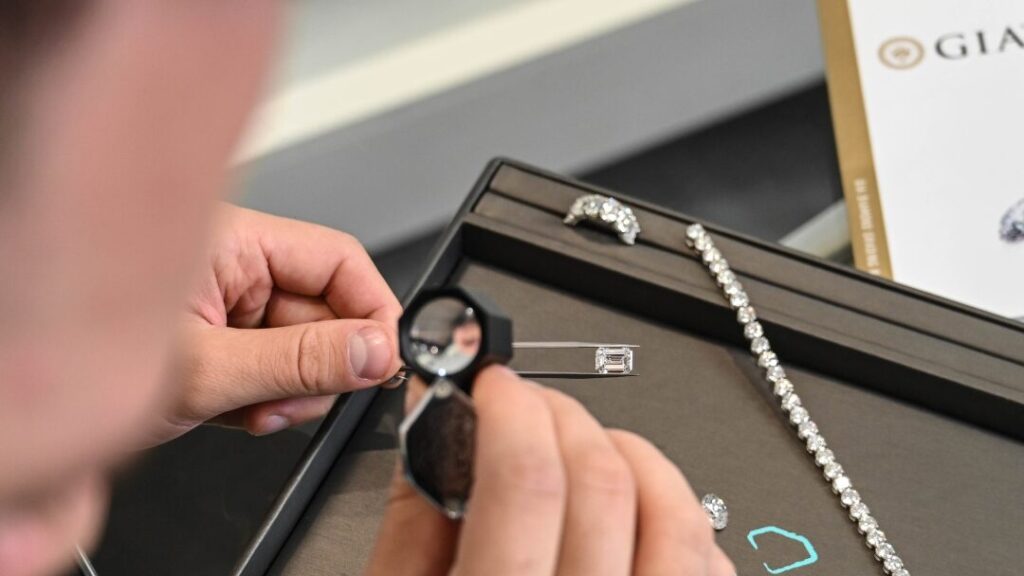
The limitations of diamond price calculators include several important gaps that affect their precision and reliability when compared to professional appraisals. While these tools are useful for generating quick estimates, they are not designed to replace expert evaluations.
- Not 100% Accurate
Diamond calculators provide estimated values based on user input data. These estimates are only as reliable as the information provided to us. If the details about carat, cut, color, quality, or clarity measurements are inaccurate, the resulting price will not reflect the diamond’s actual market value.
- Doesn’t Account for All Factors
The system ignores many personal or situational variables, like branded settings, historical significance, or custom craftsmanship. These non-physical attributes contribute to a diamond’s value and can’t be measured digitally.
- No Visual Inspection
Calculators cannot detect physical imperfections, such as inclusions, chips, or cloudiness. These require an in-person assessment with magnification and proper lighting, which can only be performed by a trained gemologist.
- Market Fluctuations
Diamond prices fluctuate over time due to shifts in supply, demand, and economic factors. Calculators may rely on outdated or generalized pricing data, rendering their results less accurate reflections of real-time market conditions.
- Varies by Source
Different calculators use different pricing models, databases, and algorithms. As a result, estimates vary from one platform to another, making it difficult to determine a consistent value.
- Doesn’t Include Extra Costs
Additional fees such as certification, setting removal, resale commissions, or transaction costs are typically excluded from calculator results. These affect the final amount received or paid during a sale.
While diamond price calculators are a great starting point for estimating value, only an in-person appraisal by a certified gemologist provides an accurate, legally recognized valuation that is suitable for insurance, resale, or lending purposes.
How to Evaluate Your Diamond’s Price Online Using Diamond Banc’s Tool?
To evaluate your diamond’s price online, Diamond Banc’s calculator offers a fast, user-friendly, and confidential solution. This tool enables users to obtain an accurate market-based estimate by entering key diamond details, including carat weight, cut quality, color grade, clarity, shape, and certification type.
The process is streamlined and requires no login or commitment; just enter the information, and the tool instantly provides a pricing estimate based on real-time market data.
The interface is designed for ease of use, making it accessible to both first-time sellers and experienced diamond owners. In just minutes, users can understand the value of their diamond, whether they plan to sell it, use it as loan collateral, or simply assess its market value.
Luxury items aren’t just for show; they represent real, liquid value. Diamond Banc helps clients unlock that value quickly, discreetly, and without pressure, turning high-end assets into financial opportunities with clarity and confidence.
What’s the best way to verify a calculator’s accuracy?
To verify a diamond calculator’s accuracy, compare results from at least two reputable sources using identical diamond details.
Check if the calculator utilizes real-time pricing data, such as the Rapaport Price List, and if it accounts for certifications from reputable labs like GIA or IGI. Ensure inputs match the diamond’s official grading report.
If the tool is from a trusted platform like Diamond Banc, estimates are more likely to reflect current market conditions. Using multiple tools confirms consistency and filters out unreliable or outdated calculations.
What red flags indicate an unreliable diamond calculator?
Unreliable diamond calculators often lack transparency regarding data sources, skip critical inputs such as certification, or provide overly broad price ranges.
If a calculator doesn’t ask for the Four Cs or ignores key attributes like shape or fluorescence, it likely oversimplifies pricing. Ads or forced signups before showing results are also warning signs.
A vague or overly high valuation may be designed to mislead. Trustworthy tools, such as those offered by Diamond Banc, clearly explain their methodology and utilize standard grading factors to deliver accurate, market-reflective estimates.
How often do diamond prices update in calculators?
Diamond prices in calculators typically update on a weekly or monthly basis, depending on the data provider. Calculators that use industry-standard sources, such as Rapaport or IDEX, adjust more frequently to reflect global market changes.
However, not all tools provide real-time updates. Reliable platforms will indicate how often their pricing data is refreshed. To ensure the most accurate result, use calculators that reference their data sources and update intervals. Regular updates are essential for aligning estimates with current diamond market trends.
Do calculators include sales tax or fees?
No, most diamond price calculators do not include sales tax or additional fees in their estimated values. The calculator focuses on the intrinsic value of the diamond based on grading and market pricing.
Fees such as sales tax, certification charges, shipping, or removal costs are typically excluded and only apply during an actual sale or transaction.
Always consider these extra costs separately when preparing to sell or insure your diamond. Use the calculator strictly as a preliminary reference for market value.
Do calculators consider brand value?
No, diamond price calculators typically do not consider brand value in their estimates. The tool evaluates the diamond based on measurable attributes, including carat, cut, color, clarity, and certification.
Luxury brands, such as Tiffany & Co. or Cartier, may carry a resale premium, but this factor is not typically reflected in automated calculators.
For branded jewelry, it’s best to follow up with a professional appraisal to determine the added value. Calculators serve as a baseline for the generic market value.
Do calculators work for colored diamonds?
Yes, some calculators work for colored diamonds, but most standard tools are designed for clear, white diamonds only. Colored diamonds, such as those in yellow, pink, or blue, require unique valuation methods that consider color intensity, rarity, and market demand.
These traits aren’t always supported by basic online calculators. If you have a colored diamond, seek a specialized calculator or contact an expert who understands colored gemstone markets.
Although calculators can offer a rough estimate, they might underestimate or oversimplify the worth of colored diamonds.
Are fancy blue diamonds priced differently from clear diamonds?
Yes, fancy blue diamonds are priced differently from clear diamonds due to their rarity and collector demand. Unlike standard white diamonds, their value is based on color intensity, saturation, and hue rather than just the Four Cs.
Most general calculators don’t capture these nuances. To gain a better understanding of the valuation of fancy blue diamonds, discover how Diamond Banc can leverage designer and rare jewelry for enhanced value.
Can I use a calculator to determine the value of vintage or antique diamonds?
Yes, you can use a calculator to determine the value of vintage or antique diamonds, but with limited accuracy. Vintage or antique diamonds often include design elements, older cuts, or historical value that standard calculators don’t assess.
While you can input basic grading data to get a general estimate, these tools won’t account for craftsmanship, provenance, or collectability.
For antique pieces, calculators serve only as a starting point. To obtain a precise valuation, consult a gemologist or an estate jewelry expert familiar with vintage market trends and historical premiums.
Can I calculate my diamond’s worth with a calculator?
Yes, you can calculate your diamond’s worth using an online diamond price calculator. These tools allow you to enter your diamond’s key attributes (carat, cut, color, clarity, and certification) to receive a reliable market-based estimate.
While the calculator won’t account for all possible variables, such as condition or brand, it provides a strong starting point. Ideal for sellers, lenders, or buyers, this method offers quick insight into your diamond’s potential resale or collateral value.
Does diamond fluorescence affect its price?
Yes, diamond fluorescence can impact pricing, depending on its strength and color. In some cases, strong fluorescence may lower a diamond’s value, especially if it creates a hazy appearance under lighting.
However, for lower color grade diamonds, mild fluorescence can sometimes enhance the appearance without negatively impacting the price.
Most advanced calculators account for this factor when it’s part of the input. For an accurate evaluation, always include fluorescence details when using a calculator or seeking an appraisal.
For quick estimates, our Diamond Banc calculator is available on our website. You can also visit a Diamond Banc location for an in-person appraisal.
- Boca Raton, FL
- Columbia, MO
- Kansas City, MO
- Miami, FL
- Nashville, TN
- Orlando, FL
- Palm Beach, FL
- Roswell, GA
- Tampa, FL
Like what you’re reading?
Add us in Google — more like this is on the wayRelated Posts


 Instagram
 Facebook
 Tiktok
 YouTube