Search for “online jewelry consultant” and you’ll find video appointments, chat widgets, and forms that promise a free number in minutes. Some of these are genuinely useful. Most of them are a sales function wearing an appraiser’s vocabulary. If you own a Rolex or fine jewelry and you’re trying to decide whether to sell it, use it as collateral, or simply understand what it’s worth, the distinction between a consultant and an appraiser is the single most important thing to get right before you act on any number someone gives you.
What “Online Jewelry Consultant” Actually Means
In most retail contexts, an online jewelry consultant is a personal-shopping role: a video or phone appointment designed to help you choose or customize a purchase, not to independently value something you already own. The title sounds like a credential, but it typically describes a sales job. That matters because the person’s incentive is to move you toward a transaction, not to hand you a neutral opinion of value. Nothing is wrong with that role on its own terms, but it answers a different question than the one most people typing “online jewelry consultant” into a search bar are actually asking, which is usually: what is my piece worth, and can I trust the person telling me?
Appraisal, Valuation, or Sales Pitch: Know Which One You’re Getting
Federal regulators draw a sharp line here. Under FTC guidance for the jewelry industry, an independent appraisal is performed by someone with no commercial relationship to the seller, who doesn’t sell competing merchandise, and who has nothing to gain beyond the appraisal fee itself. A store employee quoting you a number while also trying to sell you a replacement piece doesn’t meet that definition, no matter how the appointment is titled.
The Gemological Institute of America reinforces the same boundary from the other direction. GIA does not provide appraised values for gemstones or jewelry at all; it directs consumers to independent appraisers for that service. GIA also warns that if someone describes themselves as “GIA certified,” you should proceed with caution, because GIA doesn’t certify graduates or run appraisal training courses. A diploma from a gemological program is not the same thing as a license, membership, or certification to appraise.
The Credentials Worth Asking About
GIA’s own consumer checklist is a useful script for any online consultation. Ask directly whether the person is independent or an employee of the seller, where they received their appraisal training, what professional designations they hold, and whether they can provide references. A legitimate answer will be specific: a named membership organization, a stated fee structure, and a willingness to put findings in writing.
Fee structure is worth asking about on its own. Appraisers who follow the Uniform Standards of Professional Appraisal Practice are prohibited from charging a fee based on a percentage of the appraised value, because that arrangement rewards inflating the number. If a “consultant” offers a free valuation contingent on you selling to them, or charges more for a higher appraised figure, that’s the conflict the standard exists to prevent. Industry ethics codes for independent appraisers go further, treating both an inflated number used to encourage a purchase and a deflated number used to discourage a return as equally unethical. The point isn’t that one direction is honest and the other isn’t; it’s that the appraiser’s job is to be right, not useful to one side of the transaction.
Why a Retail Consultant’s Number Can Run Higher Than What You’ll Actually Get
This is the question almost everyone eventually asks after getting two very different numbers for the same piece: a high figure from a store, and a lower one from an independent appraiser or a lender. Both can be correct, because they’re measuring different things.
A retail-style valuation often leans toward replacement cost, the price of buying the equivalent piece new today, which carries that store’s overhead, marketing, and margin baked in. An appraisal used for selling or financing purposes is meant to reflect realistic market value instead, and appraised value and actual selling price answer different questions: one estimates what it would cost to replace the item, the other reflects what a real buyer or lender will pay for the one you actually have, in its actual condition, in today’s market. Expecting a loan payout or a sale offer to match a replacement-cost figure sets you up for a number that was never designed to match in the first place.
How Diamond Banc’s In-House Evaluation Works
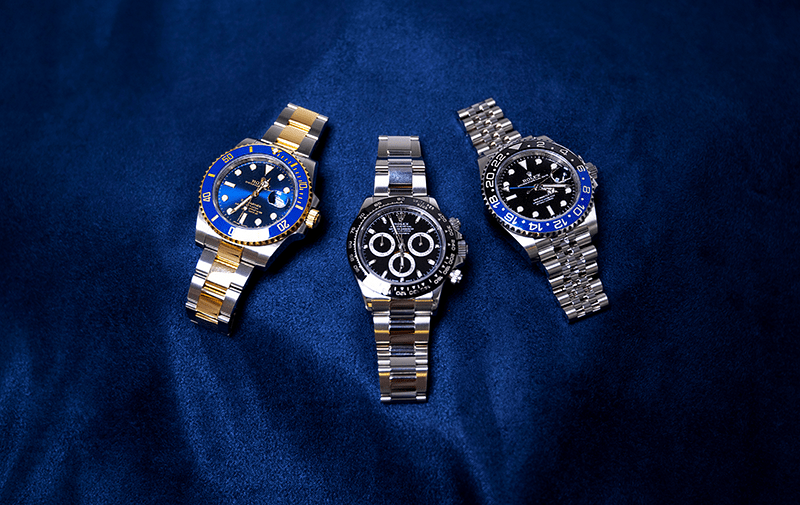
Diamond Banc’s evaluators are not retail sales consultants working from a styling script. They’re specialists in luxury watches and fine jewelry who price against current secondary-market data for the specific reference or piece in front of them, not a generic category estimate. For a Rolex, that means the valuation accounts for the model, reference number, condition, and what that configuration is actually trading for right now, delivered through a transparent process where you see how the number was reached.
Because Diamond Banc operates local offices alongside nationwide service and secure mail-in shipping, you can get that evaluation from a physical appraiser near you or start the process remotely and still have the piece inspected in person before any offer becomes final. If you decide to sell a Rolex outright, use it for a Rolex-secured loan, or place it through the Rolex Seller’s Agent consignment program, the valuation that led you there is the same one, not a lowball opening offer meant to be negotiated up.
Appraised Value, Retail Price, and What You Can Actually Get
It helps to keep three numbers separate in your head:
- Retail price: what a store charges for a comparable new or pre-owned piece, including their overhead and profit.
- Appraised value: a snapshot of market value as of a specific date, typically used for insurance replacement purposes, and understood by professional appraisers to change over time rather than hold steady.
- Sale or loan collateral value: what a buyer or lender will actually pay for your specific item today, based on current secondary-market demand, condition, and documentation.
None of these numbers is “wrong” if it’s being used for its intended purpose. The mistake is using an insurance-style appraisal as your benchmark for what a sale or a loan should pay out, then feeling shorted when the offer comes in lower. They were never answering the same question.
Can an Online Opinion Be Trusted Without a Physical Inspection?
For something like a Rolex, condition details that materially affect value, such as service history, bracelet stretch, bezel or crystal wear, and whether the movement has had non-genuine parts installed, are difficult to assess from photos alone. An online consultation can reasonably narrow a range or flag obvious red flags, but a number presented as final without the piece in hand should be treated as preliminary. Diamond Banc’s remote process is built around this reality: an initial conversation and photos can get you a starting estimate, but the firm figure for a sale or loan is confirmed once a human specialist has physically examined the watch, either in an office or after it arrives through secure mail-in shipping.
Four Questions That Expose a Conflict of Interest
Before you accept any online jewelry valuation, whether it comes from a retailer, a lender, or an independent appraiser, ask these directly:
- Do you also sell jewelry or watches, and could this valuation benefit that side of your business?
- Is your fee flat, or does it change based on the value you assign?
- What organization issued your credentials, and can I verify your membership independently?
- Will I receive this valuation in writing, with the date and basis for the number?
Independent appraisal standards require the appraiser to certify in writing that they have no bias toward the property or either party in the transaction. A store appraiser who also sells jewelry, by definition, has an interest in the outcome. That doesn’t make every retail consultation dishonest, but it’s exactly the situation professional standards were written to flag, and it’s why the questions above matter more than the number itself on a first conversation.
If you’re weighing whether to sell outright or keep ownership while accessing cash, a transparent, model-specific valuation is the starting point either way. For more on how an online process should actually work from first contact to funded offer, see our notes on selling jewelry online the right way, and compare that against what a retail “consultant” appointment is actually built to do before you decide where to send your piece next.
Like what you’re reading?
Add us in Google — more like this is on the wayRelated Posts
 Instagram
 Facebook
 Tiktok
 YouTube