On October 22, 2026, Hodinkee published “Ten Watches I Actually Care About This Fall Auction Season,” its editors’ preview of the pieces they expect to define the next few weeks of bidding in Geneva. Fall auction season is when the watch world sets its reference points for the year, and those headline results get repeated everywhere, often with the unspoken suggestion that if a rare vintage piece just sold for a record price, every Rolex got a little more valuable overnight. That’s not how it works, and understanding why is the difference between an informed decision about your watch and a disappointing one.
What’s Actually Selling This Fall
The marquee event of fall auction season is Phillips’ Geneva Watch Auction XXIV, running November 7-8, 2026 at the Hotel President Geneva with roughly 220 lots on offer. The week is unusually compressed this year: the Grand Prix d’Horlogerie de Genève falls on November 7, the same day Phillips and Antiquorum open their own sales, with Sotheby’s live sale following on November 8 and Christie’s closing the week on November 9. That concentration of major houses in a single week is itself a signal of how much inventory the trade wants to move while collector attention is highest.
The lot drawing the most attention inside the Phillips sale is Part I of the Pucci Papaleo Collection, sixteen vintage Rolex chronographs assembled by one collector over more than three decades, tracing the Rolex chronograph from the 1930s through the 1970s. The standout is a circa-1970 Ref. 6264 “Paul Newman Lemon” Daytona in 14k yellow gold, believed to be the only known gold example from its serial range, carrying an estimate in excess of CHF 1 million. Three other lots from the same collection, an early Ref. 3525 “Bariletto,” a pink-gold Ref. 3335, and a steel Ref. 6239 “Paul Newman Musketeer,” are each estimated between CHF 250,000 and 500,000.
Just ahead of Geneva, Phillips and Rolex staged a one-off charity auction in London on September 28, 2026, where four unique gem-set Cosmograph Daytonas, one per season, sold for a combined £37.3 million with no buyer’s premium. The lowest of the four still brought £6.8 million. And the fall calendar was already busy before any of this: Phillips’ New York Sessions Fall 2026 online sale closed October 9 with all 88 lots sold, led by a steel Voutilainen that brought $1,016,000 against a $120,000-240,000 estimate. For context, Phillips’ spring 2026 Geneva sale, The Geneva Watch Auction XXIII, had already totaled CHF 74,846,995 from 224 sold lots in May, a 99.6% sell-through rate with 43 world auction records, topped by a Patek Philippe Ref. 2523 “South America” world-timer at CHF 7,961,000.
Why Rare Vintage Records Don’t Move an Ordinary Rolex’s Price
Every one of those headline numbers shares something in common: they belong to pieces with documented history, rarity within a known serial range, or a one-of-a-kind story attached to them. A gold Daytona that’s the only known example from its production run, or a watch made specifically as a unique charity piece, is being bid on as an object with no substitute. That’s a completely different market than the one your Submariner, GMT-Master or steel Daytona trades in, where thousands of comparable examples exist and pricing follows supply, demand and condition rather than provenance.
This is the gap that trips people up every auction season. A record price for a vintage reference doesn’t lift the value of a modern production model of the same name, and it doesn’t even reliably lift other vintage examples of that reference unless they share the same rarity. If you own a standard steel sports Rolex, the number that actually matters to you isn’t the Papaleo estimate, it’s what’s happening in the broader secondary market where your specific reference, year and condition are traded daily.
What a Steel Sports Rolex Is Actually Worth Right Now
That broader market has been moving, just not at auction-house speed. A Morgan Stanley research report citing the WatchCharts Overall Market index found pre-owned luxury watch prices rose 1.2% in the third quarter of 2026, the fifth straight quarter of gains above 1%, with 28 of 35 tracked brands posting increases. The index is up 8.3% year-over-year but still roughly 29% below its April 2022 peak.
Rolex specifically has cooled. Rolex prices rose just 0.5% in Q3 2026, the smallest quarterly gain in seven quarters, as secondary market inventory hit a record level. That combination, rising supply and slowing price growth, is worth sitting with before you assume a strong fall auction means a strong moment to sell. At the same time, Rolex remains one of only three brands still trading above retail on the secondary market on average, at a 10.3% premium, behind Patek Philippe’s 16.3% and ahead of Audemars Piguet’s 5.9%. In plain terms: an ordinary steel sports Rolex is still worth more on the resale market than its retail price, but the pace of appreciation has slowed, and record inventory means that premium isn’t guaranteed to widen from here.
Getting a precise answer for your specific reference means looking past the overall index to model-level data, which is exactly why reference-specific guidance like our best place to sell a Rolex overview exists: a Submariner, a two-tone Datejust and a steel Daytona are not moving at the same rate even within the same brand.
What This Means If You’re Selling or Using a Rolex as Collateral
If you’re deciding whether to sell your Rolex outright or use it as collateral for a loan, the fall auction headlines aren’t a reliable guide either way. A lender that issues a Rolex-secured loan is pricing your specific reference against current secondary-market data, not against what a one-of-a-kind gold Daytona brought in Geneva. That’s also why reference-specific valuation matters more than a general sense that “watch prices are up”: the Forbes-reported 0.5% Rolex gain last quarter is an average across the brand, and your particular model, bracelet configuration, box and papers situation, and condition will move the actual number up or down from there.
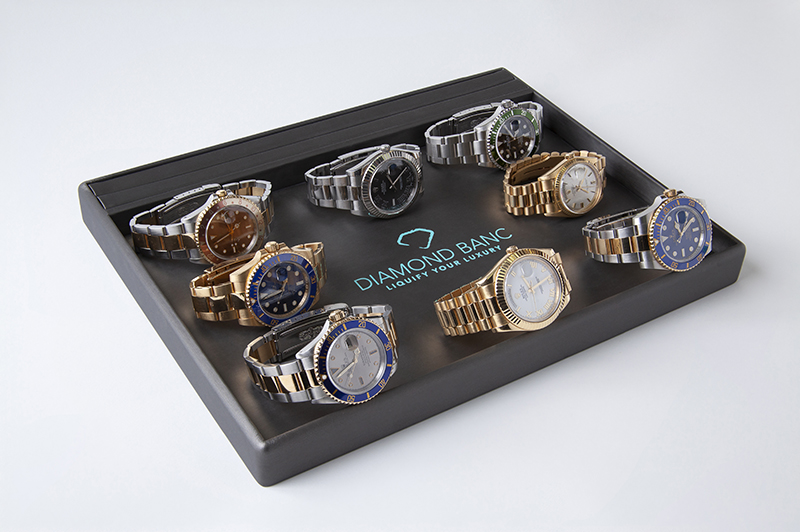
Diamond Banc values Rolex watches against current secondary-market pricing rather than headline auction results, with model and reference-specific valuation handled by specialists who track this market daily rather than general pawn-shop appraisal. If you want to turn your Rolex into cash outright, you can sell your Rolex through a transparent valuation process at a physical office or by secure mail-in shipping. If you’d rather keep the watch and free up cash against it, a Rolex-secured loan lets you do that without putting the watch through the unpredictability of an auction room. Either way, the number you’re offered should reflect what collectors are actually paying for your exact reference this season, not what a unique gold chronograph fetched in a sale designed around its own story.
Questions Worth Asking Before You Act
- Is this a rare reference or a common one? If your Rolex is a standard production model with no unusual dial, case metal or documented history, auction records for rare siblings of the same family line don’t apply to it.
- Is the market still rising, or just less slow than it was? A 0.5% quarterly gain for Rolex is still a gain, but it’s the smallest in seven quarters, and record secondary inventory means sellers have more competition than they did a year ago.
- Does my watch still carry a premium over retail? Rolex’s average 10.3% secondary-market premium is real but model-dependent: some references sell near retail while others, particularly discontinued or low-production steel sports models, carry a much wider gap.
- Am I pricing against the right comparable? A vintage Paul Newman Daytona and a current-production Daytona share a name and little else in terms of what drives their price.
For a deeper look at how individual auction results have moved specific references in the past, our post on watch values from auction news walks through how to separate a headline from a trend. And if you’re curious how a single extraordinary auction outcome can reshape an entire collecting category without changing what an ordinary comparable piece is worth, the story behind a watch recovered from the Titanic auction is a useful parallel from outside the Rolex world.
The Bottom Line for Fall 2026
This fall’s auction season, from the Pucci Papaleo chronographs to the London charity Daytonas to Phillips’ Geneva week in early November, is producing real records, but they’re records for pieces built on rarity and provenance, not a referendum on every Rolex in circulation. The more useful number for most owners is the quieter one: a 0.5% quarterly gain for Rolex overall, a still-meaningful premium over retail, and record inventory that argues for getting a precise, current valuation rather than assuming a rising tide. If you own a steel sports Rolex and want to know what it’s actually worth this week, model-specific pricing from a specialist, not an auction headline, is the number to act on, whether you decide to sell it or use it as collateral for the cash you need now.
Like what you’re reading?
Add us in Google — more like this is on the wayRelated Posts

 Instagram
 Facebook
 Tiktok
 YouTube