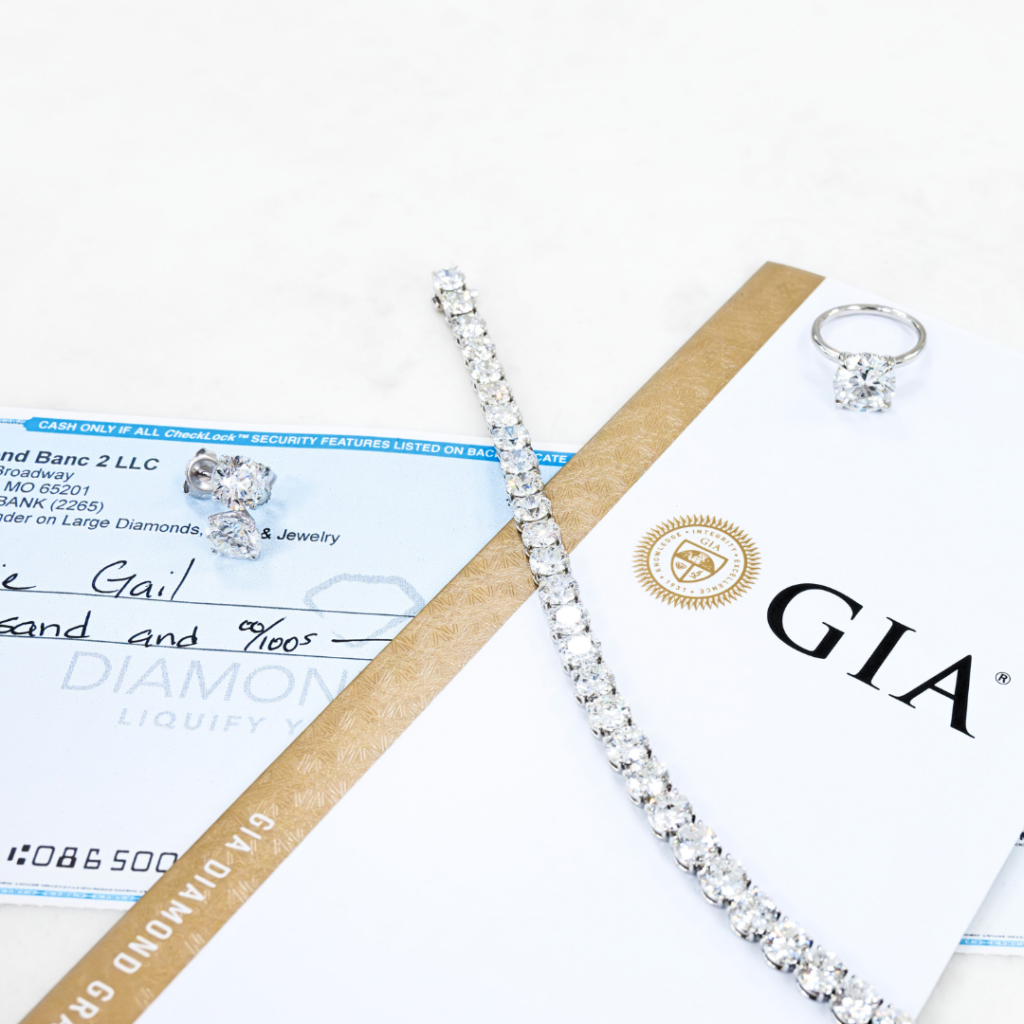
If you’ve been researching what your diamond is worth, you’ve probably run into a number called the diamond list price, often referenced as “the Rapaport price” or the “Rap list.” It’s the figure dealers quote to each other, the number your jeweler might mention when explaining a markdown, and the one most likely to leave you confused about what your stone will actually bring. A diamond’s list price is not a sale price, not an appraisal value, and not a guarantee from GIA. Here’s what it actually is, how to read it, and which number matters when you’re ready to sell a diamond or use one as collateral for a loan.
What Is a Diamond’s List Price, Really?
The most widely used diamond price list in the trade is published by Rapaport. The Rapaport Price List is organized as a grid: shape across one axis, carat-weight bracket down another, with color graded D through M and clarity graded Internally Flawless through I3 filling in the cells. Each cell shows a per-carat price in hundreds of U.S. dollars. The list is republished every Thursday at 11:59pm Eastern, and it only covers round and pear shapes from roughly 0.01 to 10.99 carats; there’s no list at all for fancy-colored diamonds.
The important part, stated plainly in Rapaport’s own documentation, is that this is a benchmark of high cash asking prices, not a record of what stones actually sold for. There’s no memo, no returns, no payment terms baked into that number. It’s a theoretical ceiling that assumes a cash deal for a well-cut, accurately graded stone.
Reading the Grid: What a Number Like “86” Actually Means
Grid cells are quoted in hundreds of dollars per carat, which trips people up the first time they see one. If a 1.00-carat stone lands in a grid cell showing “86,” that means $8,600 per carat for that particular shape, color, and clarity combination. The math is simple: 86 x 100 x 1.00 carat = $8,600. That’s the implied list price for that single stone, before any real-world discount gets applied. For a 2.00-carat stone in the same cell, you’d multiply by 2 carats instead of 1, not by the cell number twice, since the number itself represents a fixed per-carat rate within that bracket. Our diamond calculator walks through this kind of math using your own stone’s specs if you want to see where it lands.
Why a Dealer Quotes “Rap Minus 20” Instead of a Dollar Figure
This is the part that confuses most sellers: why would anyone quote a discount percentage instead of just naming a price? Because the discount, not the raw list number, is the stable reference point. Rapaport’s own trading-platform data illustrates the gap. For a 3.00 to 3.99 carat D color, Internally Flawless, excellent-cut diamond, the average actual trade price ran about 19% below the published list, and the best listed asking price in that category was 38% below list. Dealers talk in “Rap minus” terms because the underlying list number moves every week, but the typical discount off list for a given quality and size tends to hold steadier, at least for a while. When someone tells you they’re buying “at Rap minus 20,” they’re telling you where real transactions are clustering for stones like yours, not making up a number.
List Price, a GIA Report, and an Insurance Appraisal Are Three Different Numbers
A GIA grading report documents the 4Cs, cut, color, clarity, and carat weight, under a standardized, repeatable system. It’s a quality document, not a price guarantee. GIA issues full Diamond Grading Reports only for loose natural diamonds of 0.15 carats or more, and only round brilliant diamonds in the D-to-Z range receive an official GIA cut grade. None of that tells you what cash you’ll receive; it tells you what you have.
An insurance appraisal is a different number entirely, and it’s where a lot of sellers get an unpleasant surprise. That appraisal figure is typically written at replacement retail value, the amount it would cost to buy an equivalent new piece at a retail jeweler, which is the number your insurance company needs to set a policy premium. It was never meant to represent what a buyer will pay in cash, and treating it as your expected payout is one of the most common reasons sellers feel shortchanged by a real offer.
This is also where grading claims matter legally. Federal rule under 16 CFR Part 23 requires that any representation about a diamond’s grade disclose which grading system produced it, because a reasonable buyer is otherwise presumed to assume all grades mean the same thing. A “VS1” from an unnamed in-house lab and a VS1 on a GIA report are not interchangeable, even though they read the same on paper.
Why Two Diamonds of the Same Carat Weight Get Different Offers
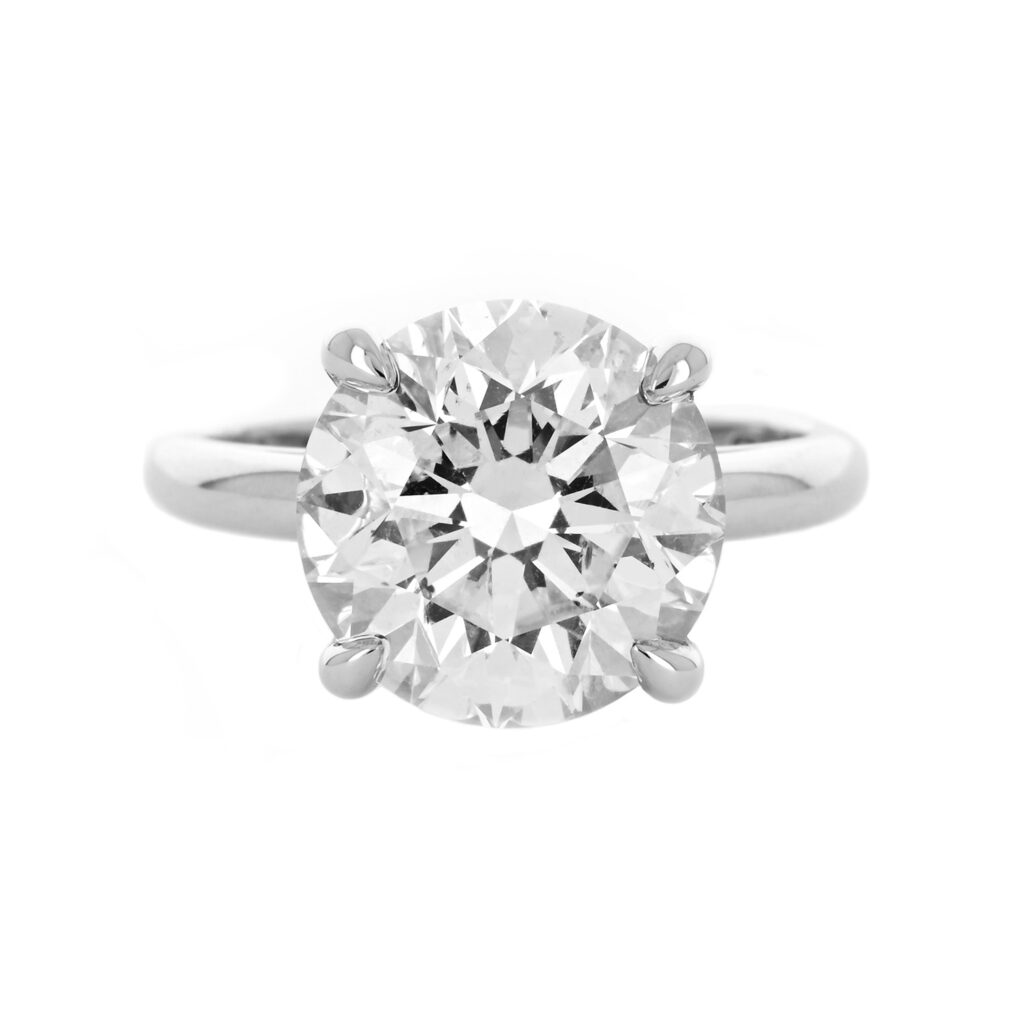
Carat weight is the one number everyone fixates on, partly because it’s unambiguous: a carat is a legally defined unit equal to 200 milligrams, with a point equal to one one-hundredth of a carat. But the list price grid assumes a well-cut stone with no strong or medium fluorescence, and real stones vary widely on both counts. Two 1.50-carat diamonds with identical color and clarity grades can land in meaningfully different offers because one has an ideal cut that returns more light and the other is cut deep or shallow to preserve carat weight at the expense of brilliance. Fluorescence, certification source, and even how recently the stone was graded can each shift where it actually trades relative to the grid, before anyone even discusses a discount.
Are Diamond Prices Rising or Falling Right Now?
Natural diamond prices have been in a multi-year decline since peaking around 2022, and as of 2026 the market is still working through that softness, shaped by both economic pressure on luxury spending and competition from lab-grown alternatives. Because the published grid updates weekly, there’s no single “current” number worth quoting here; what matters practically is that comparing today’s offer to a list price or appraisal figure from a few years ago will almost always overstate what the market will pay now. If you’re trying to gauge where things stand, treat any number you saw more than a few months ago as outdated.
What About a Rolex “Price List”? A Different Kind of List Entirely
If you landed here searching for a Rolex price list, a Day-Date price list, a Daytona panda list price, or current pricing for the Milgauss, Explorer II, or 18k gold ladies’ models, you’re looking at a completely different concept. Rolex publishes manufacturer-suggested retail pricing for current production models, along with separate service pricing for maintenance and repairs. That’s a brand’s retail price sheet, not a wholesale commodity benchmark like the diamond grid described above, and the two shouldn’t be confused when you’re trying to figure out what either item is actually worth to a buyer. For current Rolex retail reference pricing by model, see our Rolex Price List 2026 guide.
What This Means When You’re Selling a Diamond or Using It as Collateral
Once you understand that list price is an asking-price benchmark, an appraisal is a retail replacement estimate, and your actual offer depends on cut quality, fluorescence, and certification, the practical question becomes: who’s actually looking at your stone’s specifics rather than just its carat weight? Working with experienced diamond buyers who evaluate the 4Cs and current secondary-market pricing directly, rather than quoting off a generic retail number, is the difference between a realistic offer and a disappointing one. Diamond Banc’s specialists walk through that process with you, explaining how your specific stone compares to current market activity, whether you’re ready to sell or exploring a jewelry loan secured by the piece instead.
If you want a sense of where your stone stands before you commit to anything, start with a straightforward valuation conversation rather than anchoring on an old appraisal number. You can see what your diamond is worth through a transparent process, and if you want to understand your existing paperwork first, our guide to understanding diamond grading reports explains what each section of a GIA report does and doesn’t tell you about value. Diamond Banc works with clients through local offices and nationwide via secure mail-in service, so you’re not limited to whoever happens to be closest when you’re ready to make a decision.
Like what you’re reading?
Add us in Google — more like this is on the wayRelated Posts


 Instagram
 Facebook
 Tiktok
 YouTube