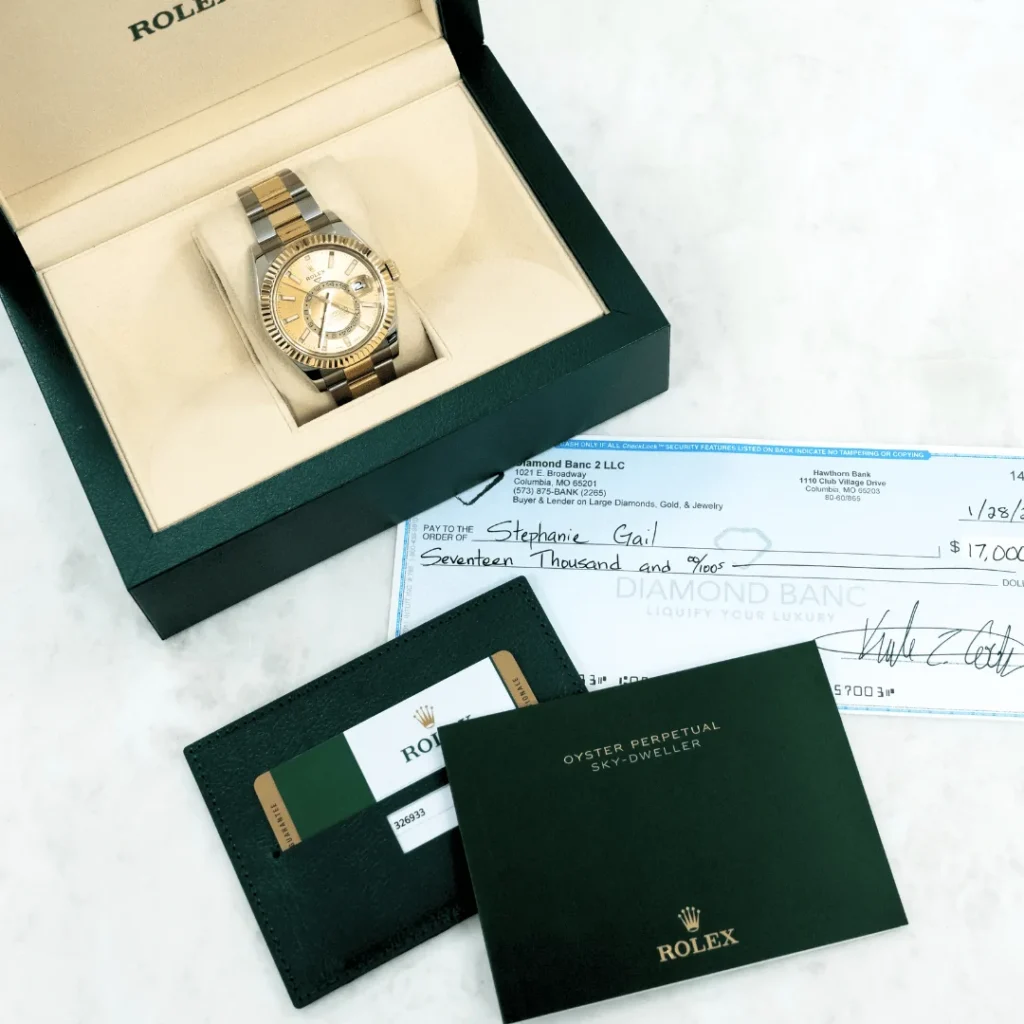
When you search for “watch appraisers near me,” what you actually need is someone who can look at your Rolex, tell you what it genuinely is, and put a defensible number on it, one that holds up whether you’re insuring it, selling it, or using it to secure a loan. That number depends entirely on who’s doing the looking. A rushed glance at a serial number is not the same process as a trained appraiser cross-checking movement, dial, case, and paperwork against each other. Here’s what actually happens during a real watch appraisal, what credentials are worth checking for, and why the same Rolex can walk out of two different offices with two very different figures attached to it.
What a Watch Appraiser Actually Does
A watch appraiser’s job has two parts that often get blurred together: authentication (is this watch what it claims to be, and is it all original?) and valuation (what is it worth, and worth for what purpose?). Authentication comes first. An appraiser who skips straight to a number without verifying the watch is just guessing with more confidence than the guess deserves.
For a Rolex specifically, that means examining the case and bracelet for consistent wear patterns, checking that the movement matches the reference number, confirming the dial printing and lume match the production era, and comparing everything against any papers or box the owner brings in. An appraiser who specializes in luxury watches will also know which references were produced in which years, which bracelet codes belong with which case styles, and what a factory-correct dial should look like under loupe magnification, details a general pawn appraiser or a jewelry-only appraiser typically hasn’t trained for.
Credentials That Matter and How to Verify Them
There is no government license required to call yourself a watch or jewelry appraiser in the United States. Anyone can print business cards that say “certified appraiser.” Credibility comes instead from voluntary membership in recognized appraisal organizations and demonstrated compliance with industry standards, not from a government seal.
The standard most of these organizations build around is USPAP (the Uniform Standards of Professional Appraisal Practice), which is updated every two years by the Appraisal Standards Board. It’s worth knowing the exact wording here: an individual appraiser can be “USPAP compliant,” but technically only an appraisal organization can certify a member as meeting its own credential. If someone tells you they’re personally “USPAP certified,” that’s a sign they don’t fully understand the standard they’re citing.
When you’re vetting a jewelry appraiser’s certifications for a pre-owned luxury watch, ask which organization issued their credential and what it required. At the International Society of Appraisers, reaching Accredited Member status requires coursework in appraisal theory and report-writing, USPAP training, at least three years of market-related experience, and 700 documented appraisal hours, followed by a peer-reviewed sample report. Other paths, through the American Society of Appraisers or similar bodies, require comparable years of full-time experience plus ongoing continuing education to keep the credential current. None of this is legally required to open an appraisal business, which is exactly why asking about it matters.
There’s a second thing worth checking beyond credentials: independence. An appraisal is only as useful as the appraiser’s incentive to get it right. If the person valuing your watch also profits from selling you a replacement, financing, or a competing piece, their number carries less weight for comparison purposes than one from an appraiser with no stake in what you decide to do next.
How a Rolex Gets Authenticated Before It’s Valued
Serial numbers are where most people assume authentication starts and ends, but a skilled counterfeiter can engrave a real serial number onto a fake watch, so an appraiser who relies on the serial alone is making a mistake. On Rolex models made before the engraved rehaut (the inner bezel ring) became standard, around 2005 to 2008, the serial sits between the lugs at six o’clock and requires removing the bracelet to inspect closely. On newer watches, Rolex switched to randomized alphanumeric serials that carry no date information by themselves, which means the accompanying papers matter more than ever for pinning down a watch’s history.
This is also where mismatched paperwork becomes a real risk. Genuine Rolex papers from one watch are sometimes paired with a different, unrelated watch to make it look more complete and more valuable than it is. A proper appraisal requires the serial number on the papers to match the engraved serial on the watch exactly; any discrepancy is treated as a deal-breaking red flag, not a minor discrepancy to be explained away. An appraiser who specializes in Rolex will also check whether the watch has ever been serviced outside an authorized channel, because Rolex’s own guarantee terms state that service work performed by anyone other than an Official Rolex Retailer or Service Center voids the manufacturer guarantee, even when the repair work itself was done competently. That status gets noted on a thorough appraisal because it affects how a buyer or lender treats the watch going forward.
If you want a closer look at the physical checks involved, Diamond Banc’s guide on how to authenticate a Rolex watch walks through the process step by step.
Why Two Appraisals of the Same Rolex Can Differ by Thousands
This is usually the most confusing part for owners: two appraisers look at the identical watch and come back with numbers thousands of dollars apart. In almost every case, they weren’t actually appraising the same thing, they were answering different questions.
Appraisal reports typically use one of several distinct value types, and conflating them is where most of the confusion starts:
- Retail Replacement Value is the figure used for insurance. It’s defined as the highest price a consumer would pay to replace the item with one of like kind and quality at retail, and it’s almost always the highest number on any appraisal report. It is explicitly not what you’d receive if you sold the watch, it’s what it would cost to buy a comparable one new or at retail.
- Fair Market Value reflects a sale between a willing, uncompelled buyer and seller, neither one under pressure and both reasonably informed. It’s the standard used for estate and charitable donation appraisals and typically lands well below replacement value.
- Forced Liquidation Value assumes the item has to be sold immediately, with no time to find the right buyer, and is often worth little more than scrap or melt value for the metal content alone.
- Loan collateral value is its own, less commonly discussed category: a lender’s assessment of what the watch could reliably be converted to if needed, which is why it doesn’t match an insurance figure and shouldn’t be expected to.
If you ask one appraiser for a number “for insurance” and another “for a quick sale,” you haven’t gotten two opinions on the same question, you’ve gotten accurate answers to two different questions. That gap is normal, not a sign that one appraiser is wrong.
Inflating any of these numbers beyond a fair, defensible figure isn’t just bad practice, it runs against FTC guidance on jewelry valuation, which treats intentionally over-valuing an appraisal as deceptive, particularly when that inflated number gets used to make a sale look like a bargain by comparison.
Which Value Matters for a Loan vs. an Insurance Policy vs. a Sale
Once you know these categories exist, the practical question becomes: which one applies to you right now?
If you’re insuring a Rolex, you want Retail Replacement Value, because that’s what it would cost to replace it if it were lost or stolen. If you’re donating a watch or settling an estate, Fair Market Value is the standard appraisers and the IRS expect. If you’re bringing a watch in for a loan or a sale, the relevant figure is based on current secondary-market demand for that specific reference, not retail replacement cost and not a forced liquidation floor. A specialist evaluating a Rolex for a loan or purchase is pricing it against what collectors and the resale market are actually paying for that model right now, with its specific condition, box, and papers status factored in. For a deeper breakdown of how reference number, condition, and documentation move that secondary-market figure, see Diamond Banc’s guide to understanding Rolex watch value.
Hidden Risks That Can Lower Your Offer
A few things catch owners off guard when they bring a Rolex in for appraisal:
- Missing box and papers. A complete set (watch, original box, warranty card, and purchase documentation) supports a higher valuation than a watch on its own, since it’s easier to authenticate and more desirable to the next buyer.
- Independent servicing. Because Rolex voids its manufacturer guarantee when service work is done outside its authorized network, a watch with aftermarket parts or unofficial repair history may be valued more conservatively, even if it runs perfectly.
- Service intervals. Rolex recommends servicing roughly every 10 years depending on the model and how the watch is worn; an appraiser will note whether a watch is overdue, since that affects both condition and buyer confidence.
- Mismatched or altered papers. As covered above, this is treated as disqualifying rather than a minor deduction, because it raises doubts about the watch’s entire history.
None of these make a watch worthless, but they do change where it lands within its reference’s typical value range, and a qualified appraiser will tell you exactly which factor is doing the work, rather than giving you a single number with no explanation attached.
Finding a Qualified Appraiser Near You
When you search for a Rolex appraiser near you, look past the word “certified” on a sign and ask three questions directly: Which organization issued your credential, and what did it require? Do you specialize in luxury watches specifically, or jewelry generally? And can you provide written documentation I can use for insurance or resale purposes?
Diamond Banc’s specialists focus specifically on Rolex and other luxury watches rather than general pawn-shop inventory, using model and reference-specific valuation built on current secondary-market pricing, not a generic jewelry price guide. That expertise matters whether you’re deciding to sell a Rolex outright or use it to secure a Rolex loan instead. With physical offices across the country and secure mail-in shipping for anyone who isn’t near one, you can get a transparent, documented valuation without guessing which number on a report actually applies to your situation. For a closer look at how documentation and condition move the final number, Diamond Banc’s article on how to sell a Rolex watch is a useful next read before you bring your watch in.
Like what you’re reading?
Add us in Google — more like this is on the wayRelated Posts

 Instagram
 Facebook
 Tiktok
 YouTube