Selling a Rolex is a high-value decision. The safest process starts with identifying the watch, gathering the information that supports its evaluation, choosing a buyer carefully, and understanding what happens before an offer becomes final.
This guide explains how to sell a Rolex watch, what can affect its value, how to prepare it for evaluation, and how to compare private, consignment, and professional-buyer options. It is designed to help you make an informed choice without assuming that every watch, accessory set, or selling route produces the same result.
Before you send a valuable watch anywhere, confirm who will receive it, how it will be protected in transit, how the evaluation works, and what happens if you decide not to accept an offer. A clear process is as important as the headline estimate.
Start a Rolex evaluation with Diamond Banc
Quick answer: How to sell a Rolex watch
A practical selling process usually includes these five steps:
- Identify the watch. Record the model, reference number, approximate age, and any visible serial information you can find without disassembling the watch.
- Gather the details and accessories. Locate the box, warranty card, service records, extra links, receipts, and other items that came with the watch, if available.
- Compare selling routes. Consider the convenience, security, costs, timing, and level of expert support offered by each option.
- Request a preliminary evaluation. Share clear photographs and accurate details so a buyer can review the initial information.
- Complete the physical evaluation and review the final offer. Authentication, condition review, originality checks, and current market data help determine the final terms.
These steps are not a substitute for a physical review. They give you a way to organize the information a buyer needs and to compare the level of certainty offered at each stage. An online estimate is an initial indication, not automatically a final purchase offer.
What affects the value of a Rolex?
A Rolex does not have one universal resale value. A professional evaluation considers the specific watch and its current market context rather than relying on the retail price alone. The same model family can have different values depending on its reference, configuration, condition, originality, accessories, and service history.
Model and reference
The model and reference number identify the watch’s configuration. Buyers may also consider the production period, dial, bezel, metal, bracelet, and whether the reference is currently in demand. If you are unsure where to find identifying numbers, do not remove parts or force the bracelet. Share clear photographs and ask the evaluator what additional information is needed.
Small configuration details can matter, so avoid describing a watch only by its broad model name. If you know the reference or can photograph the markings safely, include that information. If you are not sure whether a number is a reference or serial number, say so rather than guessing.
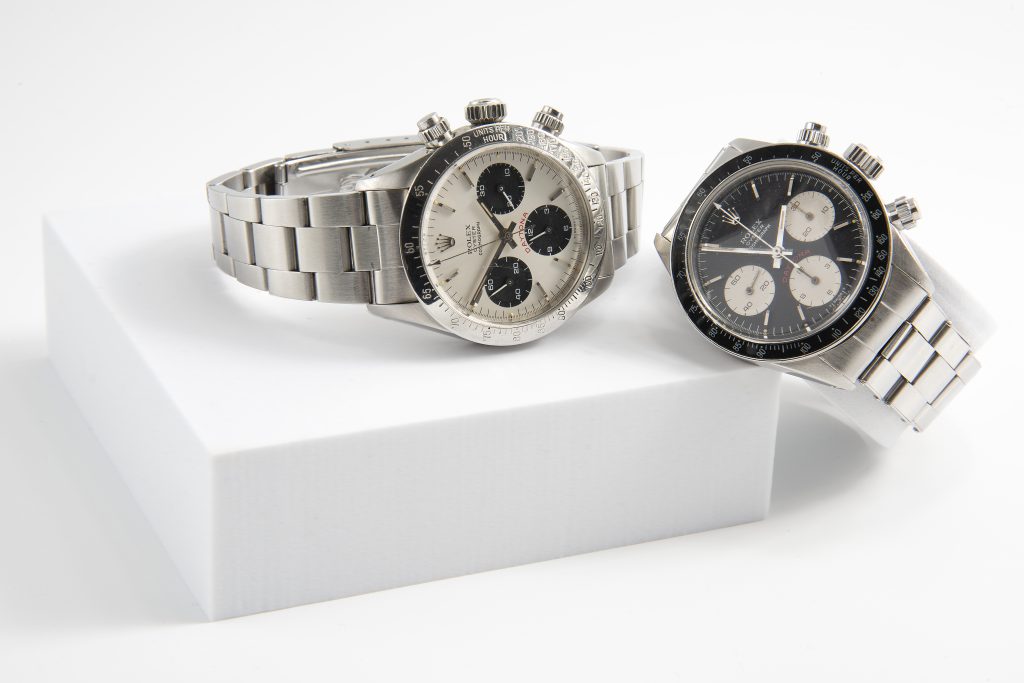
For high-demand models such as the Rolex Daytona, reference and dial variations can meaningfully affect value, so identifying the exact configuration — including dial color, bezel material, and bracelet type — is especially important before requesting an evaluation.
Condition and originality
Scratches, dents, polishing, bracelet stretch, crystal condition, function, and water-resistance history can affect an evaluation. Original parts and a configuration that matches the reference are also important. Aftermarket dials, bezels, bracelets, or other modifications may change buyer interest and should be disclosed.
Do not try to improve the watch immediately before an evaluation by opening the case, polishing the case or bracelet, replacing parts, or making an unapproved repair. A buyer needs an accurate picture of the watch as it is. Clear disclosure helps the evaluator interpret photographs and reduces surprises during physical review.
Box, papers, and full links
Original accessories can help document the watch and give a buyer a clearer picture of its completeness. They do not guarantee a particular price, and their effect varies by model and condition. If you do not have the box or papers, you can still ask for an evaluation. Be accurate about what is included.
Service history and market demand
Service records can provide useful context about the watch’s maintenance. Current market demand also changes by model and reference. A professional buyer may use current market data alongside the watch’s physical condition and originality when preparing an offer. A recent service is not automatically a reason to expect a particular price, and an older service history does not by itself determine whether a watch can be evaluated.
For a deeper explanation of authenticity checks, see how to authenticate a Rolex watch.
How to prepare your Rolex for sale
Preparation should make the evaluation easier, not change the watch before an expert has reviewed it. Start by creating a simple record of what you own and what you know. Keep the watch, accessories, and paperwork together, but do not send anything until you understand the buyer’s instructions.
- Photograph the front, back, sides, clasp, bracelet, dial, and any visible identifying marks in clear light.
- Write down the model or reference number and describe any known service, repair, replacement part, or modification.
- Gather the original box, warranty card, service records, extra links, receipts, and other accessories you have.
- Keep the watch in its current condition. Avoid polishing, opening, or modifying it just before an evaluation.
- Store the watch and accessories securely until you select a buyer and receive shipping or appointment instructions.
- Ask how the package will be insured, tracked, received, and returned if you do not accept the offer.
Use clear, recent photographs and answer questions consistently. If the watch has been exposed to water, repaired, polished, or fitted with a replacement component, include that information. Accurate details help a buyer give a more useful preliminary evaluation and help you compare that estimate with the physical review later.
Selling privately, through consignment, or to a professional buyer
The best route depends on your priorities. Compare the likely effort, timing, transaction security, fees, and control over the final outcome before choosing. A higher advertised price is not the same as a completed transaction, so consider the work and risk attached to reaching that price.
Private marketplace sale
A private sale may give you control over the listing and buyer conversations, but it also requires you to create the listing, answer questions, screen buyers, manage shipping, and protect yourself from payment fraud or chargebacks. A high-value watch should never be shipped or handed over without a secure, verified transaction plan.
You also need to decide how to handle authenticity questions, returns, disputes, and the buyer’s ability to complete payment. Meetups, shipping, and payment arrangements each create different risks. If you choose this route, document the watch’s condition and the agreed transaction terms before releasing it.
Consignment
Consignment can reduce the seller’s day-to-day work because the business markets the watch and manages the sale. The tradeoff is that timing depends on finding a buyer, and the agreement should be reviewed carefully so you understand fees, control, insurance, and the expected payment timeline.
Before signing, ask who sets the asking price, whether you can approve a reduction, how the watch is stored, what happens if the agreement ends, and when you receive proceeds after a completed sale. A written agreement should make the responsibilities of both sides clear.
Direct sale to a professional buyer
A professional buyer can provide a structured evaluation and a direct purchase offer. Ask how the watch will be shipped or received, who performs the authentication, what information supports the offer, what happens if you decline, and when payment is available after acceptance. Confirm which terms are preliminary and which apply only after physical review.
What happens during a professional Rolex evaluation?
The first estimate is based on the details and photographs you submit. A physical evaluation is needed to verify the watch and confirm its condition, originality, accessories, and other details that affect the final offer. The initial estimate should therefore be treated as a starting point for a conversation, not as a guaranteed result.
At Diamond Banc, the public Rolex selling process describes an online and mail-in route. After a seller submits watch details and photographs, the buyer may arrange fully insured shipping for an expert evaluation. The watch is reviewed against the submitted information and current market data before a final purchase offer is made.
Purchase offers are preliminary and assume the details provided are accurate, the watch is in premium condition, and it is accompanied by full links and all factory accessories. Prices are subject to change, and Diamond Banc is under no obligation to purchase your watch. If you decline the offer, your watch is returned at no cost under the stated offer conditions.
This distinction between a preliminary review and a final offer protects both sides. The evaluator can compare the physical watch with the information submitted, and the seller can review the terms before deciding. If anything about the process is unclear, ask for an explanation before shipping the watch.
How Diamond Banc’s Rolex selling process works
- Submit watch details and clear photographs online to begin the evaluation.
- Review the preliminary estimate and decide whether you want to continue.
- If you proceed by mail, follow the insured shipping instructions provided for your watch.
- Allow the buyer to verify the model, condition, originality, accessories, and other details.
- Review the final purchase offer. If you accept, Diamond Banc states that accepted offers are funded within 24 hours. If you decline, the watch is returned at no cost under the stated offer conditions.
This process lets you understand the next step before sending a valuable watch and keeps the decision in your hands. Provide complete information at the start, read the offer conditions, and compare the route with your priorities for security, timing, and control.
Use the Rolex value calculator before you decide
Frequently asked questions
Can I sell a Rolex without the box or papers?
Yes. You can still request an evaluation without the original box or papers. Tell the buyer exactly what you have, including any missing links or records. Accessories may help establish completeness, but they do not guarantee a particular offer. The watch’s identity, condition, originality, and current market context still need to be reviewed.
Should I service or polish my Rolex before selling it?
Do not assume that a new service or polish will increase the offer enough to recover its cost. Disclose the service history and let the evaluator review the watch’s condition and originality before making that decision. Avoid aftermarket changes or unapproved parts before an evaluation. If the watch is not running correctly, describe the issue rather than attempting a last-minute repair.
How long does it take to sell a Rolex?
The timeline depends on the information submitted, shipping or appointment logistics, the physical evaluation, and your decision about the offer. An online estimate is not the same as a final offer. Diamond Banc states that accepted offers are funded within 24 hours, subject to its stated process and conditions.
What information should I provide to start an evaluation?
Provide the model or reference number if known, clear photographs, a description of condition, information about service or modifications, and a list of the box, papers, links, and accessories included. Accurate details help the buyer prepare a more useful preliminary evaluation. Mention anything you do not know so the buyer can tell you what to document next.
When you are ready, start with a careful description of the watch and choose a selling route that matches your priorities for security, timing, and control. A qualified evaluation can help you understand the watch’s market position before you decide whether to accept an offer.
Like what you’re reading?
Add us in Google — more like this is on the wayRelated Posts
 Instagram
 Facebook
 Tiktok
 YouTube