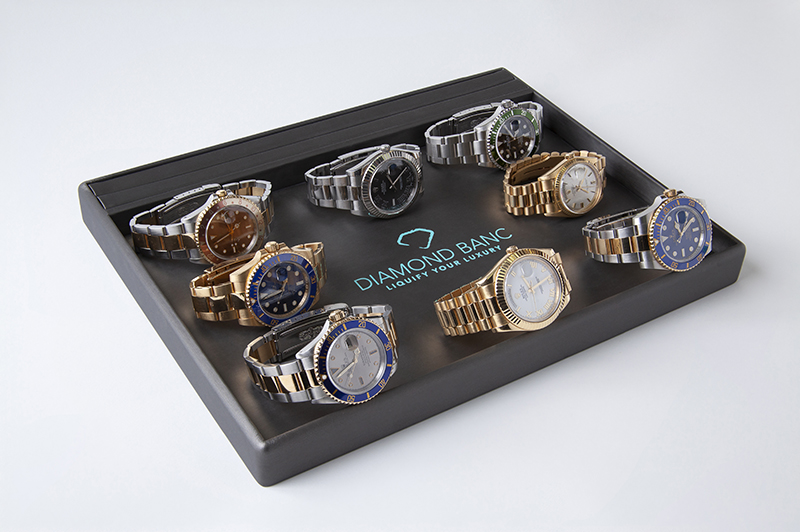
If you own a Rolex, the bracelet it’s on tells you almost as much about the watch as the dial does. The Rolex Jubilee bracelet gets asked about more than any other because it shows up in unexpected places: on modern GMT-Master II references, on vintage Datejusts from the 1950s, and in search results next to watches that never actually wore one. This guide sorts out what the Jubilee bracelet is, how it differs structurally from the Oyster and President, which current Rolex models actually come on it, and what matters for durability and value if you already own one.
What the Jubilee Bracelet Actually Is
Rolex introduced the Jubilee bracelet in 1945 to mark the brand’s 40th anniversary, and it was created specifically for the launch of the Datejust that same year, alongside the fluted bezel that still defines the model. The Jubilee’s signature is its five-piece link: two larger satin-finished outer links flanking three narrower, polished center links. That alternating finish is what gives the bracelet its dressier, more articulated look compared to Rolex’s other bracelets, and on Rolex’s current Datejust page, the Jubilee bracelet is still listed as one of the model’s defining, signature features alongside the date window and Cyclops lens.
The Oyster bracelet came three years later, in 1948, built around a simpler three-piece link and paired with its own Oyster clasp. It was designed for Rolex’s sport and tool watches, and it became the standard bracelet for the Submariner, Explorer, Sea-Dweller, GMT-Master and Daytona as those lines developed. The President bracelet, semi-circular and solid-link, arrived later still and was reserved for the Day-Date and some Datejust references as Rolex’s most formal option.
Jubilee vs Oyster: The Real Structural Difference
The “dressy vs sporty” description is accurate but incomplete. The real difference is in the link count and finish. The Oyster’s three flat, brushed links per row create a stiffer, more utilitarian bracelet that resists scratching and reads as matte from across a room. The Jubilee’s five-piece construction, with its mix of satin and polished surfaces, drapes more fluidly on the wrist and catches light differently, but it also means more moving joints and more polished surface area. That polish shows fingerprints and fine surface scratches more visibly than the Oyster’s brushed finish, so a Jubilee-bracelet watch can look more worn at a glance even with completely normal use. It’s a cosmetic tradeoff, not a flaw, but it’s worth knowing before you assume a bracelet’s condition from photos alone.
Which Rolex Models Actually Come on a Jubilee Bracelet
This is where most of the confusion starts, because the Jubilee bracelet has never been offered across Rolex’s full catalog. In the current lineup it’s concentrated on two families: the Datejust (including the Datejust 41 in configurations like the rhodium dial with diamond markers) and the GMT-Master II. It also appeared on some vintage women’s references decades ago, but outside of those lines, Rolex has not built it.
That matters directly for three of the most-asked questions:
- Submariner “Hulk” (116610LV): No. The Jubilee bracelet has never been offered on the Submariner line, including the Hulk. Every factory Hulk left the case on an Oyster bracelet, so a “Hulk Jubilee” isn’t a Rolex production combination.
- GMT-Master II “Pepsi” (126710BLRO): Yes, since 2018. That reference was the first time Rolex put the Jubilee bracelet on a sport-tool watch rather than a dress model, and it changed how people think about the bracelet entirely.
- GMT-Master II “Batman” (126710BLNR): Yes. Despite being closely associated with the Oyster bracelet, the Batman is also offered on Jubilee, and the two versions are priced and traded differently on the secondary market.
The Daytona, including the “Panda” dial configuration, has not been produced on a Jubilee bracelet; it stays on Oyster. If you’re seeing a “Daytona Panda Jubilee” described anywhere, treat it the same way as a Hulk Jubilee claim: it’s not a factory pairing.
For current secondary-market pricing on the Jubilee-bracelet Pepsi specifically, this live market tracker is a useful reference point since those figures move with demand rather than sitting still.
Clasps: Why Jubilee and Oyster Don’t Match
The clasp a bracelet wears isn’t arbitrary. Rolex’s Oysterlock clasp, used on Professional models, is reinforced with a folding safety catch that has to be deliberately lifted before the clasp can open, which is why it’s standard on Oyster-bracelet sport watches where accidental opening carries more consequence. The Jubilee bracelet typically pairs with a standard fold-over clasp, though Rolex’s concealed Crownclasp, its most formal clasp design, is reserved for the President and Pearlmaster bracelets and only specific Jubilee applications, such as the Datejust 31 and Lady-Datejust. Many modern bracelets, Jubilee included, also include the Easylink comfort extension, a hidden 5mm adjustment built into the clasp that lets you loosen the fit slightly for warm weather without tools. The clasp differences are functional, not cosmetic: a GMT-Master II on Jubilee still gets the Oysterlock safety catch because it’s a tool watch underneath the dressier bracelet.
Does a Jubilee Bracelet Stretch? What to Check
Yes, more than an Oyster does, and it’s worth understanding why before you judge a bracelet’s condition. The Jubilee’s five-piece link design creates more connection points per row than the Oyster’s three-piece links, and more pivot points means more opportunity for wear to accumulate at each joint. Over five to ten years of regular wear, that can produce a noticeably looser fit than an Oyster bracelet from the same era would show. This isn’t a defect; it’s a known characteristic of the design, and it’s one reason some owners who want a Jubilee’s look opt to have links checked or replaced periodically rather than assuming the bracelet will hold its factory tension indefinitely.
Vintage Jubilee bracelets, meaning anything made before the early 2000s, add another variable. Earlier versions commonly used hollow or folded links rather than the solid links Rolex uses today, and hollow construction is inherently more susceptible to long-term stretch and wear. If you’re evaluating a pre-2000s Rolex on its original Jubilee bracelet, the bracelet itself is part of what you’re assessing, separate from the watch head’s condition.
Can You Swap an Oyster for a Jubilee?
Rolex doesn’t publish an official policy encouraging bracelet swaps between models, and compatibility depends entirely on the end-link and lug width matching the specific reference. Some owners do have Jubilee bracelets fitted to watches that left the factory on Oyster, usually through an authorized dealer or experienced watchmaker who can confirm the end-links are correct for that case. It’s worth knowing that this changes the watch from its original factory configuration, which can matter if you ever want to sell it: a watch’s bracelet, original or swapped, is something any serious buyer will ask about.
What the Bracelet Means for Your Watch’s Value
Bracelet type affects both daily experience and resale value, but not in the same direction for every model. On a Datejust, Jubilee is the expected bracelet and doesn’t typically move value much either way. On a GMT-Master II Pepsi or Batman, Jubilee versus Oyster is a real fork in the market: condition of the links, whether it’s stretched, and which bracelet the piece left the factory on all factor into what a knowledgeable buyer will offer. If you’re trying to understand what your specific reference and bracelet combination is worth before making a decision, a model- and reference-specific valuation accounts for these details rather than pricing the watch generically.
If the goal is to turn the watch into cash, sell a Rolex outright through a buyer who understands bracelet and reference-specific pricing, with options for in-person evaluation at a local office or secure mail-in shipping nationwide. If you want to keep the watch but need liquidity now, a Rolex loan lets you use the piece as collateral and get it back once the loan is repaid, which is often the better fit for an owner who isn’t ready to part with the watch permanently. For owners who want a professional to manage the sale process and timing on their behalf, Diamond Banc’s Rolex consignment service is a third option worth knowing about.
If your Rolex is a Submariner or another model that never came on a Jubilee bracelet, it’s worth reading about how bracelet and dial combinations affect Submariner values specifically, since the factors that matter differ from the Datejust and GMT-Master II world. And if a loan rather than a sale is the better fit for your situation right now, this overview of how a Rolex-secured loan works in practice walks through the process in more detail.
Whichever bracelet your Rolex wears, the underlying question is the same: does the watch’s current condition and configuration match what the market expects for that exact reference. A Jubilee bracelet that’s stretched past factory spec, or a swapped bracelet that doesn’t match the watch’s original papers, changes that answer. Getting a specific, reference-level read on the watch as it sits today, rather than relying on general pricing for the model, is the most reliable way to know what you’re actually holding.
Like what you’re reading?
Add us in Google — more like this is on the wayRelated Posts

 Instagram
 Facebook
 Tiktok
 YouTube