How to Authenticate a Rolex Watch
 Written By: Mills Menser
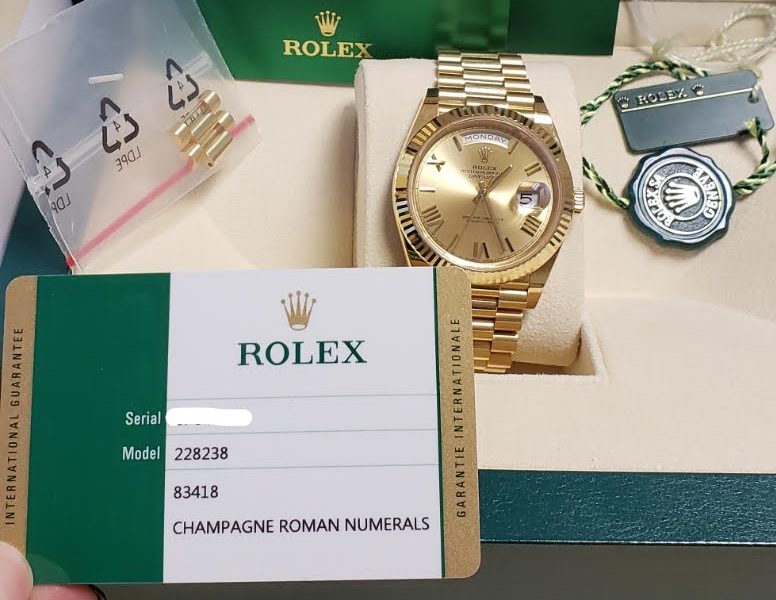
Diamond Banc’s Rolex authentication guide explains how to verify a Rolex’s authenticity using expert checks on serial/reference numbers, weight, movement performance, Cyclops date magnification, materials, caseback details, bracelet construction, security markings, and supporting paperwork. Professional authentication combines technical tools and databases to distinguish genuine Rolex watches from counterfeits, protect value, support resale or insurance, and ensure confidence for buyers and sellers.
Rolex watches represent precision, durability, and significant financial value. Collectors, sellers, and buyers all depend on accurate authentication to safeguard against counterfeits and preserve long-term worth. Authenticating a Rolex means verifying its construction, movement, materials, and documentation with measurable checks.
At Diamond Banc, authentication combines technical expertise, reference databases, and modern testing methods. This process ensures each client understands whether their Rolex is genuine, service-correct, or counterfeit.
Protect the value of your Rolex with Diamond Banc, the nation’s premier jewelry buyer and lender. Our experts provide precise authentication to confirm your watch’s authenticity and safeguard your investment.
Start online today or schedule a private in-person appointment at a Diamond Banc office near you.
Table of Contents
- Why Rolex Authentication Matters More Than Ever
- What’s the Difference Between Authentication and Appraisal?
- How Do Serial and Reference Numbers Verify Authenticity?
- How Does Weight Confirm a Rolex Watch?
- Why Does the Movement Prove Authenticity?
- How Does the Cyclops Lens Authenticate a Rolex?
- What Materials Distinguish Genuine Rolex Watches?
- How Does the Caseback Confirm Authenticity?
- Why Is Bracelet Construction Important for Verification?
- How Do Etchings and Security Marks Authenticate a Rolex?
- What Paperwork Confirms a Rolex Watch?
- Why Choose Professional Authentication?
- Investment Considerations: Protecting Value Beyond Authentication
- Making Informed Decisions: Your Action Plan
- Where to Get Professional Rolex Authentication
- Common Authentication Challenges and Solutions
- Using an Authenticated Rolex as Collateral
- Securing the True Value of Your Rolex
- FAQs
Why Rolex Authentication Matters More Than Ever
Authentication matters because counterfeit Rolex watches account for millions in buyer losses annually. Market studies estimate that more than 40 million counterfeit luxury watches circulate each year; many are modeled after Rolex. Counterfeits range from basic imitations to advanced “super fakes” that closely mimic genuine construction.
Without authentication, buyers risk paying thousands for watches with little intrinsic value. Sellers face diminished credibility when offering unverified pieces. Authentication creates certainty, enabling insurance coverage, secure resale, and confident ownership.
What Is the Difference Between Authentication and Appraisal?
Authentication verifies whether a Rolex is genuine, while appraisal assigns monetary value. Authentication checks measurable details:
- Serial and reference numbers
- Case and bracelet construction
- Movement performance and frequency
- Security markings and paperwork consistency
Appraisal builds on authentication by assessing market value for purposes such as resale, insurance, or collateral loans. A watch must be authenticated before it can be fairly appraised.
How Do Serial and Reference Numbers Verify Authenticity?
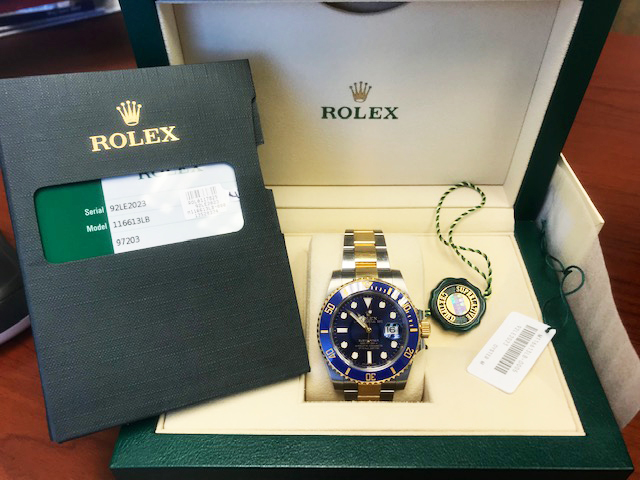
Serial and reference numbers provide Rolex’s built-in identity check.
- Serial numbers identify production periods. Older models display them between the lugs at 6 o’clock, while modern models engrave them on the rehaut (inner flange) at 6 o’clock.
- Reference numbers identify model configuration and appear between the lugs at 12 o’clock.
Authentic engravings show sharp, deep, uniform fonts. Counterfeits often produce shallow, uneven, or poorly spaced characters. Cross-referencing these numbers against Rolex production data ensures the case, dial, and bracelet combination matches the correct reference. For a full walkthrough of where to find your serial number, how to decode it into a production year, and how to check whether a watch has been reported lost or stolen, see our complete guide to Rolex serial numbers.
How Does Weight Confirm a Rolex Watch?
A genuine Rolex weighs more than replicas due to solid metals and in-house movements.
For example:
- A Submariner Date with a full steel bracelet averages 155–160 grams.
- Counterfeit versions typically weigh 110–120 grams due to hollow links or lighter alloys.
This 30–40 gram difference comes from Rolex’s use of solid 904L stainless steel and heavy automatic movements. Weighing both the head and bracelet together offers a quick, objective check.
Why Does the Movement Prove Authenticity?
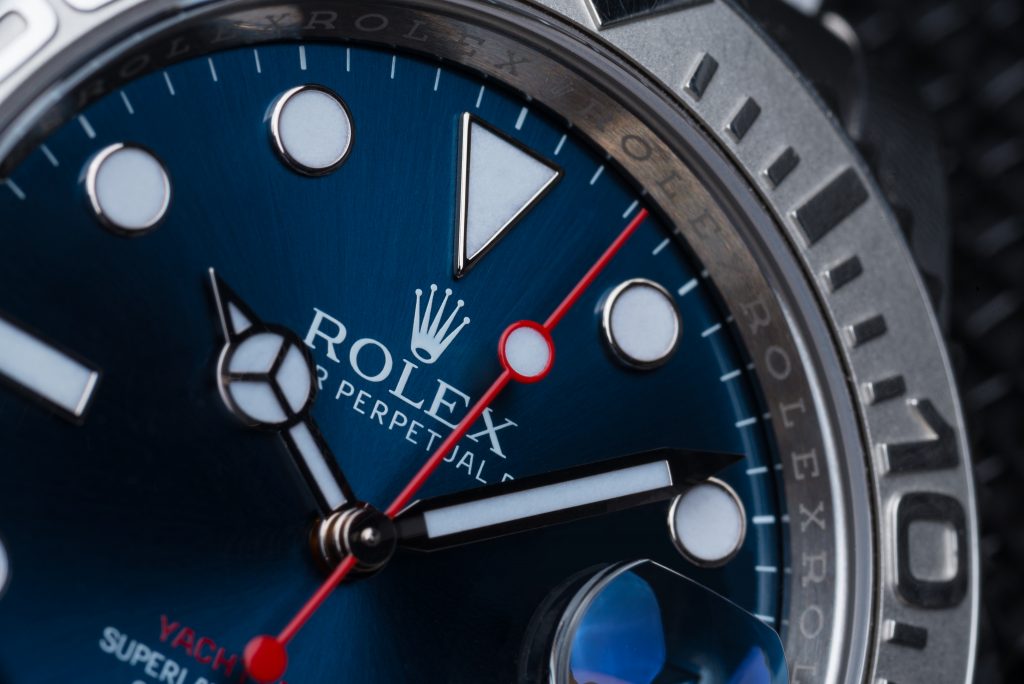
An authentic Rolex contains an in-house automatic movement operating at 28,800 vibrations per hour (vph). This produces a smooth sweep with eight ticks per second.
Counterfeit watches often use quartz movements that tick once per second or generic automatics with irregular beats. Even advanced replicas lack the consistent performance of Rolex calibers.
Chronometer testing provides additional evidence. The COSC tolerance is −4/+6 seconds per day, but Rolex’s internal “Superlative Chronometer” standard tightens that to −2/+2 seconds per day after casing. Watches far outside these ranges demand further inspection.
How Does the Cyclops Lens Authenticate a Rolex?
A genuine Rolex Cyclops lens magnifies the date approximately 2.5×. This ensures the date fills the magnified window for clear legibility. Replicas often use weaker lenses with 1.5× or less magnification, making the date appear undersized. Genuine Cyclops lenses also include anti-reflective coatings to reduce glare. Under magnification, authentic dates remain sharp, while fakes show distortion.
What Materials Distinguish Genuine Rolex Watches?
Rolex uses premium alloys and ceramics that counterfeits cannot easily replicate.
- 904L Oystersteel: Higher chromium and nickel content than 316L steel, producing superior corrosion resistance and a brighter polish.
- 18k Gold and Platinum: Rolex uses solid metals, not plating. For instance, an 18k gold President bracelet weighs nearly 200 grams, while plated replicas weigh under 120 grams.
- Cerachrom Bezel Inserts: Hardness above 1,500 Vickers, resistant to scratches and fading.
Material analysis through X-ray fluorescence or acid testing can confirm authenticity when weight or finish appears questionable.
How Does the Caseback Confirm Authenticity?
Most Rolex models use smooth, unengraved casebacks secured by proprietary tools. Counterfeits often add clear exhibition backs or decorative engravings, which Rolex rarely uses outside limited or vintage references. Rolex casebacks also screw down tightly to maintain water resistance ratings—100 meters for Oyster Perpetual and 300 meters for Submariner.
Visible tool marks, poorly sealed gaskets, or non-standard engravings typically indicate aftermarket modification or counterfeit assembly.
Why Is Bracelet Construction Important for Verification?
A genuine Rolex bracelet shows precise machining, solid links, and engineered clasps.
Examples include:
- Oyster bracelet: Smooth finishing, solid end links, and tight tolerances.
- Easylink extension system: Adds 5 mm adjustment for comfort, absent in fakes.
- Clasp engravings: Sharp, deep, and evenly aligned, not shallow or uneven.
Counterfeit bracelets often feel lighter, stretch more quickly, and feature rough edges. In industry seizures, over 70% of counterfeit Rolexes displayed flawed clasps or hollow links.
How Do Etchings and Security Marks Authenticate a Rolex?
Modern Rolex watches include a micro-etched crown at the 6 o’clock position on the sapphire crystal. This tiny coronet is almost invisible without magnification. Counterfeits often exaggerate the size, misplace it, or fail to replicate the subtle detail. Rolex also introduced rehaut engravings in the mid-2000s, repeating the word “ROLEX” with the serial number at 6 o’clock. Older hologram stickers, once used on casebacks, are discontinued and should not be considered proof.
What Paperwork Confirms a Rolex Watch?
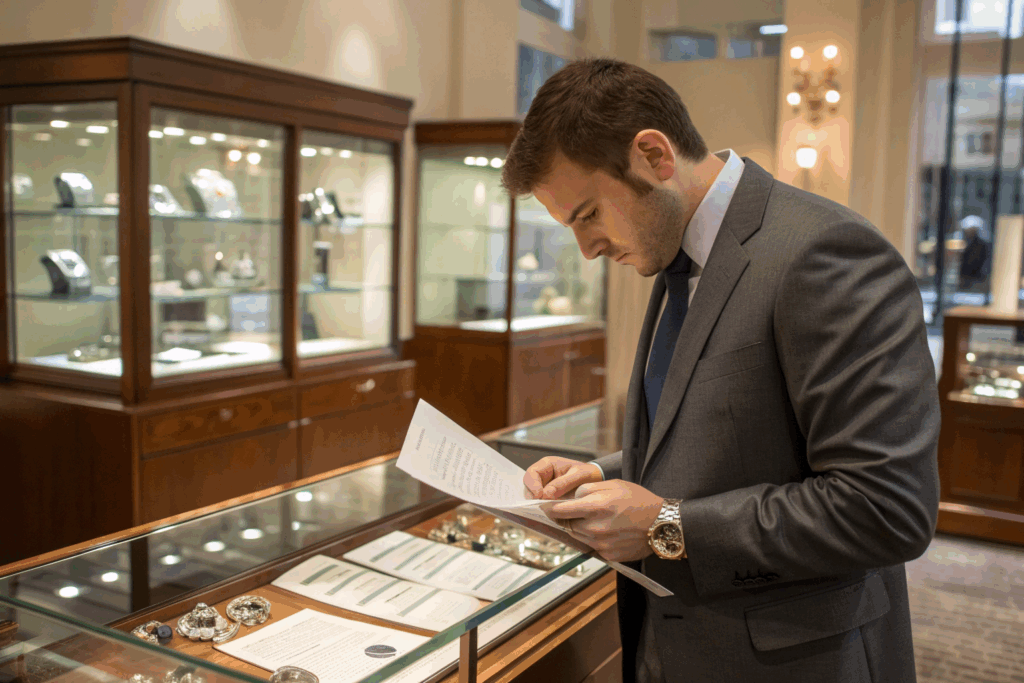
Official Rolex documentation strengthens authentication. Each genuine sale includes a warranty card, manuals, and a presentation box.
- Warranty cards post-2007 contain microchips for anti-counterfeit verification.
- Dealer stamps, model numbers, and dates must align with the watch itself.
Counterfeit paperwork often shows errors in spelling, fonts, or misaligned serials. Paperwork never authenticates alone but supports other inspection points when consistent.
Rolex documentation has changed considerably over the decades, and knowing which format matches a watch’s era is itself a useful authenticity check. Vintage watches from the 1950s and 1960s originally came with printed booklets, stamped or handwritten by the dealer, though many were lost or discarded over the years. In 2006, Rolex replaced these booklets with a credit-card-style warranty card carrying the watch’s serial number, model, and dealer details. That warranty period was extended from two to five years in 2015, and in 2020 Rolex redesigned the card again into an all-green format with an embedded NFC chip for secure verification at authorized dealers. A card style that doesn’t match a watch’s claimed production year is a red flag worth investigating further.
Why Choose Professional Authentication?
Professional authentication ensures accuracy that casual inspection cannot achieve. Experts use calibrated tools, databases, and multi-point testing. This includes timegrapher analysis, metal composition testing, weight verification, and magnified visual inspection. Professional reports provide documentation for insurance and resale.
Counterfeits cost buyers more than $1 billion annually worldwide. Avoiding that risk requires more than visual checks—it requires expertise.
Investment Considerations: Protecting Value Beyond Authentication
Authentication protects more than ownership; it protects long-term financial outcomes.
- Insurance: Providers often require professional authentication before issuing coverage.
- Resale: Verified Rolex watches command significantly higher resale values.
- Loans: Collateral lenders accept authenticated watches for higher loan offers.
- Estate planning: Clear authentication prevents disputes over asset distribution.
For collectors, authentication is the foundation of both enjoyment and financial security.
Where to Get Professional Rolex Authentication
Once a self-check raises questions, several types of professionals can provide a definitive answer.
- Rolex Service Centers: Offer the most authoritative verification, with access to Rolex’s own proprietary databases and genuine parts for comparison, though turnaround can take weeks.
- Certified Horologists and Gemologists: Independent professionals with credentials from organizations such as the American Watchmakers-Clockmakers Institute (AWCI), the American Gem Society (AGS), or the Gemological Institute of America (GIA) typically offer faster turnaround than factory service centers.
- Luxury Appraisal Services: Combine horological expertise with market valuation, useful when authentication and an insurance or collateral value are both needed.
Diamond Banc’s in-house evaluators combine several of these approaches, giving clients both an authenticity finding and a market-based value in a single visit.
Common Authentication Challenges and Solutions
Not every authentication is straightforward. A few recurring situations require extra care:
- Missing Documentation: Many vintage Rolex watches lack original papers simply due to age or previous changes in ownership. Rolex’s own archives can sometimes issue an extract letter confirming production details, and a professional appraisal can authenticate a watch even without its original paperwork.
- Altered or Replaced Components: Genuine parts installed during an authorized Rolex service generally preserve authenticity, while non-genuine aftermarket components reduce both value and authentication confidence. Watches assembled from multiple donor pieces — sometimes called “frankenwatches” — require especially careful evaluation.
- Regional Variations: Rolex produces market-specific dial configurations, language variations on date wheels, and region-specific regulatory markings that can look unfamiliar but are entirely genuine. An experienced authenticator will recognize these variations rather than mistake them for red flags.
Using an Authenticated Rolex as Collateral
Once authenticated, a Rolex becomes more than a timepiece — it becomes a liquid asset. Authenticated watches make strong collateral because they hold value consistently, benefit from a deep and active secondary market, are instantly recognizable to lenders, and in many cases appreciate over time rather than depreciate.
To get the strongest loan offer, arrive with the watch fully authenticated, any original documentation on hand, and the watch in good working condition. Diamond Banc offers Rolex collateral loan options that let clients access immediate liquidity while keeping ownership of the watch.
Making Informed Decisions: Your Action Plan
Use a step-by-step checklist before buying, selling, or insuring a Rolex.
- Record serial and reference numbers; confirm placement matches production era.
- Weigh the watch and bracelet; compare to documented averages.
- Inspect the Cyclops lens for clear 2.5× magnification.
- Observe movement sweep and timing accuracy across multiple days.
- Check bracelet construction, clasp engravings, and link solidity.
- Examine the caseback for proper sealing and absence of decorative etchings.
- Review paperwork and match details to the watch configuration.
- Schedule professional authentication for final confirmation.
Securing the True Value of Your Rolex
Authenticating a Rolex involves precise checks: serial numbers, weight, movement accuracy, materials, and paperwork alignment. Counterfeits expose themselves through measurable gaps in weight, magnification, typography, and construction.
Professional authentication secures financial value, supports resale, and prevents costly mistakes. Whether you’re a collector safeguarding your timepiece or selling your Rolex watch for maximum return, working with experts like Diamond Banc ensures every Rolex is judged on fact, not assumption.
Frequently Asked Questions
A Rolex Superlative Chronometer runs at −2/+2 seconds per day, tighter than COSC’s −4/+6 second tolerance.
Modern Rolex watches place serials on the rehaut at 6 o’clock. Older models show serials between the lugs at 6.
Yes. The Cyclops magnifies the date window 2.5×. Replicas often use weaker magnification, around 1.5×.
Yes, with few exceptions, such as vintage Cellini models. Exhibition casebacks typically indicate non-genuine parts.
Rolex uses 904L Oystersteel, which resists corrosion and polishes brighter than 316L steel.
No. Paperwork must match serials and configuration but always supports, not replaces, technical inspection.
Counterfeits often weigh 30–40 grams less than genuine models due to hollow links or lighter alloys.
Aftermarket or modified parts break originality. While the base may be genuine, authentication reports flag changes.
Insurers rely on authentication reports to validate coverage and determine replacement values.
Basic checks help, but counterfeits often bypass casual inspection. Only professional authentication provides certainty.
Yes. Professional authenticators can verify a Rolex through physical inspection alone, though missing papers may lower market value and extend the authentication timeline.
Independent certified professionals typically complete authentication within 3–7 business days, while factory service centers can take 2–4 weeks.
The authenticator provides documentation of the findings, which can support insurance claims or legal proceedings if the watch turns out to be counterfeit.
NFC-enabled cards add real-time digital verification and are harder to counterfeit, but older paper and plastic cards still provide adequate proof of authenticity when their details match the watch.
Authentication is typically only needed when buying, selling, insuring, or using the watch as loan collateral, though periodic re-checks are worthwhile after significant service work.
Bring the watch along with any warranty card, purchase receipt, and service records you have — but authentication is still possible with just the watch itself.
 Instagram
 Facebook
 Tiktok
 YouTube