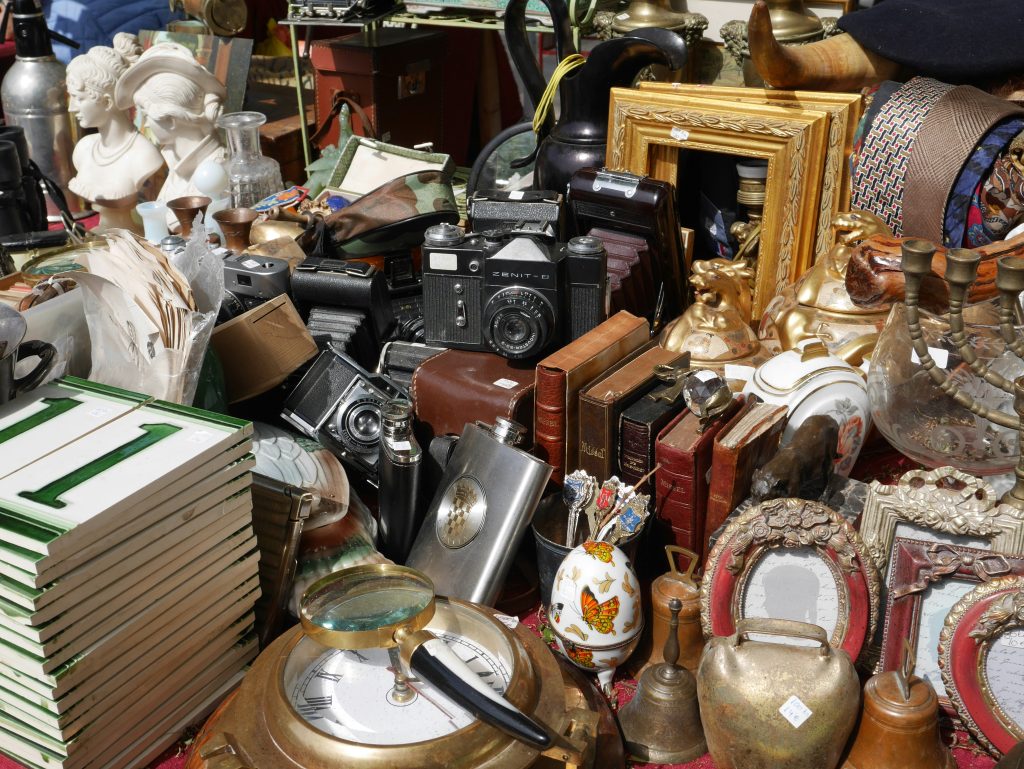
Every second Sunday, thousands of people walk the lots around Rose Bowl Stadium looking for the same thing: a piece of jewelry that’s older, better made, and worth more than its price tag suggests. The Rose Bowl Flea Market has run for more than 50 years, drawing over 2,500 vendors and roughly 20,000 buyers to Pasadena every month. Some of what’s on the folding tables is costume jewelry. Some of it is genuinely old gold, platinum, or signed estate pieces that have been sitting in a drawer for decades. The hard part is telling which is which before you hand over cash, or figuring out what you actually own if you already bought something there last year.
Is the Rose Bowl Flea Market Really a Good Place for Vintage Jewelry?
Yes, with a caveat. The market was founded in 1968 by Bill Thunell and R.G. Canning, and the organizer marked its 57th anniversary with its own press release, which tells you something about how long estate and antique dealers have been showing up there alongside general flea market vendors. But most individual sellers at the market are not licensed jewelers. California allows a private seller to sell their own used items at an event like this up to twice a year without a resale permit, which means a lot of the jewelry changing hands comes from someone’s personal collection or inheritance, not a vetted dealer with a reputation to protect. That’s not automatically a red flag, but it does mean the burden of verifying a piece falls on you, the buyer, not on the market.
When Is the Next Rose Bowl Flea Market, and What Does It Cost?
The market runs on the second Sunday of every month, rain or shine, at Rose Bowl Stadium, 1001 Rose Bowl Drive, Pasadena. The organizer’s calendar lists the next scheduled date as Sunday, December 13, 2026. General admission runs $15.83 online once fees are added, and VIP early admission, which gets you in between 5:00 and 8:45 AM before the crowds, runs $23.21. If you’re hunting for jewelry specifically, the early entry is worth the extra cost: estate dealers tend to sell their best pieces in the first hour or two, before the heavier foot traffic arrives.
Where to Look: Antiques vs. Vintage Clothing Vendors
The market isn’t laid out randomly. Vendor space is split by category, and the organizer reserves the Orange Area for antiques and collectibles only, while the Pearl and White areas are set aside for vintage clothing, textiles, and general merchandise. That distinction matters if you’re specifically hunting for estate or vintage fine jewelry: you’ll find far more of it concentrated among the antiques dealers than scattered across the clothing racks, where costume pieces and fashion jewelry are much more common. If you only have a few hours, start in the antiques section before working your way out.
How to Tell If a “14K” Stamp Is Legit, On the Spot
A karat stamp alone doesn’t prove much. Under the FTC’s Jewelry Guides, no item can be described or marked as gold unless it’s at least 10 karat fineness throughout, and any manufacturer or dealer who stamps a quality mark like 14K or 925 is also required to stamp their registered trademark on the same piece. A karat number with no maker’s mark next to it is technically misbranded under federal law, whether or not the metal content itself turns out to be accurate. In practice, that means two things are worth checking before you buy: first, is there a trademark or hallmark alongside the karat stamp, not just the number by itself; second, does the piece show any wear pattern consistent with solid gold rather than plating, such as brassy color showing through at high-friction points like clasps and ring shanks. Neither check is foolproof, but a stamp with no accompanying trademark is a legitimate reason to ask more questions or walk away.

What Happens If You Buy Something That Turns Out to Be Fake?
Very little, which is the risk worth planning around. The market’s own ticket terms state the event is rain-or-shine with no refunds, exchanges, or returns, and all sales are final. Because most jewelry sellers are individuals moving their own items rather than licensed estate jewelers, there’s usually no business entity behind the sale to pursue if a “gold” or “antique” claim doesn’t hold up once you get it checked. That doesn’t mean you shouldn’t buy at the Rose Bowl, it means you should treat every jewelry purchase there as final the moment you pay, and have a plan to get anything significant verified afterward rather than relying on a verbal description from the table.
What Your Vintage Gold Is Actually Worth
Once you’re home, it helps to separate two different numbers: what the metal itself is worth melted down, and what the piece might be worth as a vintage or designer collectible, which can run higher if it’s signed, in original condition, or from a sought-after era. The melt value is the easier one to calculate and it moves daily, so check a live gold price rather than trusting any number that isn’t dated. As of November 17, 2026, spot gold was running $123.73 per gram, which puts 14 karat gold, the most common fineness in U.S. jewelry at 58.3% pure, at about $72.17 per gram before any vintage premium.
Here’s how that plays out on an actual piece: a 10-gram vintage 14K bracelet, at that same spot price, works out to 10 grams x 0.583 purity x $123.73 per gram, or roughly $721.35 in melt value alone. If the bracelet is also a signed, collectible design, it could be worth meaningfully more than that; if it’s unsigned and plain, melt value is close to the floor of what it’s worth.
What to Do With It Once You’re Home
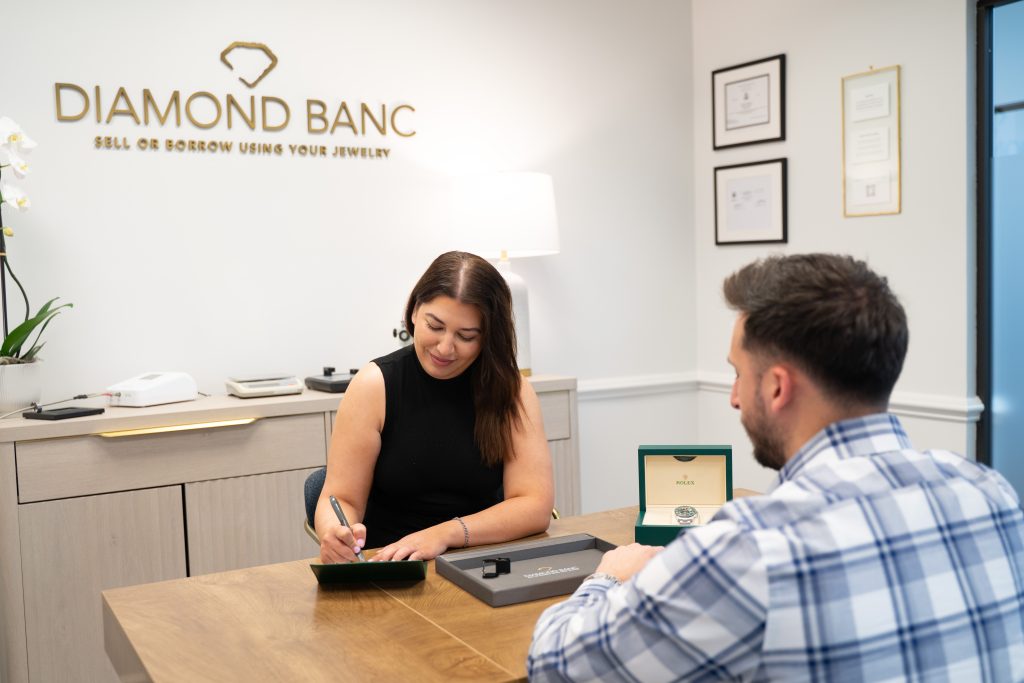
Once you know what you’re holding, the decision is usually between two paths: sell the piece outright, or use it as collateral for a short-term loan if you’d rather keep it in the family but need cash now. Both options start with a transparent valuation that accounts for metal weight, purity, and any collectible premium, not just a karat stamp. If you’ve picked up a vintage watch at the market rather than jewelry, the same questions apply, and it’s worth getting a specialist to sell a vintage watch rather than relying on a general appraisal of the case alone. For gold jewelry specifically, Pasadena residents looking for the best place to sell gold can get a metal-weight-based valuation the same day. If the piece has more sentimental or collectible value than you want to give up, a jewelry loan secured by the item lets you access cash while keeping ownership. Either way, start local: a Diamond Banc office set up to sell jewelry in Pasadena can tell you within one visit which of those two paths makes sense for what you’ve actually got.
Related Reading
It’s not unusual to find more than jewelry boxes at the Rose Bowl. For a closer look at what turns up specifically in the watch cases, see our coverage of what people have found a Rolex at the Rose Bowl Flea Market. If the piece you’re checking is marked with a well-known maker rather than a generic karat stamp, our guide on how to tell if Tiffany & Co. jewelry is real covers a different set of authenticity markers worth knowing before your next trip to the market.
Like what you’re reading?
Add us in Google — more like this is on the wayRelated Posts

 Instagram
 Facebook
 Tiktok
 YouTube