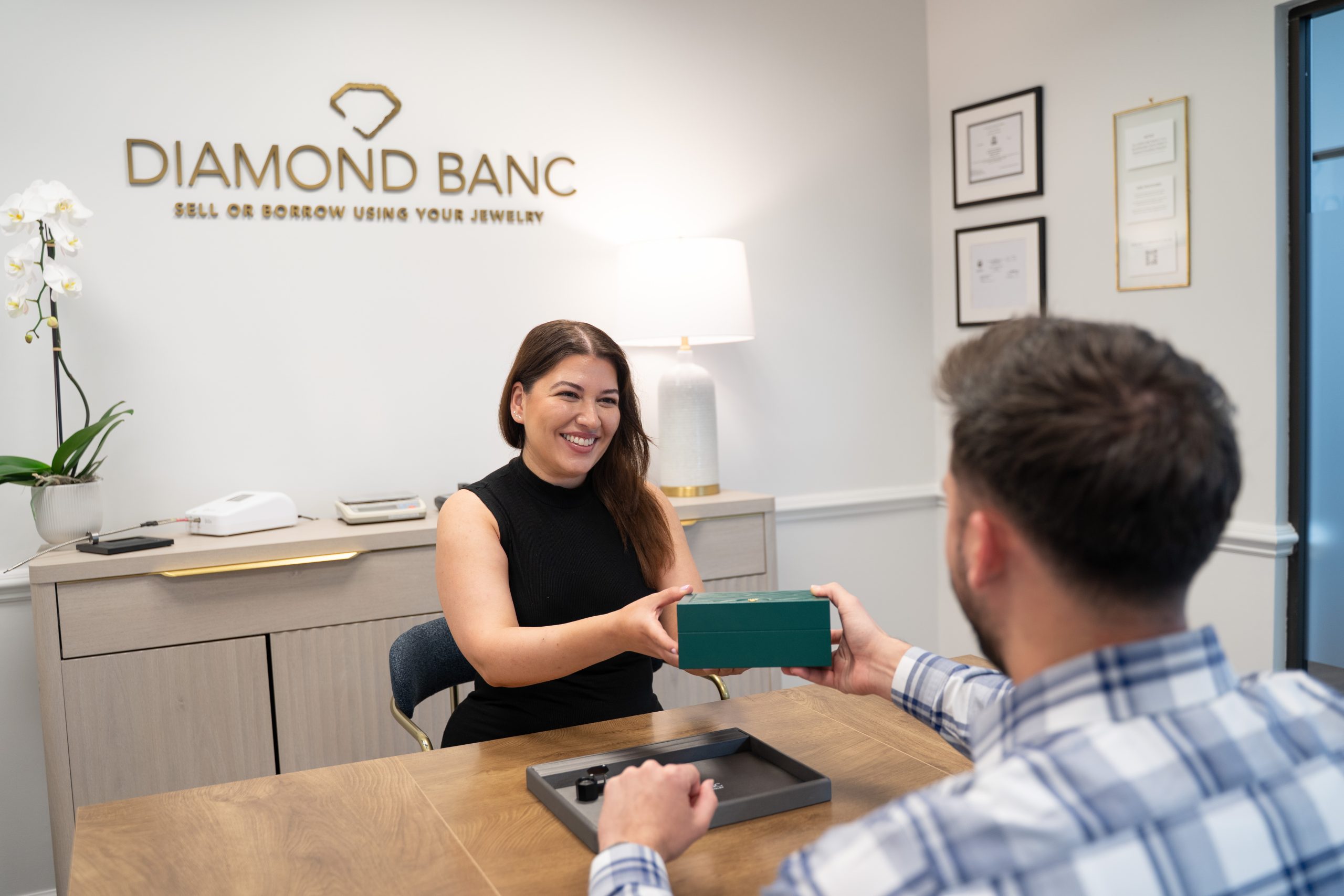
Pasadena has two very different jewelry stories within about half a mile of each other. Old Pasadena’s brick storefronts hold vintage dealers and estate finds with decades of history behind them, while three blocks south, the boutiques and anchor stores of South Lake Avenue sell fine jewelry and watches at full retail. If you own a piece from either side of the city and you’re trying to figure out what it’s actually worth now, the answer has less to do with which street it came from and more to do with what it’s made of, what’s stamped on it, and where gold and diamond prices stand this month.
Old Pasadena and South Lake Avenue Aren’t the Same Jewelry Market
Old Pasadena’s historic district runs roughly from Holly Street on the north down to the old Santa Fe railroad right-of-way near the Train Station and Central Park, with Arroyo Parkway as its eastern edge and Pasadena Avenue to the west. The city chartered the district in 1980 to revive a downtown that had become economically barren, and that redevelopment has since drawn over $900 million in private investment and seismic reinforcement for more than 150 historic buildings. It’s a walkable area, helped by city-run park-and-walk garages on De Lacey Avenue, Schoolhouse Place, and Marriott Plaza that charge as little as $1 for the first two hours with validation, which is part of why it’s stayed a destination for antique dealers, estate sellers, and vintage jewelry shops rather than a corporate retail corridor.
South Lake Avenue is a different kind of district. The Shops on Lake Avenue stretch runs three blocks, roughly from 345 to 455 South Lake Avenue, and functions as Pasadena’s primary financial and upscale commercial corridor, mixing corporate offices with specialty boutiques. Macy’s at 401 South Lake Avenue anchors the fine jewelry and watch retail there alongside fashion jewelry, and the corridor has long drawn specialty retailers, including a Ten Thousand Villages store that opened in June 2006 as the chain’s first California location. In short: Old Pasadena is where you find older, often one-of-a-kind pieces with a story attached. South Lake Avenue is where you buy new, at full retail, from a department store or boutique counter.
Does a South Lake Avenue Price Tag Mean a Higher Resale Value?
Not necessarily. A retail price at a boutique or department store counter includes the brand’s margin, the store’s overhead, and the markup on craftsmanship, none of which transfers when you go to sell the piece later. What actually determines resale value is the metal content and purity, the quality and certification of any diamonds or gemstones, and current demand for the specific brand or model, if it’s a watch. Under federal rules, an item can only be marked and sold as “gold” when the word is immediately preceded by an accurate, equally visible karat designation, such as “14 Karat Gold” or “14 Kt.” That stamp (or an accompanying maker’s trademark) is what lets a buyer verify purity quickly; without it, the piece still has value, but it needs to be tested before anyone can put a number on it.
Timing matters too, especially for anything priced off the gold market. Gold is down for 2026 as of late November, trading well below the all-time high it set in January, even though it still sits far above pre-2024 norms. A bracelet or chain bought on South Lake Avenue two years ago at a higher gold price won’t appraise for what it cost; it appraises for what the metal and stones are worth today. If you’re deciding whether to sell jewelry in Pasadena or hold onto it, that distinction between retail price paid and current resale value is the first thing to get straight.
How a Gold Piece’s Cash Value Is Actually Calculated
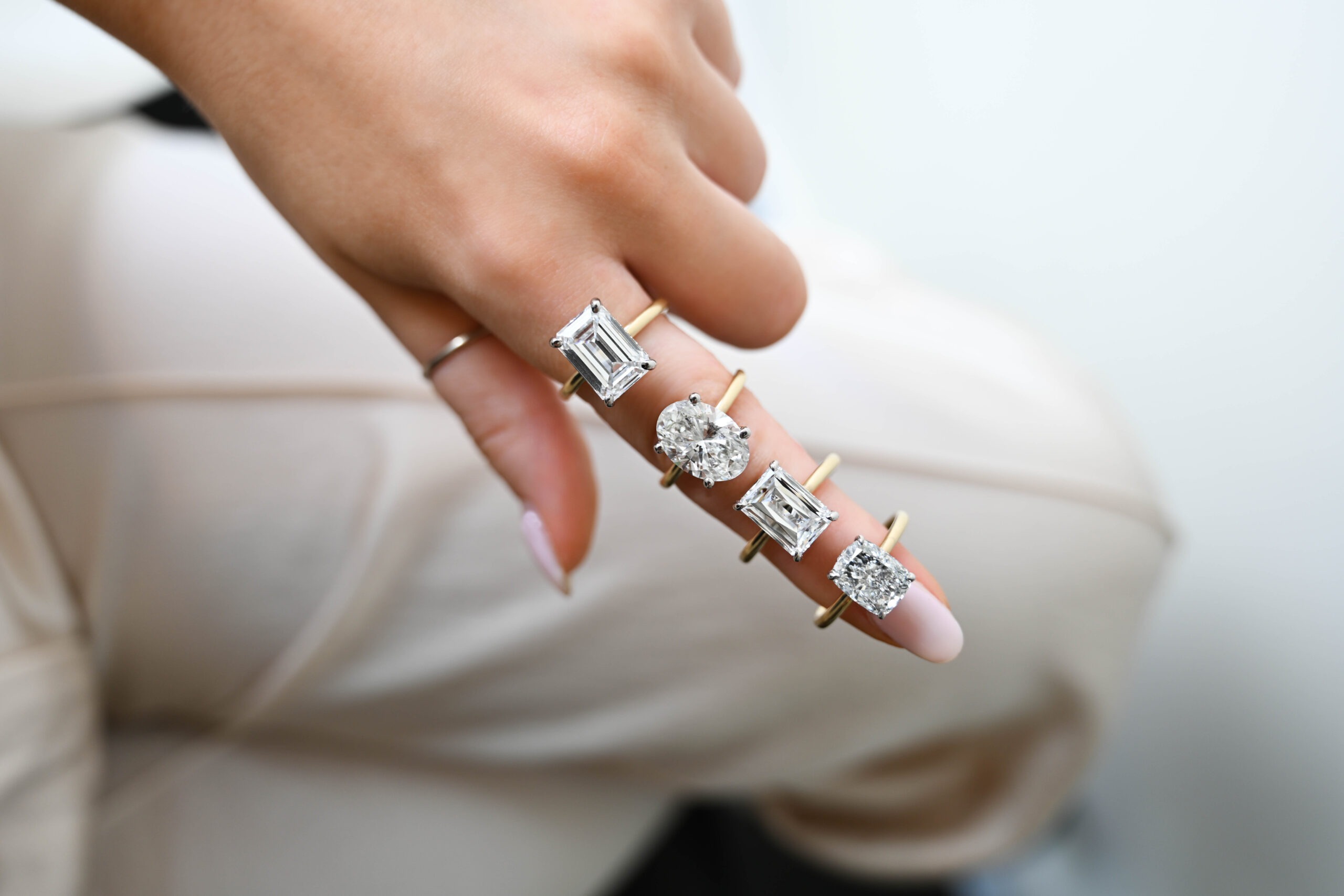
The math is simpler than most people expect. Gold closed at $3,589.44 per troy ounce on November 25, 2026, down 17.8% for the year and 33.6% below the all-time closing high of $5,405.00 set that January. To value a gold item, a buyer multiplies its weight by its purity percentage, converts grams to troy ounces, then multiplies by the spot price.
Here’s a worked example using that November 25, 2026 close: a 10-gram 14-karat gold bracelet is 58.5% pure gold under the federal fineness standard. That’s 5.85 grams of pure gold, or about 0.188 troy ounces. At $3,589.44 per ounce, the melt value comes out to approximately $675.11. That’s a floor, not a ceiling: a signed piece, a recognizable designer house, or stones set into the mounting can push the actual offer above melt. But for plain gold jewelry with no maker’s mark or gemstones, melt value is close to what you should expect, which is why the daily spot price matters more than the original receipt. If you have gold or silver pieces you’re trying to value this way, you can sell gold or silver jewelry for a cash offer based on that day’s price.
What Happens to Your ID and Sale Details When You Sell Jewelry in California
California treats jewelry and gold transactions as a matter of public record, not just a private receipt. Under state law, every licensed secondhand dealer must report the purchase of secondhand property to the state’s electronic CAPSS system no later than the next business day, and the dealer has to keep your identification on file for three years from that report date. That’s not unique to any one buyer; it’s a statewide requirement, and it exists so law enforcement can trace property that turns up in a theft report.
That system also means a completed sale isn’t always the end of the story. If an item you sold is later reported lost or stolen, a peace officer can place it on hold for up to 90 days, and the dealer is required to produce it for inspection during that period. You’ve already been paid, and this is rare for jewelry with a clean ownership history, but it’s worth knowing before you sell that the transaction leaves a paper trail you don’t control after the fact. It’s one more reason to sell to a buyer who handles that reporting correctly rather than one who treats it as optional.
Deciding What Comes Next for a Pasadena Piece
Once you know what a piece is actually worth, the choice is usually between selling it outright and keeping it while using it as collateral for cash you need now. For an estate ring, a gold bracelet, or a watch from either side of Pasadena’s shopping districts, a jewelry-secured loan in Pasadena lets you access funds against the item’s value without giving up ownership, which makes sense if the piece has sentimental weight or you expect to want it back. Selling makes more sense if you’ve decided you’re done with the piece for good, whether that’s a loose diamond, an estate setting, or a watch you no longer wear.
Diamond Banc’s Pasadena team values pieces by model and reference where applicable, not generic category, and prices against current secondary-market demand rather than a flat percentage of retail. That matters for diamonds as much as metal: if you’re weighing what a stone from an Old Pasadena estate piece or a South Lake Avenue setting is worth on its own, you can sell a diamond in Pasadena and get a valuation based on the stone itself rather than the mounting it came in. For readers researching where to take a Rolex specifically, the best place to sell a Rolex is one worth comparing locally and nationally before you decide. For more on how estate pieces move through this city specifically, see our look at Pasadena estate jewelry and watches, or if you’re weighing options beyond city limits, our piece on where to sell gold near the LA Jewelry District covers the regional alternative.
Like what you’re reading?
Add us in Google — more like this is on the wayRelated Posts
 Instagram
 Facebook
 Tiktok
 YouTube