Some of the longest-held jewelry collections our team sees come out of Pasadena, San Marino, and Arcadia: signed pieces bought on Colorado Boulevard decades ago, watches that have been in the same family since they were new, and estate rings that have outlasted three generations of owners. When one of those collections lands in an estate, the executor or family usually has the same questions. What is all of this worth, who is allowed to do what with it, and how fast does anything need to happen?
This guide covers the Los Angeles County and California specifics that come up most often. For a broader overview, see our national guide to selling inherited jewelry. Nothing here is legal or tax advice, and every estate is different, so loop in the estate’s attorney or CPA before making decisions.
Step 1: Secure Everything Before Anyone Divides Anything
The most common estate jewelry mistake happens in the first week, when relatives take pieces home “for safekeeping” before anyone has made an inventory. Before anything leaves the house:
- Photograph each piece, including any stamps, signatures, and watch serial numbers
- Gather the paperwork: original receipts, boxes, watch warranty cards, GIA or other grading reports, and old insurance appraisals
- Check for a safe deposit box, a home safe, and any insurance rider that schedules specific pieces
- Keep everything together in one secure place until the estate’s legal path is clear
Boxes and papers matter more than many families realize. For a Rolex, Patek Philippe, or Cartier piece, original documentation can noticeably change what a buyer will pay.
Step 2: Figure Out Which Legal Path the Estate Is On
Who has authority to sell, distribute, or insure the jewelry depends on how the estate is being handled. In the Pasadena area, the three most common paths are:
- A living trust. Many California families hold assets in a revocable living trust, and if the jewelry was assigned to the trust, the successor trustee generally manages it under the trust’s terms without going to court.
- A small estate affidavit. California lets heirs collect personal property without a full probate when the estate’s qualifying assets fall under a set limit. For deaths on or after April 1, 2025, that limit is $208,850.
- Formal probate. Larger estates without a trust go through the Los Angeles County Superior Court, where most probate matters are heard at the Stanley Mosk Courthouse downtown. Simple estates there commonly take nine to twelve months, and average estates often take twelve to eighteen.
Until the right person has authority under one of these paths, it is usually wise to hold off on selling or distributing valuable pieces.
Step 3: Pin Down Value as of the Date of Death
For federal income tax purposes, the IRS generally sets an heir’s basis in inherited property at its fair market value on the date of the decedent’s death. In practical terms, if a watch was worth $20,000 when your parent passed away and you sell it a few months later for about the same amount, there is often little or no taxable gain, even if it was originally purchased for a fraction of that price.
California adds no estate or inheritance tax of its own for most families. According to the State Controller’s Office, no California estate tax return is required for deaths on or after January 1, 2005.
That is why a credible, documented date-of-death valuation is worth getting early, and why the number needs to reflect what the piece would actually sell for.
Step 4: Don’t Confuse an Insurance Appraisal With What a Piece Will Sell For
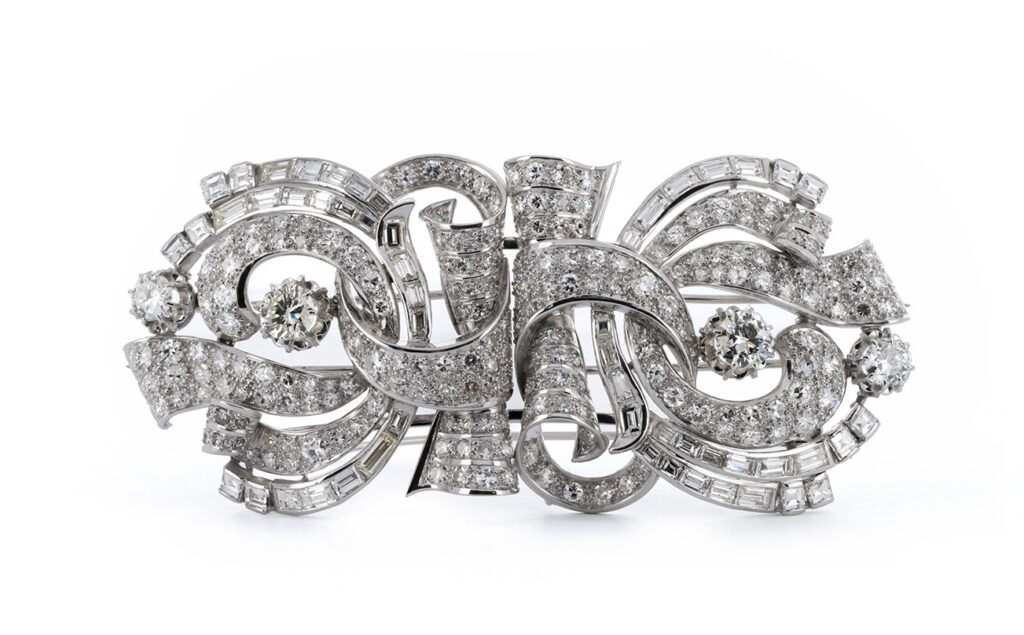
Many Pasadena families find an old insurance appraisal in the safe and assume it is the jewelry’s value. It usually is not. Insurance appraisals estimate the retail cost to replace a piece new, which is intentionally high. Executors and heirs need fair market value: what a willing buyer would pay a willing seller today. For diamonds and unsigned gold jewelry, the gap between the two can be large. For signed pieces from Cartier, Van Cleef & Arpels, or Tiffany & Co., and for in-demand Rolex references, the secondary market can be much stronger and sometimes exceeds the original purchase price.
Step 5: Decide Piece by Piece Whether to Keep, Sell, or Use as Collateral
Estates rarely call for an all-or-nothing decision. Families we work with in Pasadena and San Marino often:
- Keep the sentimental pieces, such as a wedding band or a grandfather’s watch, and document their value for fair division among heirs
- Sell pieces no one will wear, which also makes it easier to divide value equally. Our Pasadena team buys fine and estate jewelry, luxury watches, and diamonds.
- Use a piece as collateral when an heir who has received it needs cash but does not want to part with it. A jewelry-secured loan in Pasadena provides funds while the heir keeps ownership and gets the piece back once the loan is repaid.
What a Private Estate Evaluation Looks Like
At our Playhouse District office on Colorado Boulevard, executors, trustees, and heirs can bring an entire collection or a single piece for a private evaluation. We separate signed designer pieces and watches from unsigned gold, evaluate diamonds individually rather than melting them with the metal, and explain how we arrived at each number so the family has a clear record to share with its attorney or CPA. There is no obligation to sell.
Serving Pasadena, San Marino, Arcadia, South Pasadena, Altadena, Sierra Madre, and La Cañada Flintridge. Call (626) 887-8741 or schedule a private estate consultation.
Like what you’re reading?
Add us in Google — more like this is on the wayRelated Posts

 Instagram
 Facebook
 Tiktok
 YouTube