Walk through the Seybold Building in Miami – Coral Gables and you’ll find ten floors of jewelers packed into one tower, a dense, decades-old trade district where a $400 estate ring sits a few stalls from a vendor who buys loose diamonds by the carat. If you already own a piece that came from here, or you inherited one from a relative who shopped there decades ago, the question usually isn’t where to find a jeweler. It’s how to tell a fair cash offer from a weak one, and what your gold or diamonds are actually worth once you account for today’s market instead of the price tag from 1985.
What Is the Seybold Building, and Is It Still an Active Jewelry Market?
The Seybold Building isn’t a marketing name for a strip of jewelry shops. It’s a specific, historic structure: the first three levels were completed in 1921, with seven more stories added in 1925, designed by the architecture firm Kiehnel and Elliott and now recognized as a City of Miami historic landmark. Today the building runs 166,000 square feet across ten stories, making it the second-largest diamond and jewelry center in the United States, trailing only New York’s Diamond District.
It’s still very much working. The building’s first jeweler moved in during the 1960s, a Hungarian immigrant named Joseph Buchwald who had originally opened his shop on the Atlantic City boardwalk before relocating south. Other dealers followed over the following decades, and at least one, Barclays Jewellers, has operated inside the building since 1979, long enough to have outlasted several generations of its own neighbors. The mix inside today still reflects that history: family-run counters that have been there for decades sitting next to newer tenants, all under one roof.
Is the Seybold Building the Same Thing as “Miami’s Diamond District”?
Not exactly, and this trips people up when they’re trying to track down where a piece originally came from. Right next door is the International Jewelry Center, a separate three-floor jewelry exchange building that operates independently of the Seybold tenant roster. So “Miami’s Diamond District” really spans two buildings, not one, and a piece’s paperwork or receipt might reference either.
Inside the Seybold Building itself, the floors aren’t uniform either. Some counters are set up for retail walk-in customers; others sell wholesale and deal almost exclusively with other jewelers and dealers in the trade, not the public. If you’re trying to identify where an old piece came from, or you’re comparing offers from vendors there now, it’s worth knowing that not every floor is open to, or interested in, a one-off retail transaction the way a standalone jeweler or a dedicated buyer would be.
What a Seybold-Era Piece Is Actually Worth Today
This is usually the real question: not where the piece came from, but what it’s worth now. There are two separate numbers at play, and conflating them is where sellers lose money.
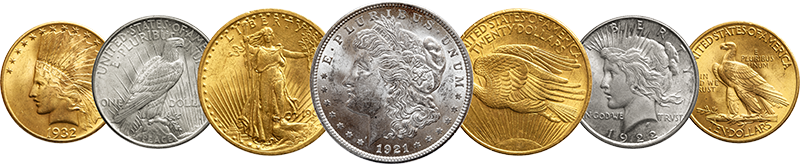
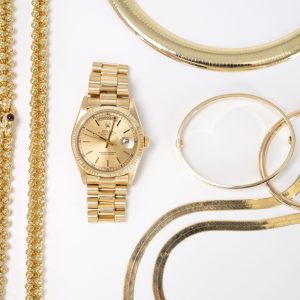
The first number is melt value, which is just the piece’s raw metal content at the current market price. Live spot gold was $119.77 per gram as of 4:11 p.m. ET on November 18, 2026, and that figure moves throughout every trading day, so any flat number you read today will be slightly out of date tomorrow. Using that benchmark, a 10-gram piece marked 14-karat (58.5% fine gold) works out to roughly $700.65 in melt value before any dealer premium or discount is applied. That’s the floor, not necessarily the offer.
The second number is everything melt value ignores: the diamonds or other stones set in the piece, the brand if it’s a signed design, and its condition. A ring from a Seybold-era jeweler with an estate diamond mounted in a 14-karat setting can easily be worth several times its melt value once the stone is weighed and graded separately from the metal. The trouble is that a vendor quoting you a single per-gram number, especially on the spot, at a crowded counter, often isn’t separating those two values at all. Getting an accurate number requires someone who evaluates the stone and the metal independently, not a single blended guess.
Protections to Know Before You Sell Near Coral Gables
Florida regulates this transaction more than most sellers realize, and the rules work in your favor if you know them. Under the state’s secondhand dealer statute, a dealer cannot sell, barter, exchange, or otherwise dispose of precious metal, gemstones, or jewelry within 30 calendar days of acquiring it. That means the “we’ll melt it down today” pressure line some vendors use isn’t accurate; legally, your item has to sit for a month regardless of who buys it. The same law requires a dealer to report every transaction to local law enforcement, including a full description of the item, within 24 hours of acquiring it. A dealer who can’t speak to this reporting requirement, or seems unfamiliar with it, is one you should be cautious about.
The other protection worth understanding is around the karat stamp itself. Federal Trade Commission guidance tells buyers to look for the karat quality mark, but a stamp reading “14K” or “18K” isn’t a guarantee of what’s actually inside the piece. It’s also not unusual to find items stamped “GF” or “RGP” (gold-filled or rolled gold plate), which under FTC rules must carry both the karat of the gold layer and the plating term, because these are not solid gold despite the karat number appearing on them. A worn or partially rubbed-off stamp on an old Seybold-area piece is exactly the kind of thing that should be weighed and tested before anyone, including you, assumes a melt value based on the stamp alone.
Where Coral Gables Owners Can Get a Straightforward Offer
If you’ve inherited a piece and you’re not sure where it fits into any of this, that uncertainty is common, and it’s worth reading through how other owners in similar situations have approached selling inherited jewelry before deciding what to do with yours.
Diamond Banc’s Coral Gables office gives local owners a way to get a transparent number without navigating a crowded vendor floor or guessing at a stamp’s accuracy. If the piece is gold, whether it’s an old ring, a bracelet, or scrap you’ve been holding onto, you can
Related Posts

 Instagram
 Facebook
 Tiktok
 YouTube