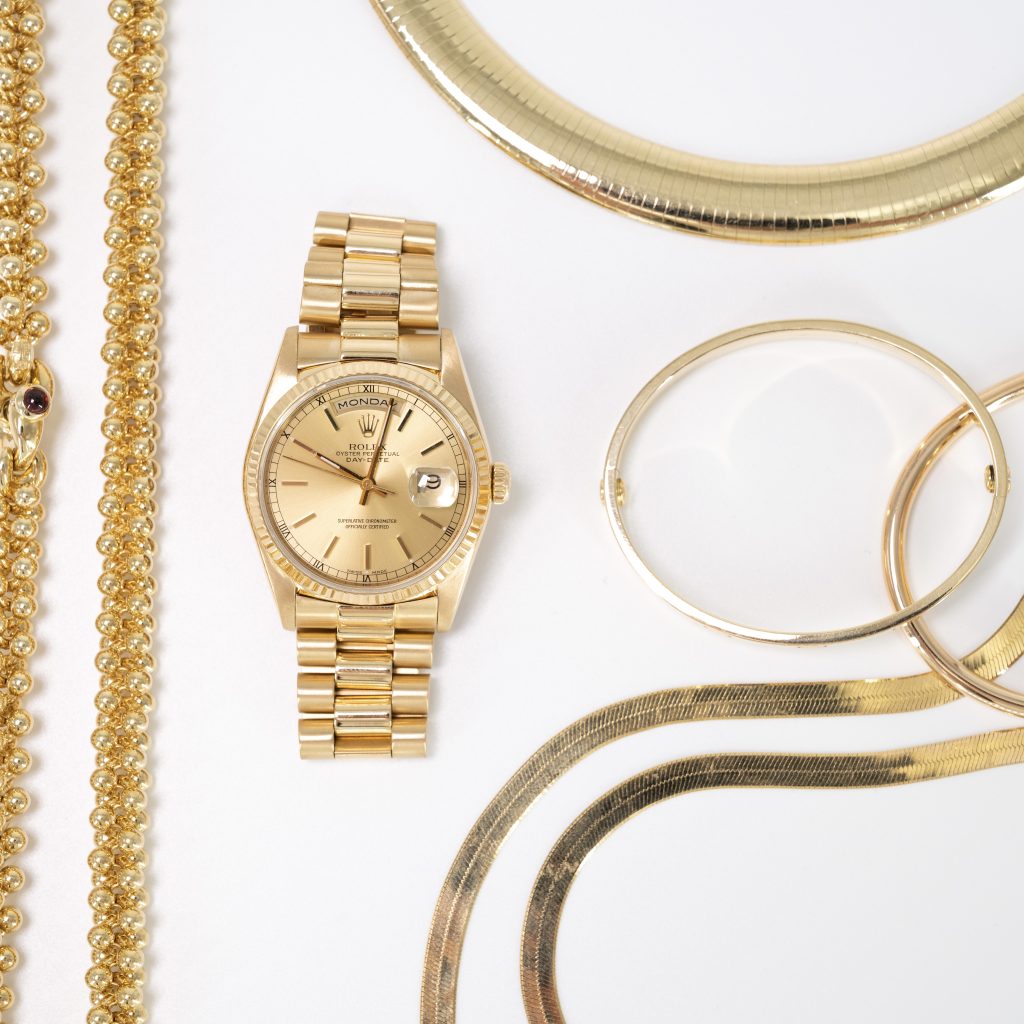
Gold fell 3.4% in a single week, from $4,165.27 an ounce on October 18, 2026 to $4,024.35 an ounce on October 24, 2026. If you own gold jewelry, gold coins or scrap gold and you’re weighing whether this gold price drop is the moment to sell, wait, or use what you own as collateral instead, the honest answer depends on a few things most headlines skip: what actually caused the move, whether it’s likely to continue, and how a buyer turns a spot price into an actual offer for your specific piece.
Why Gold Fell This Week
The slide wasn’t random, and it wasn’t really about gold. Kitco’s weekly survey shows gold opening at $4,164.69 an ounce on Sunday evening, touching a high of $4,190.17, then sliding to a weekly low of $3,975.10 before closing near $3,995.81, a 4.12% weekly loss and gold’s lowest level since early June. It was gold’s second straight weekly decline.
The trigger was oil. Brent crude jumped to a four-year high near $114 to $117 a barrel on tensions around the Strait of Hormuz, reviving fears that inflation will force the Federal Reserve to hold interest rates higher for longer. Higher rates raise the opportunity cost of holding gold, which pays no yield, so money moved toward the dollar and bonds instead. A firmer dollar and rising yields during a week like this are the mechanical reason gold loses ground even when nothing about gold itself has changed.
Is This a Bigger Slide, or a Short Dip Before a Rebound?
The details here suggest a liquidity scramble rather than a real shift in demand for gold. Even as the price fell more than 8% over the past month, global gold ETFs added more than 70 tonnes, a gap the World Gold Council called “highly unusual.” Investors weren’t abandoning gold as an asset; many were forced to sell it for cash as other markets came under stress at the same time, which is also why gold didn’t act as the safe haven long-term holders expect. In a scramble for cash, investors often sell what has gained rather than what has lost.
It’s worth keeping the drop in perspective, too. Even after this week’s loss, gold sits roughly 28.8% below its all-time high of $5,595 an ounce, set on January 28, 2026, a far smaller pullback than a headline about breaking below $4,000 implies on its own.
The next two events likely to move the price are already on the calendar: the Federal Reserve’s rate decision on October 28 and the September PCE inflation report due October 29, with the fed funds rate having sat at 3.75% to 4.00% since the Fed’s September hike. Either report could extend this week’s move or reverse it. If you’re trying to time a decision around one week’s dip, understand that the next real catalyst is days away, not months.
What a Spot-Price Drop Actually Means for Your Gold Jewelry
A 3.4% drop in spot price does not translate into a 3.4% drop in what you’d be offered for a specific ring, bracelet or coin, because spot price is only the starting point of that calculation, not the answer. Three things determine what your item is actually worth to a buyer: purity, weight, and the spread a buyer builds in to cover refining, assay and margin.
Purity is the piece most owners underestimate. Gold jewelry is rarely 24-karat, essentially pure, gold. An 18K piece is 75% gold by weight, 14K is 58.5% gold, and 10K is only 41.7% gold. The rest is alloy, copper, silver or zinc, that has little to no melt value. That means a 14K ring weighs the same as an 18K ring of identical size but contains barely more than half as much actual gold, so two rings that look nearly identical can be worth very different amounts.
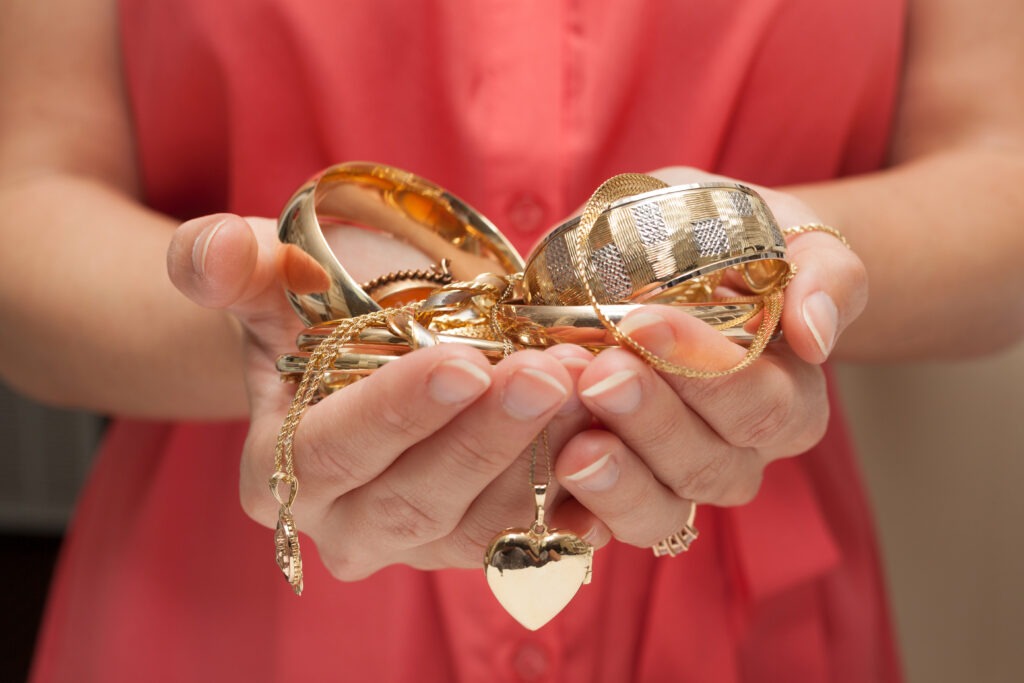
Worked Example: What a 14K Item Is Worth Today
Take a 10-gram, 14K gold item (58.33% pure gold by weight) priced at today’s spot of $4,024.35 an ounce. The melt value, before any dealer spread, comes out to about $754.75. That number is a ceiling, not an offer.
Buyers typically pay somewhere in the 85% to 95% of melt value range for gold scrap, to cover assaying, refining and their own margin. On that same 10-gram 14K item, that puts a realistic cash offer somewhere between roughly $642 and $717, depending on the buyer and how the piece is priced that day. Ask any buyer to walk you through four numbers: your item’s weight, its tested purity, the spot price they’re using, and the date that price was pulled. If a buyer can’t or won’t show you that math, treat the quote with suspicion.
Sell Now, Wait, or Use Your Gold as Collateral?
If you need cash and aren’t attached to the piece, a week like this one doesn’t necessarily argue against selling. Gold is still trading far above where it sat a few years ago, and this drop looks more like a short-term liquidity scramble than a change in underlying demand. You can sell your gold jewelry, coins or scrap for cash at a price locked in on the day you transact, whether you visit one of Diamond Banc’s local offices or ship it in through a secure mail-in process.
If the piece has sentimental value, or you expect you’ll want it back, a gold-backed loan gets you cash now without giving up ownership. One thing to understand if gold keeps sliding: the amount a lender offers is based on your item’s appraised value at the time you apply, not a number that moves with the market afterward. If spot keeps falling and you wait to apply, the amount you qualify for could be lower than it would be today; once a loan is funded, its terms don’t change because the market moves later. That makes the timing of your appraisal, not a bet on where gold goes next, the relevant decision if you’re considering collateral instead of an outright sale.
Either way, get the item weighed, tested and priced the same day you plan to transact. Diamond Banc’s specialists price gold against the live spot number and walk through the purity test with you before you commit to anything, rather than relying on a figure from a few days earlier. In a week this volatile, a quote based on “gold is around $4,000” can already be meaningfully off by the time you act on it.
What to Check Before You Assume Solid-Gold Value
Before assuming a piece is worth melt value at all, look for a karat stamp next to a maker’s registered trademark. Gold jewelry is only properly represented as “gold” when it carries both, and the stamp alone, without a maker’s mark, isn’t a reliable guarantee of purity on its own. Federal rules also limit how far a stamped karat can legally drift from actual purity, a few parts per thousand at most, which is exactly why a reputable buyer tests the metal rather than trusting the stamp. Gold-filled and gold-plated pieces can look identical to solid karat gold but contain only a thin layer of gold over a base metal, and they’re priced very differently because there’s little recoverable gold at melt.
If you also own silver, platinum or palladium, don’t assume those will recover on gold’s timeline. Silver is under separate pressure from an Indian import quota, and platinum and palladium are weighed down by an unrelated auto-sector supply surplus, so each metal’s path forward depends on its own set of drivers, not gold’s.
A single week’s 3.4% move is noise relative to gold’s path over the past year, but it’s real money on a specific item you own today. Whether you sell your gold jewelry outright or use it as collateral, ask for a transparent breakdown of weight, purity and the spot price used on the day of your appointment, not an estimate based on last week’s headline. For more on how swings in either direction play out for owners, see how a rising gold market changes the math, or browse our broader gold coverage for context on where prices have been.
Like what you’re reading?
Add us in Google — more like this is on the wayRelated Posts

 Instagram
 Facebook
 Tiktok
 YouTube