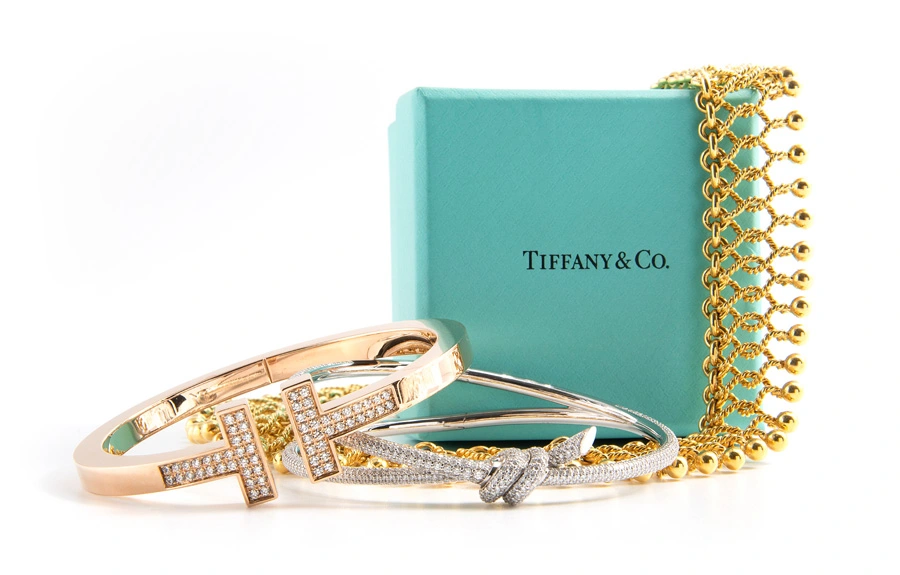
Walk into any estate sale and you’ll see two gold bracelets that look nearly identical to the untrained eye: one stamped with a famous maker’s mark, one without. The stamped piece can be worth two to three times as much, not because it contains more gold, but because of what that stamp legally represents and what it signals in the lending and resale markets. Understanding what designer jewelry actually means, legally and commercially, changes both what you can expect from a loan and what you can expect at resale.
What Legally Makes a Piece “Designer” Jewelry
A piece isn’t “designer” simply because a seller says so. Under the FTC’s Jewelry Guides, anyone marketing jewelry has to truthfully represent its metal content, quality, value, and manufacture in every piece of advertising. That’s the legal floor any designer claim has to clear before brand reputation even enters the conversation.
The more specific requirement sits in federal stamping law. Any manufacturer or dealer who stamps a gold or silver item with a quality mark like “18K” also has to stamp their federally registered trademark next to it, as large as and very close to the karat mark, registered with the federal government within 30 days of the piece first going up for sale. That paired stamp, a karat quality mark plus a registered maker’s mark, is what actually separates a “designer” piece from jewelry that merely resembles one.
This has a practical consequence years after purchase. If a ring or bracelet has been resized, re-polished, or repaired in a way that wears down or removes that maker’s stamp, authentication gets harder, even when the piece is completely genuine. A specialist evaluating a piece with a worn or missing stamp has to do more verification work, and may need more time to reach a confident number, than one looking at a crisp mark next to a legible karat stamp.
Brand Name vs. Raw Material: Where the Premium Really Goes
Every gold designer piece carries two separate values stacked on top of each other: the melt value of the metal itself, and the brand premium layered over it. The gap between the two is larger than most owners assume.
Take 10 grams of 18K gold, which is 75% pure gold by weight. At the spot price of $4,156.60 per troy ounce recorded on October 2, 2026, that 10 grams of gold content alone is worth about $1,002.28, before a single stone, a single hour of craftsmanship, or a single brand name is factored in. Everything above that figure, on a designer piece, is paying for design, manufacture, and the house’s name.
How far that premium stretches varies by house. As of late 2026, Cartier’s own site prices its classic 18K gold LOVE bracelet at $7,950, with a smaller model starting at $5,300. Van Cleef & Arpels prices a plain 18K yellow gold Vintage Alhambra 5-motif bracelet at $7,250, climbing to $35,900 for a diamond-set white gold version within the same collection. Tiffany & Co. typically prices its settings 20% to 40% above the cost of comparable loose diamonds, a premium baked into the retail price before the ring is ever worn.
The question that matters for an owner isn’t how large that premium was at purchase. It’s how much of it survives on the way back out.
Which Designer Houses Hold Value, and Which Don’t
Brand premium and resale value are not the same thing, and that gap is exactly what determines whether a designer stamp is paying for metal and stones or for something that holds up at resale.
One industry analysis of jewelry brand resale performance found that Cartier LOVE bracelets typically retain roughly 85% to 96% of retail value, with Van Cleef & Arpels Alhambra pieces holding 80% to 100% or more, compared with only about 40% to 60% for Tiffany & Co. gold jewelry. Cartier and Van Cleef & Arpels are both owned by the same parent company, Richemont, and sit alongside Harry Winston in what that analysis calls the only true “investment-grade” tier of jewelry houses.
Part of why Cartier and Van Cleef & Arpels hold value is pricing discipline at the house level. Cartier’s classic yellow-gold LOVE bracelet has gone from roughly $3,600 in 2008 to $7,950 in early 2026, more than doubling over 18 years. Every time the retail price climbs, the resale floor beneath previously purchased pieces climbs with it. Tiffany’s 20% to 40% retail premium, by contrast, is mostly a design and setting markup rather than a true brand floor, which is why it compresses much harder once a piece changes hands.
For an owner deciding between selling now and waiting, that distinction matters more than the showroom price. A house with resale retention in the 80% to 96% range gives you a fairly predictable number. A house in the 40% to 60% range means the brand name is worth far less at the exit than the sticker price suggested on the way in.
Platinum Stamps, Boxes, and Papers: What Actually Changes an Appraisal
Two assumptions trip up owners more than any other when they bring a designer piece in for a loan or sale.
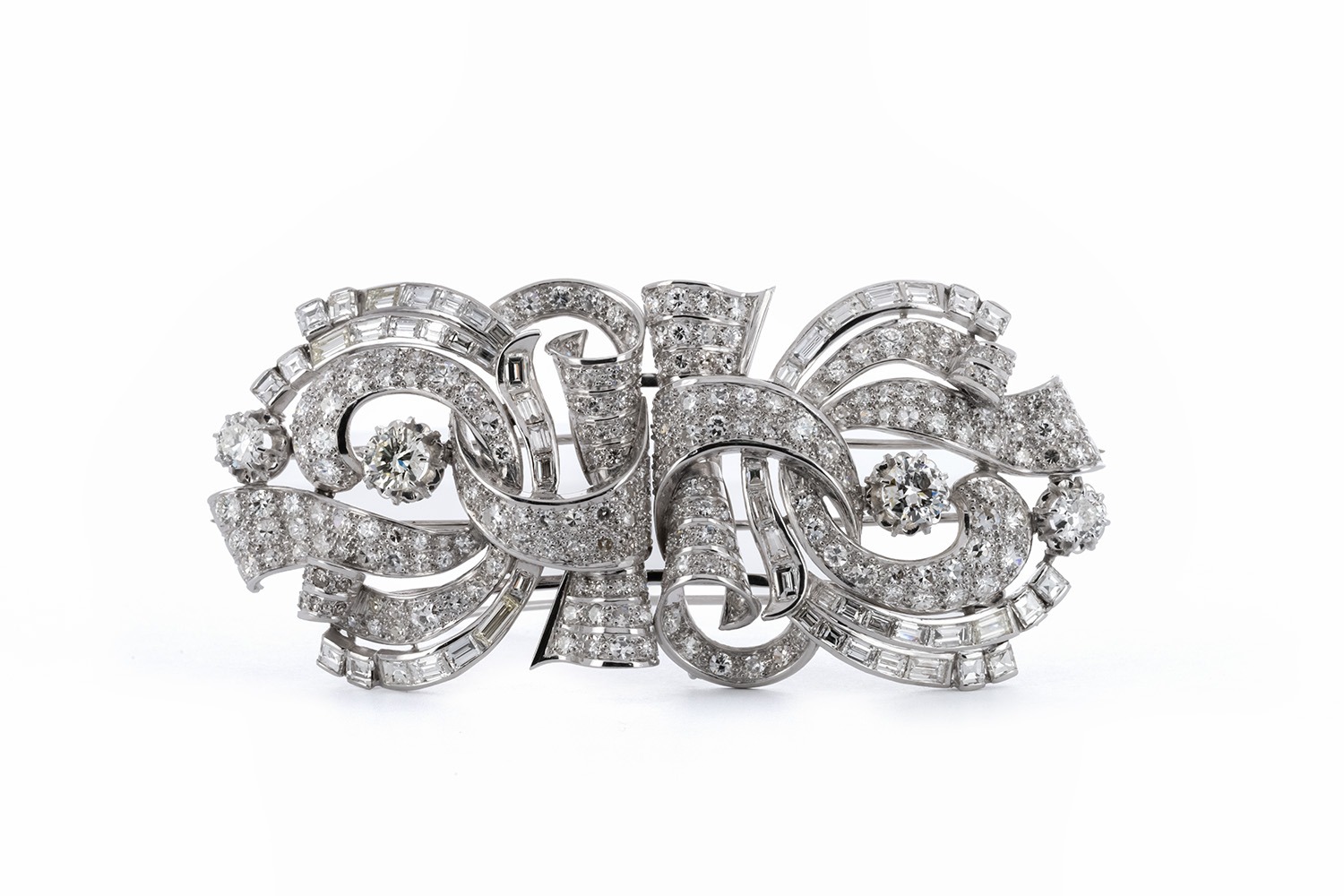
The first is about platinum. A “platinum” stamp on a designer piece doesn’t guarantee unalloyed platinum content. The FTC revised its Jewelry Guides in 2010 specifically because some manufacturers had started adding base metals like copper and cobalt into platinum jewelry sold to consumers. That means a buyer or lender has to confirm actual metal content rather than take a platinum stamp at face value; the alloy content changes the metal’s true value independently of the brand stamped next to it.
The second is documentation. The original box, papers, and receipt don’t change what the metal and stones themselves are worth, but they do change how quickly and confidently a piece can be authenticated, and that affects how fast an offer can be made. A piece with its original paperwork needs less verification work; a piece without it still has value, it just takes a specialist a bit longer to confirm what it is before putting a number on it.
How Brand Pedigree Changes Your Loan Amount
Against the same weight of gold, a piece from a house with strong resale retention typically supports a larger loan amount than an unbranded piece with identical metal content, because the collateral behind the loan includes the brand’s resale floor, not just the melt value. A Cartier or Van Cleef & Arpels piece with its stamps intact and its papers on hand gives a lender more to work with than the same gold weight in an unmarked setting, because the resale outcome if the loan isn’t repaid is more predictable.
That’s also why model-specific, brand-specific valuation matters more for designer jewelry than a simple scale-and-stamp approach. A designer jewelry loan at Diamond Banc is underwritten by specialists who look at the maker’s mark, the condition of that mark, the metal content, and current secondary-market pricing for that specific house and piece, not just the gram weight. Pieces from houses like Cartier are evaluated individually rather than against a generic designer average.
If you’re deciding between a loan and an outright sale, the same information applies to both choices. Owners who want to sell jewelry outright are paid based on current resale value for that specific house and model, while owners who want to keep the piece can use designer jewelry as loan collateral and get it back once the loan is repaid. Either way, the brand’s documented resale floor, not just the melt value, is what’s being put to work.
What to Check Before You Sell or Use a Designer Piece as Collateral
- Locate the maker’s trademark next to the karat or platinum stamp, and check that it’s still legible. A worn or missing stamp doesn’t disqualify a piece, but it does slow down authentication.
- Gather the box, original papers, and receipt if you have them. They shorten the appraisal process even though they don’t change the metal or stone value itself.
- Don’t assume a platinum stamp means unalloyed platinum. Ask for the actual metal content to be confirmed before relying on it for a loan or sale decision.
- Compare your house’s documented resale retention, not just its retail premium. A high sticker price doesn’t guarantee a high resale floor.
- Get a model-specific, brand-specific valuation rather than a generic per-gram estimate, especially for houses like Cartier or Van Cleef & Arpels where resale retention is well documented.
For owners holding pieces from established houses, a top-dollar designer jewelry sale or loan both start the same way: a specialist confirms the maker’s mark and metal content, then prices the piece against current secondary-market data for that exact brand and model rather than a flat percentage of what it cost new. That’s the difference between treating a designer stamp as decoration and treating it as the collateral asset it actually is.
Like what you’re reading?
Add us in Google — more like this is on the wayRelated Posts



 Instagram
 Facebook
 Tiktok
 YouTube