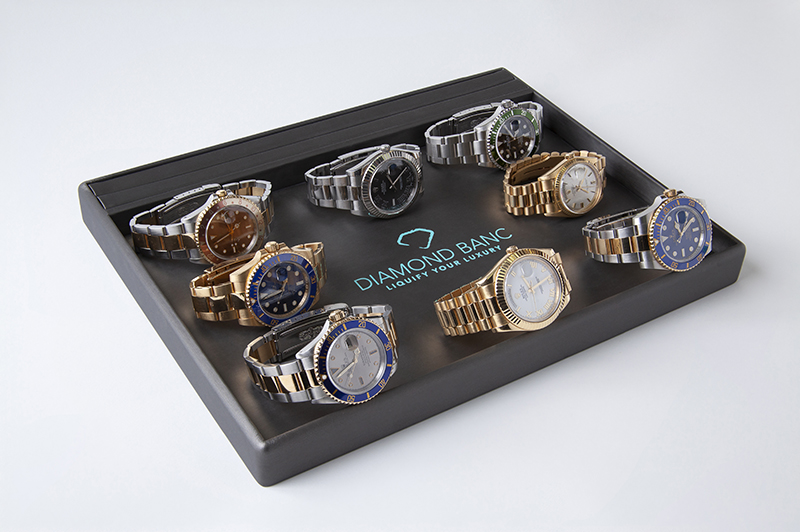
If you own a two-tone Rolex, someone has probably asked you whether the gold is “real” or just a coating. It’s a fair question, and the answer matters more than most owners realize when it comes time to sell a Rolex or use one as collateral. Rolex calls its steel-and-gold combination Rolesor, and understanding exactly what that word means, how much actual gold is involved, and how it’s treated in a valuation can change what you expect your watch is worth.
What “Rolesor” Actually Means
Rolesor isn’t a marketing label slapped on a two-tone case. It’s a specific construction method Rolex has used since the 1930s, and the name itself is a contraction: Rolex trademarked “Rolesor” in 1933, combining its own name with “or,” the French word for gold. According to Rolex’s own materials page, Rolesor pairs 904L Oystersteel with 18-karat gold on the bezel, bracelet, and crown, depending on the exact configuration.
That 18-karat detail answers the “is it real gold” question directly. Under U.S. rules, an item can only be described as “gold” if it’s at least 10 karats, and a genuine karat stamp has to be real gold content, not a coating. The Federal Trade Commission draws a sharp line between solid gold, which carries a karat mark like 14K or 18K, and “gold filled,” “gold overlay,” or “rolled gold plate,” which describe only a thin layer of gold mechanically bonded to a base metal. Rolesor components fall into the first category. The gold parts of a Rolesor watch are solid 18k gold, not a plated steel surface.
That’s also why some older Rolex paperwork or dealer listings refer to the gold content as “yellow metal” rather than stating “18k gold” outright. It isn’t a hedge about quality. It traces back to hallmarking regulations in certain jurisdictions that restrict calling a mixed-metal piece “gold” without qualifying language, even when the gold content itself is unchanged.
Yellow, White, and Everose Rolesor: What’s Different
Rolesor comes in three variants, and they’re not built identically:
- Yellow Rolesor: steel case and most of the bracelet, with 18k yellow gold on the crown, bezel, and the bracelet’s center links.
- White Rolesor: only the bezel is 18k white gold. The case, crown, and the entire bracelet, including center links, stay in steel.
- Everose Rolesor: built the same way as Yellow Rolesor, but with Everose, Rolex’s proprietary pink gold alloy. It follows the same gold placement on crown, bezel, and center links, with steel everywhere else.
The two-tone Yacht-Master is the one notable exception, keeping a steel crown even in its gold-accented configurations. Rolex also makes Everose with platinum mixed into the gold alloy, specifically to resist the color fading that affects ordinary rose gold over years of wear and sun exposure.
White Rolesor is worth pausing on because it’s the one owners most often misjudge. Since only the bezel carries gold, a White Rolesor Datejust has noticeably less gold content than a Yellow or Everose Rolesor piece of the same size and reference. That difference shows up when a watch is weighed and assessed for its metal content, not just its brand and condition.
Which Models Come in Two-Tone
The Datejust is where Rolesor started, with its Jubilee bracelet dating to 1945 and the combination finding its first major commercial expression in that model by the end of the 1940s. But two-tone construction spread well beyond dress watches over the decades. Reference 16803 became the first official two-tone Submariner in 1984, with a two-tone Daytona following in 1988. Today you’ll find Rolesor across the GMT-Master II, Yacht-Master, Day-Date, and Sky-Dweller lines as well.
Not every mixed-metal Rolex uses Rolesor. A separate steel-and-platinum pairing, trademarked “Rolesium,” appears on certain Yacht-Master references instead of gold. If you’re trying to identify exactly what metal combination your watch uses, the reference number on the case, between the lugs, is the most reliable starting point, since model names alone don’t always specify the metal configuration.
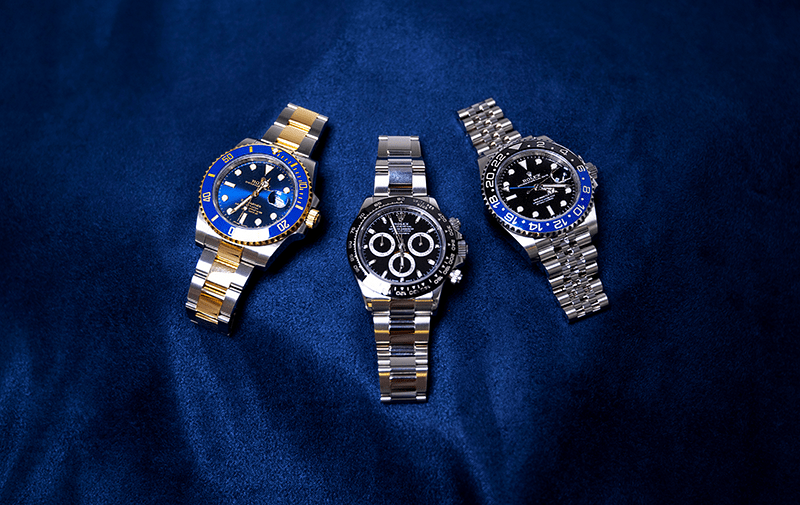
Does the Gold Actually Add to the Watch’s Value?
Two-tone Rolex watches are generally not priced below comparable steel models, and they’re also not simply “steel plus a gold premium.” On the secondary market, demand drives most of the price, and a reference-specific valuation accounts for condition, documentation, and current buyer interest as much as metal content. But the gold is not cosmetic, and it does have an intrinsic floor value independent of the brand.
Here’s a concrete way to see that. A typical Yellow Rolesor Datejust 41 carries roughly 10 grams of 18k (750 fine) gold across its bracelet center links, crown, and bezel. With spot gold at $4,182 per troy ounce as of October 13, 2026, that gold content alone works out to approximately:
10 grams x 0.75 fine x ($4,182 / 31.1035 grams per troy ounce) = about $1,008 in melt value.
That figure is illustrative, not a quote, since actual gold weight varies by reference and bracelet length. But it illustrates the point: even before brand, rarity, or condition are factored in, a two-tone Rolex carries real, calculable value in its metal alone. That’s part of why gold and watch specialists weigh and assess the gold components separately from the overall market valuation, rather than treating a two-tone piece as “steel with gold trim.” A White Rolesor watch, with gold limited to the bezel, will have meaningfully less of this intrinsic floor than a Yellow or Everose Rolesor watch of the same size.
Gold’s own trajectory matters here too. Spot gold has risen more than 25% since early 2025, which means the metal floor under every two-tone Rolex has been rising independent of watch demand. Checking a live gold spot price before any transaction gives you a current reference point rather than a stale one.
Caring for a Two-Tone Rolex
Two-tone watches don’t require different maintenance intervals than solid steel or solid gold models. Rolex recommends a full service roughly every 10 years depending on the model and how the watch is actually worn, and new watches purchased from an Official Jeweler carry a five-year international guarantee. A complete service includes lubricating and testing the movement, refinishing the case and bracelet, and checking water resistance, power reserve, and timekeeping accuracy, and the full process takes a minimum of four to six weeks.
The one thing worth asking about before you authorize service on an older two-tone piece: refinishing can mean polishing or replacing worn case and bracelet surfaces with current Rolex components. On a vintage Rolesor watch, that can mean original gold surfaces get buffed down or swapped for modern parts. If originality and unpolished case lines matter to you, whether for personal reasons or because you’re considering a sale down the line, it’s worth raising that directly with whoever services the watch before work begins.
Deciding What to Do With a Two-Tone Rolex You Own
Whether a two-tone Rolex is the right one to sell, keep, or use as collateral depends on the same two things any Rolex owner should check: the reference-specific market value and the actual gold weight in the piece, not a generic “two-tone watches are worth X” assumption. A model/reference-specific valuation from a luxury watch specialist, rather than a general pawn shop, accounts for both.
If you’re ready to find out what your watch is worth, Diamond Banc’s Rolex valuation process looks at current secondary-market pricing for your exact reference along with the gold content described above. From there, you have two paths: you can sell a Rolex outright for immediate funds, or, if you’d rather keep the watch, you can use it as collateral for a Rolex loan and get it back once the loan is repaid. Both options are handled by specialists who work with Rolex references daily, whether at a local office or through secure nationwide mail-in service.
It’s also worth understanding how an asset-based loan differs from pawning a Rolex at a traditional pawn shop, since the valuation process, loan terms, and how your watch is handled can vary significantly between the two.
Common Questions, Answered Directly
Is the gold in a two-tone Rolex real, or just plating?
It’s solid 18-karat gold on the bezel, crown, and/or center links, not a plated layer. That’s a meaningful difference from “gold overlay” or “rolled gold plate” watches, which only have a thin layer of gold over a base metal.
Does a two-tone Rolex need a different insurance policy than a steel one?
No separate category exists for “two-tone” watches specifically. Coverage decisions should be based on the watch’s full appraised value, which already accounts for its gold content, not on the fact that it’s two-tone rather than solid steel.
Can I tell how much gold is in my watch just by looking at it?
Not reliably. Yellow and Everose Rolesor place gold on the crown, bezel, and bracelet center links, while White Rolesor limits gold to the bezel alone. The reference number, not a visual guess, is the starting point for knowing exactly what you own.
A two-tone Rolex is a genuine mix of steel and solid gold, built to a specific formula Rolex has used for nearly a century. Knowing which Rolesor variant you own, and how much of it is actually gold, puts you in a better position whether you’re deciding to keep the watch, insure it correctly, or find out what it’s worth today.
Like what you’re reading?
Add us in Google — more like this is on the wayRelated Posts

 Instagram
 Facebook
 Tiktok
 YouTube