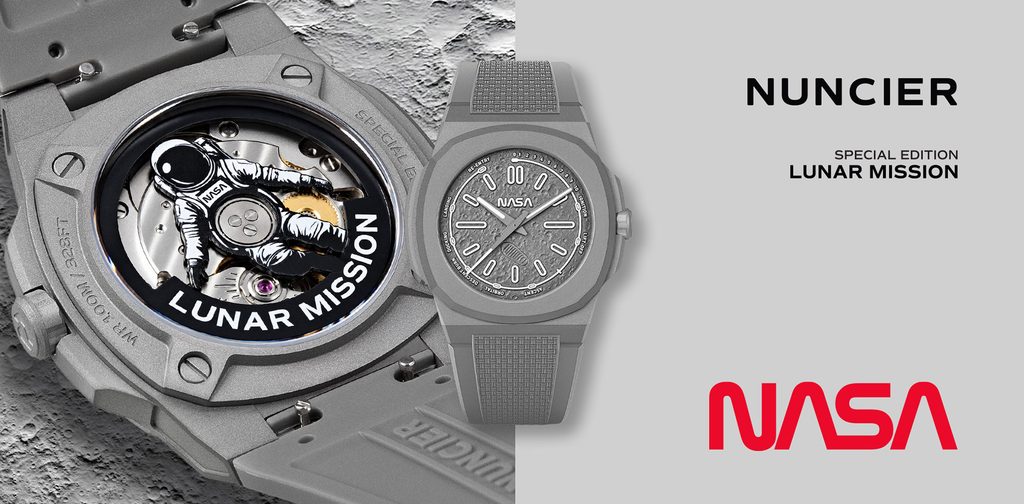
On October 15, 2026, aBlogtoWatch reported the release of the Nuncier Lunar Mission, a NASA-approved watch from a Middle Eastern independent brand that references the Apollo Moon landing. The watch itself is a niche release. But the story behind it (a small brand deliberately capping output to protect value) is the same logic that has quietly supported Rolex resale prices for decades. If you own a Rolex, that connection is worth understanding before you decide whether to sell it or use it as collateral for a loan.
What exactly is the Nuncier Lunar Mission, and why now?
The Lunar Mission is capped at just 100 pieces, priced at $999 USD, and built around a Miyota 9039 automatic movement in a 40.5mm Grade 2 titanium case. Nuncier is a small, independent brand, not a horological household name, so the watch itself won’t move anyone’s Rolex valuation. What’s instructive is the strategy: a 100-piece cap, announced loudly, timed to a story (the Moon landing) that gives collectors a reason to want in before the run sells out.
That’s not a new idea. It’s the same playbook watch brands have used for a century to make a piece desirable beyond its parts cost: tell buyers there will only ever be this many, and some of them will pay a premium precisely because of that promise.
Does a small brand’s limited drop have anything to do with my Rolex’s loan value?
Not directly. Nuncier’s 100-piece run isn’t evidence a lender can use to price your Rolex. But it’s a useful, current example of a principle that does matter when a lender is pricing your watch as collateral: scarcity, by itself, doesn’t create value. Scarcity combined with sustained demand does. A brand can cap production at any number it likes; what makes that cap meaningful is whether enough people want the piece once it’s gone. Rolex has proven that pattern for decades, which is a large part of why Rolex pieces hold up as collateral in the first place.
Why scarcity matters for collateral value
When a lender like Diamond Banc values a watch as collateral, the central question isn’t “is this watch nice?” It’s “if this loan isn’t repaid, how reliably and quickly can this watch be sold at or near its appraised value?” A model that’s been discontinued or produced in limited numbers, but that still has deep buyer demand, answers that question well. A model still in full, unlimited production competes with its own new-condition version at retail, which caps how much a pre-owned piece can command.
This is why reference-specific valuation matters more than brand name alone. Two watches from the same maker, one still in active production and one discontinued, can have very different resale and loan profiles even if they look similar on the wrist.
Does Rolex actually limit production, or is that just marketing?
Rolex doesn’t publish production numbers or publicly announce when it discontinues a reference. There’s no press release. A model simply stops appearing in the current catalog, and the secondary market takes it from there. This is a deliberate difference from a brand like Nuncier, which markets its cap number directly. Rolex’s scarcity is quieter, but the effect on long-term demand has been consistent: once a reference is confirmed discontinued, existing examples tend to become more sought after precisely because no more are coming.
Because Rolex doesn’t confirm discontinuations itself, any “current” secondary-market price you see quoted for a discontinued reference should be checked against a live marketplace benchmark rather than treated as fixed. Prices on discontinued pieces can move for reasons that have nothing to do with your specific watch: condition, box and papers, and overall market demand all shift those numbers week to week.
What happens to value when Rolex discontinues a model
When Rolex quietly retires a reference, two things tend to happen at once. First, the supply of new pieces from authorized dealers stops permanently. Second, demand doesn’t disappear with it; buyers who wanted that specific reference now have to find one on the secondary market. That mismatch is what tends to push resale and loan values upward over time for the references collectors care about most.
That said, discontinuation alone doesn’t guarantee a premium. A reference has to have had real demand while it was in production. A discontinued piece nobody wanted when it was new won’t suddenly become valuable because Rolex stopped making it. This is exactly where model- and reference-specific valuation does work that a generic “Rolex” price tag can’t.
If I have a discontinued or limited Rolex, does that help my loan offer?
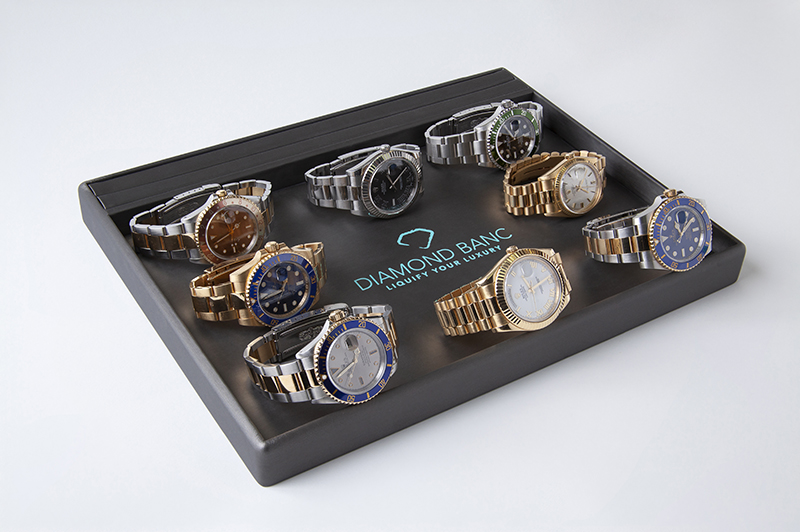
It can, but rarity is only one input. A discontinued reference in strong demand, in excellent condition, with its original box and papers, will typically appraise and collateralize better than the same reference that’s worn, missing documentation, or overdue for service. Lenders who specialize in luxury watches price all of these factors together rather than quoting a single number based on the model name alone. That’s the difference between general pawn-shop pricing and reference-specific Rolex valuation done by people who track current secondary-market pricing daily.
Condition, paperwork, and service: what else affects the number
Rarity sets the ceiling on what a watch could be worth. Condition and documentation determine how close your specific piece gets to it. A few things worth knowing before you ask for an appraisal:
- The Rolex guarantee is tied to purchase, not condition. Every new Rolex comes with the brand’s own international five-year guarantee, activated by an Official Rolex Jeweler at the time of sale. If you’re the original owner with that paperwork intact, it supports your watch’s story, but the guarantee itself transfers with the watch, not with you personally, so a well-documented pre-owned piece still benefits from it.
- Service history matters, and routine service isn’t automatic. Rolex recommends a full service roughly every ten years, depending on the model and how the watch is actually worn, rather than on a fixed short schedule. A watch that’s overdue for service isn’t necessarily broken, but a lender will factor in whether service is likely needed soon.
- Original box and papers aren’t optional extras. For a discontinued or limited reference especially, documentation is part of what a buyer or lender is pricing, since it’s harder to replace than the watch itself.
- Authenticity verification is a starting point, not an afterthought. Before any value conversation starts, a specialist will confirm the piece is genuine; it’s worth understanding how that verification works before you bring a watch in.
For a deeper look at how these specific factors stack up against each other in an actual appraisal, see our breakdown of how condition and documentation affect Rolex value.
How a lender actually arrives at your number
A specialist lender starts with the reference number, not the brand name, and checks current secondary-market pricing for that exact model, including dial variant, bracelet, and any complications. From there, condition, service history, and documentation adjust that baseline up or down. Only after that process does a loan amount or purchase offer get quoted. This is different from a general pawn shop, which is more likely to price a Rolex the way it would price any other watch: by weight of precious metal and general impression, missing the premium that reference-specific scarcity and demand actually create.
If you’re trying to figure out what your own watch is worth in today’s market before deciding whether to sell or use it for a loan, that reference-specific process is really the only one that gives you a realistic number, rather than a rough guess.
Deciding what to do with a limited or discontinued Rolex
If you need cash but want to keep the watch long-term, a Rolex-secured loan lets you access funds against its value without giving up ownership. If you’ve decided you’re ready to part with it, working with a specialist who understands what makes your specific reference desirable is what separates a fair offer from a disappointing one; our guide on how to sell a Rolex and our related post on preparing a Rolex for sale both walk through what to gather before you get an offer. And if you’re simply weighing where to start, the best place to sell a Rolex is one that prices it by reference, not by brand alone.
Nuncier’s Lunar Mission will likely never factor into a Rolex appraisal directly. But the instinct that made aBlogtoWatch’s readers pay attention to a 100-piece run is the same instinct that makes a discontinued Rolex reference worth more than its still-in-production sibling: fewer pieces, sustained demand, and a story that holds up over time. Knowing where your own watch sits in that pattern is the first real step toward deciding what to do with it.
Like what you’re reading?
Add us in Google — more like this is on the wayRelated Posts
 Instagram
 Facebook
 Tiktok
 YouTube