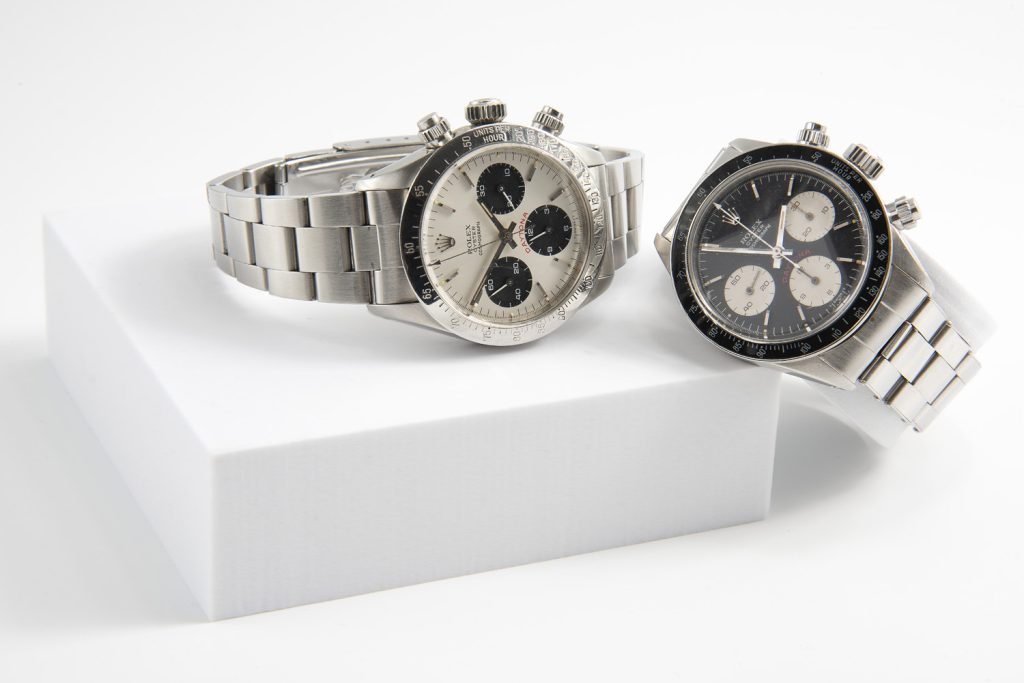
Ask a watch owner what their Rolex is worth and most will quote the price on the tag when they bought it. That number has almost nothing to do with what a dealer or lender will actually offer. The watch market runs on its own pricing logic, and understanding it before you sell a piece or use it to secure a loan changes what you should expect to receive.
How the Watch Market Actually Sets a Loan Value
Dealers and lenders start from the same place: the reference number, not the brand name. A Rolex Submariner and a Rolex Datejust in identical condition can differ in value by tens of thousands of dollars because each reference trades on its own supply and demand curve. From there, a valuation builds in layers: current secondary-market comparables for that specific reference, physical condition against a graded scale (not just “good” or “worn”), presence of original box and papers, documented service history, and whether the piece has had parts replaced that affect originality.
There is an actual benchmark behind this, not just dealer intuition. The WatchCharts Overall Market Index tracks 300 watches across the ten largest luxury brands, weighted by transaction value, and as observed in early October 2026 it stood at 38,518, up 8.3% over the prior year. The Rolex-specific sub-index within that same index sat at 27,991, up 5.2% over the same period. When a lender or buyer tells you “the market is up” or “that reference has softened,” this is the kind of data behind the statement, not a guess.
Why Rolex’s Retail Price Doesn’t Predict What You’ll Get
Retail and secondary pricing are two separate markets that happen to share a brand name. Rolex sets MSRP through its authorized dealer network, and that price reflects manufacturing cost, distribution, and Rolex’s own brand strategy, not the resale supply of a given reference. Secondary-market price is set by scarcity, discontinued-reference demand, and condition among buyers who already know what they want. A heavily discontinued or limited-production reference can trade well above its original retail price, while a currently produced, widely available reference may sit closer to or even below what it cost new, depending on where it falls in that index movement. Neither direction has anything to do with the sticker price at the authorized dealer.
This is why a reference-specific valuation matters more than a general sense of “Rolex holds value.” Two watches with the same retail price new can be worth very different amounts five years later, and the only way to know is to price the actual reference against current transactions, not against what the catalog said.
The Gold Floor Beneath the Brand Premium
Underneath every brand premium sits a hard floor: the melt value of the metal itself. This matters even for a steel sports watch with gold accents, and it matters a great deal for a solid gold case or bracelet. Gold was trading at $4,168 per troy ounce as of 9:05 a.m. ET on October 6, 2026, up roughly $240 from a year earlier. Using that spot price, one troy ounce of 18-karat gold (750 parts per thousand pure) carries a floor value of 1 x 0.75 x $4,168, or $3,126, before any brand, condition, or collectibility premium is added.
That number is a floor, not a price. A dealer or lender will almost never pay strictly melt value for a Rolex case because the brand premium and reference-specific demand typically sit well above it. But the floor matters in two situations: when a piece is too damaged or incomplete to carry collectible value, and when you want a sanity check against an offer that seems unusually low. If an offer on a solid gold piece comes in near or below its metal content alone, that is worth questioning before you accept it.
Condition, Service History, and the Parts-Availability Clock
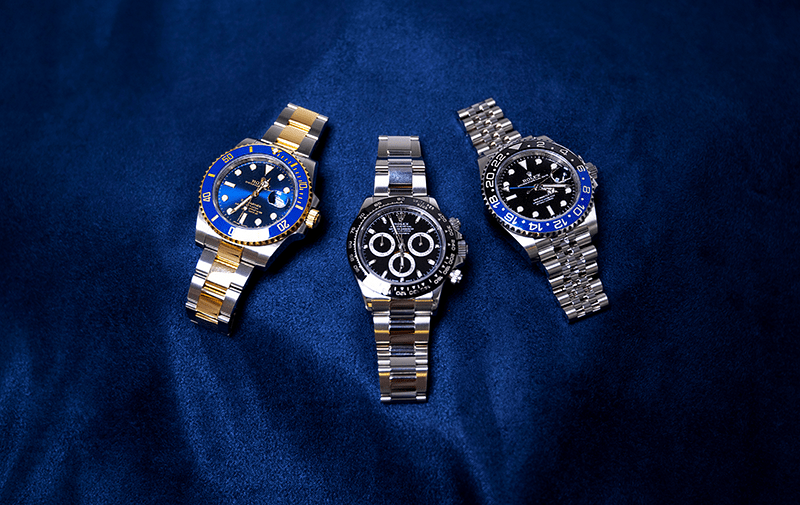
A watch that runs fine on a wrist test can still carry hidden valuation risk. Service history is one of the most heavily weighted inputs a dealer or lender uses, and a missing or undocumented history pulls the number down even when the watch is cosmetically excellent. Rolex recommends professional servicing roughly every ten years, depending on the specific model and how the watch is actually used, and new watches purchased from an Official Jeweler carry a five-year international guarantee. Falling well outside that service window doesn’t make a watch worthless, but it signals unknown mechanical condition, and buyers and lenders price in that uncertainty.
There’s a second, less obvious wrinkle: an authorized factory service doesn’t just clean and lubricate a movement. It can replace a dial, hands, bezel insert, or movement parts with current-production components. The watch remains fully authentic and functional, but it loses the period-correct originality that specialist and vintage buyers specifically pay for. A “perfectly serviced” vintage reference can actually be worth less to a collector than the same reference with original, if slightly worn, parts intact. On top of that, Rolex generally guarantees parts availability for only about 35 years after a reference is discontinued, which means some older pieces may eventually be declined for factory service altogether. If you own a reference heading toward that window, that’s a documentation and timing issue worth understanding before you sell, not after. Our page on how condition and documentation affect Rolex value walks through this in more detail.
Metal Purity, Plating, and the Disclosure Rules That Protect You
Federal rules govern exactly how a seller is allowed to describe the metal in a watch case or bracelet, and a buyer or lender who knows these rules can catch a misrepresentation that would otherwise go unnoticed. Any product described as precious metal that carries a rhodium surface layer has to disclose that plating. Platinum content between 500 and 850 parts per thousand pure platinum requires a clear disclosure immediately following the product’s name or description, since “platinum” without qualification implies a much higher purity than that. Gold labeling rules were also revised in 2018 to remove a strict minimum karat threshold for using the word “gold,” provided the marketing includes an equally visible karat fineness disclosure right alongside it.
In practice, this means the metal description on a watch’s paperwork or listing isn’t automatically reliable. Independent verification, testing the actual metal content rather than trusting a label, is a routine part of any serious valuation, and it’s one more reason a quoted price from an unverified source should be treated as a starting point rather than a fact.
Turning a Valuation Into Cash: Sell It or Use It as Collateral
Once you know roughly where a piece sits, pricing it accurately for an actual transaction comes down to who’s doing the valuation. A general pawn shop values a watch the way it values anything else that comes through the door. A luxury watch specialist prices it against current reference-specific secondary-market data, documented service history, and verified metal content, the same inputs covered above, rather than a flat percentage guess.
Diamond Banc works from that reference-specific approach whether you want to sell a Rolex outright or keep the piece and use it as collateral through a Rolex-secured loan. Either way, the process starts with the same transparent valuation: model and reference verification, a condition and service-history review, and current market pricing, explained to you in plain terms rather than handed over as a single unexplained number. If authenticity is a concern before you bring a piece in, our guide on how to authenticate a Rolex watch covers what to check first.
Diamond Banc operates physical local offices alongside nationwide transactions handled through secure mail-in shipping, and every valuation is reviewed by a human luxury-asset specialist and a local market director rather than an automated pricing tool. That matters most for owners with more than one piece: if you’re weighing options across several watches, our notes on how to use a watch to secure a jewelry equity loan and how collectors use an entire watch collection as collateral go through how a multi-piece valuation actually works.
The short version: a watch’s retail price tells you what it cost. Its real worth, whether you’re selling it or using it to secure a loan, comes from the reference, the documented condition, the metal underneath the brand, and where that specific reference sits in the market right now. Those are the inputs that actually move the number, and they’re the ones worth asking about before you accept an offer.
Like what you’re reading?
Add us in Google — more like this is on the wayRelated Posts
 Instagram
 Facebook
 Tiktok
 YouTube