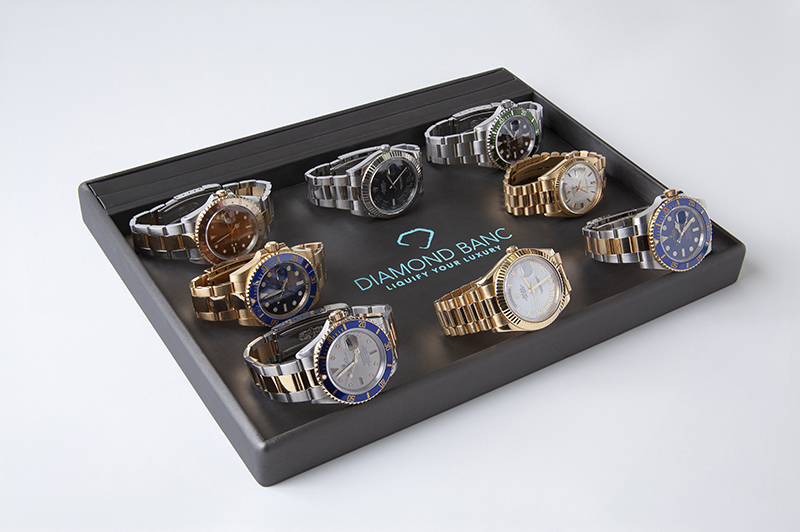
Watch-secured lending is the practice of using a valuable timepiece, typically a Rolex or another recognized luxury brand, as collateral for a loan rather than selling it outright. It sounds similar to walking into a pawn shop, and legally it often is treated the same way, but the details that matter to a borrower, the rate, the loan-to-value, the paperwork, and what happens if you can’t repay, vary enormously depending on who is making the loan and how the contract is written. Before you pledge a watch you’ve worked to buy or inherited, it’s worth understanding exactly what kind of agreement you’re entering.
How Watch-Secured Lending Differs From Pawning
Most watch-secured loans, whether made by a neighborhood pawn shop or a specialist luxury lender, are structured as non-recourse pawn loans. That term has a specific legal meaning: the lender’s only remedy if you don’t repay is to keep and sell the watch. There’s no collections call, no lawsuit, no hit to pursue a remaining balance beyond the collateral itself. The Consumer Financial Protection Bureau built this distinction into federal rule: non-recourse pawn transactions are specifically excluded from its 2017 Payday Lending Rule because the lender holds the collateral for the full loan term and has no legal claim against the borrower for any shortfall.
That exclusion only holds if the contract actually meets those conditions. If the fine print leaves you personally liable for any gap between what you owe and what the watch is later sold for, the loan is no longer a true non-recourse pawn transaction under that same federal standard, and different consumer-protection rules may apply instead. This is the single most important clause to read before you sign anything: does the lender’s recourse end with the watch, or does it extend to you?
Rates, APRs, and Fees to Expect
Pawn-structured loans, including those made against luxury watches, are still consumer credit under the Truth in Lending Act, which means the lender is required to disclose the APR, not just a monthly rate, along with the total amount financed and the total dollar cost of the loan. Pawn and luxury-asset lenders commonly quote pricing as a flat monthly percentage, which can make the loan look cheaper than it is until you see the annualized figure.
Reporting on the high-end asset-lending niche found that lenders financing luxury goods typically charge low single digits in interest per month, but once appraisal, storage, and related costs are layered in, total borrowing costs can run closer to 5% a month, an annualized rate approaching 60%. That’s well above a typical credit card APR and far above a personal loan from a bank, which makes sense given the loan is usually funded and secured in a single visit with no credit check and no income verification. The tradeoff for speed and privacy is a materially higher cost of capital than you’d get from unsecured credit if your credit profile qualifies for it.
Beyond interest, ask specifically what’s included in the quoted rate versus billed separately: appraisal fees, secure storage, shipping if the transaction is handled by mail, and any renewal or extension fee if you don’t redeem the watch on the original due date.
Loan-to-Value: What a Rolex Can Get You
Loan-to-value, the percentage of a watch’s appraised secondary-market value that a lender will actually advance, is where brand and model matter most. Industry reporting puts typical loan-to-value on luxury collateral somewhere in the 40% to 65% range, with more liquid, easily resold assets landing at the higher end and specialized or hard-to-move items landing lower. A steel sport Rolex with strong resale demand and full documentation sits toward that higher end; a discontinued or unusual reference with a thin resale market sits lower, even if its retail price was similar. Typical luxury-asset loans reported in that same coverage run between $15,000 and $20,000, with some specialist lenders able to fund up to $5 million against higher-value collections, so a single well-documented Rolex can realistically support a meaningful loan on its own.
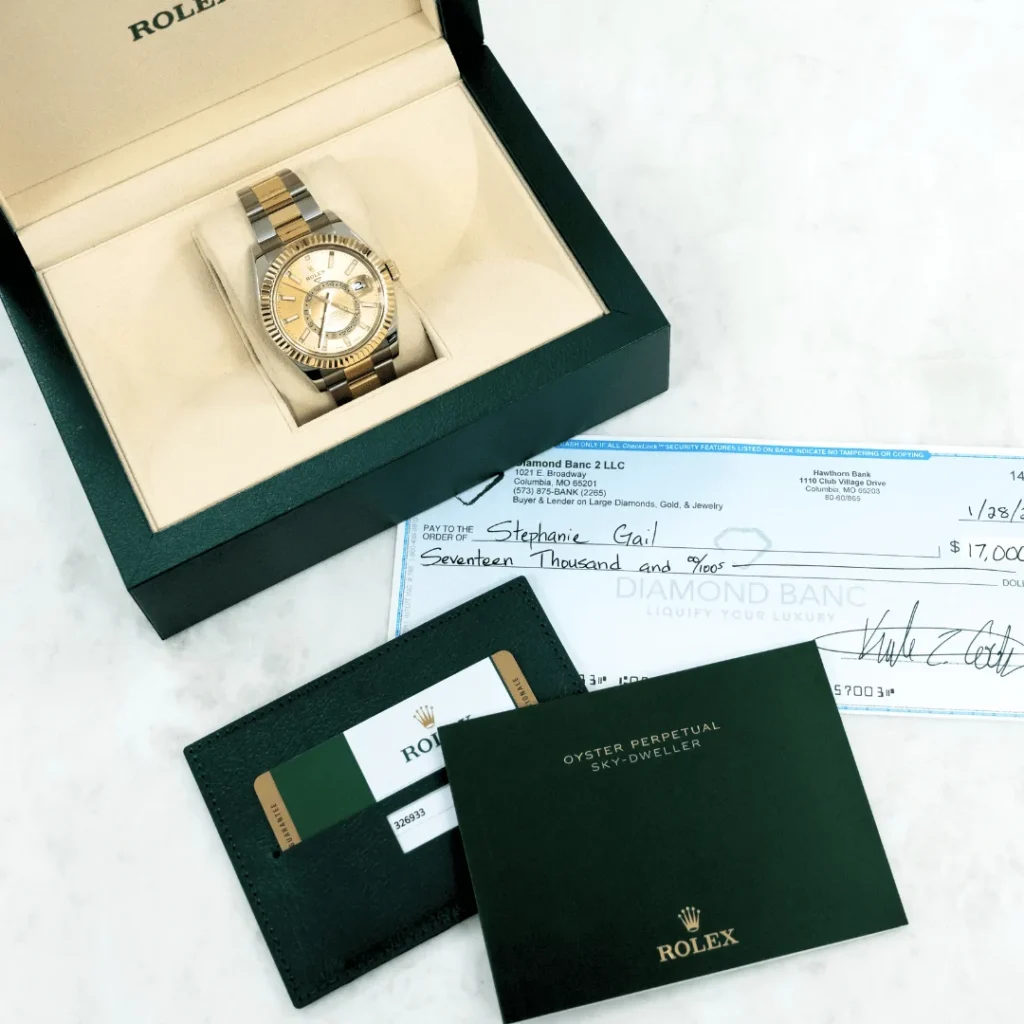
Documentation changes the number too. A watch with its original box, papers, and service history will generally appraise higher and borrow better than the same reference sold loose, because provenance directly affects what a lender believes it can resell the piece for if a loan isn’t redeemed.
Terms, Renewals, and What Happens If You Can’t Repay
Short terms are standard in this space. Loans against luxury goods commonly run 30 to 120 days, far shorter than a typical personal loan or mortgage term. Because that window is tight, renewing or extending is common: the same reporting found roughly 74% of borrowers in this niche come back to borrow again, and many simply roll an existing loan forward by paying the accrued interest rather than closing it out. That’s not necessarily a problem if you understand it going in, but it does mean the “30 to 120 day” loan can quietly become a much longer, ongoing cost if you don’t plan an exit.
On a true non-recourse pawn loan, missing the deadline doesn’t damage your credit score and doesn’t trigger collections, because the lender simply keeps the watch and sells it. That’s a meaningful difference from a personal loan or credit card default, which can follow you for years. The tradeoff is that you lose the watch itself, including any amount its value exceeded the loan. If the contract isn’t structured as non-recourse, ask directly what happens to a shortfall and whether it can appear on your credit report.
Does the Watch Market’s Direction Affect Your Loan?
Because the loan amount is set against the watch’s appraised value at the moment you sign, and that market moves, the number you’re offered today can look different from what the same watch would appraise for a year from now. The Bloomberg Subdial Watch Index, which tracks the 50 most-traded watches by transaction value, gained 8% over 2025 to reach its highest level since October 2023, driven largely by dress-watch demand. That followed a nearly 6% decline in 2024 that had pushed the same index to its lowest point since 2021. In other words, secondary-market watch values, the basis for any appraisal a lender uses, can swing meaningfully within a single year in either direction, not just climb steadily.
That volatility cuts both ways for a borrower. If values have risen since you bought the watch, you may be able to get a larger loan than the watch’s original price suggests. If the market has softened, the appraisal, and therefore the loan offer, may come in lower than you expect based on retail pricing. Either way, a current, model-specific appraisal matters more than a general sense that “watch prices are up” or “watch prices are down.”
Questions to Settle Before You Pledge a Watch
- Is this loan truly non-recourse? Get it in writing that the watch alone satisfies the debt, with no further claim against you.
- What is the full annualized cost? Ask for the APR, not just the monthly rate, and get a written breakdown of appraisal, storage, and any renewal fees.
- What happens at the end of the term? Know whether you’re expected to repay in full, and what renewal costs if you need more time.
- How was the watch appraised? A generic pawn appraisal and a model-specific, reference-aware valuation can produce very different loan offers for the same watch.
- Would selling make more sense? If you don’t plan to reclaim the watch, a straight sale avoids interest entirely and may net you more than a loan advance.
For Rolex owners specifically, the valuation step is where the biggest gaps show up between lenders, since reference number, bracelet, box and papers, and service history all move the number more than brand recognition alone. Understanding what actually drives Rolex value before you get an appraisal puts you in a better position to evaluate any offer, loan or sale, on its merits.
Weighing a Loan Against Selling Outright
A watch-secured loan makes sense when you need cash now but expect to redeem the piece later, and you’re comfortable with a short term and the possibility of renewal. Selling makes more sense when you don’t have a clear plan to reclaim the watch, or when the interest cost over a likely renewal period would outweigh what you’d gain by keeping it. Diamond Banc offers both paths rather than steering every client toward one: a Rolex-secured loan that keeps ownership intact while you access funds, or an outright sale through its Rolex buying option if liquidity, not repayment, is the goal. Owners of other luxury brands have a similar choice through Diamond Banc’s watch-secured loan option.
Whichever direction you lean, a transparent, model-specific valuation from someone who works with luxury watches daily, rather than a general pawn appraisal, is the step that most affects the number you’ll actually be offered. If you’re still deciding, reading through what the selling process actually involves can help you compare it directly against the loan terms above before you commit either way.
Like what you’re reading?
Add us in Google — more like this is on the wayRelated Posts
 Instagram
 Facebook
 Tiktok
 YouTube