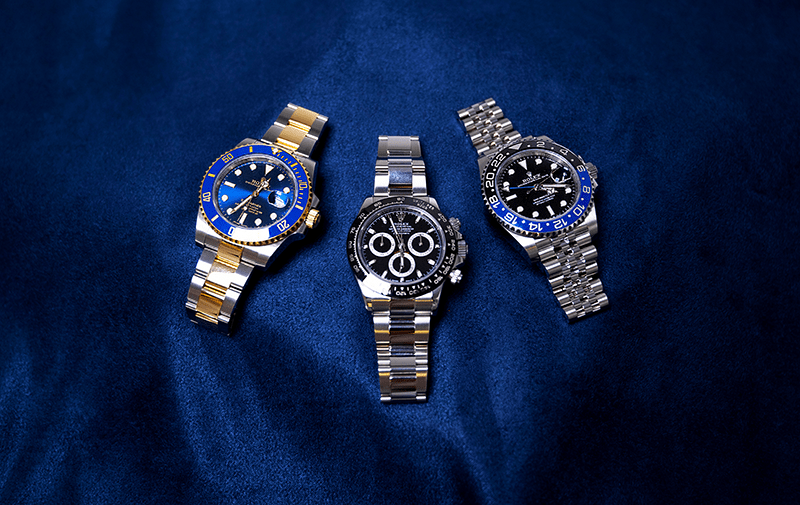
If you’re researching a Rolex full set loan, you already know your watch is worth more with its original box and papers than without them. What most owners don’t know is exactly how much more, which pieces of the “set” actually move a lender’s valuation, and what happens to that value the moment a card gets lost or a watch goes in for service. This is the specific breakdown, with real numbers.
What “Full Set” Actually Means for a Rolex
“Full set” refers to the watch plus its original outer and inner boxes, the printed booklets, and the guarantee (warranty) card completed at the time of purchase. It is not just a nice-to-have. Rolex’s own guarantee terms state that coverage is valid only if the watch was sold by an Official Rolex Retailer, the guarantee card was completed in full at purchase, and that same card is presented with the watch to an Official Rolex Jeweler or Service Center. Every new Rolex today ships with a five-year international guarantee and the green seal designating Superlative Chronometer status, and that guarantee is tied to the card, not to the watch alone.
A reasonable next question is whether a digital or NFC-based warranty record has replaced the physical card. As of Rolex’s currently published terms, it hasn’t: the guarantee language requires the physical card, completed at purchase, presented alongside the watch. There is no provision in Rolex’s own terms for a digital substitute for that document. Until Rolex changes its published terms, the paper card remains the piece that lenders and buyers look for.
How Much More Is a Full Set Actually Worth?
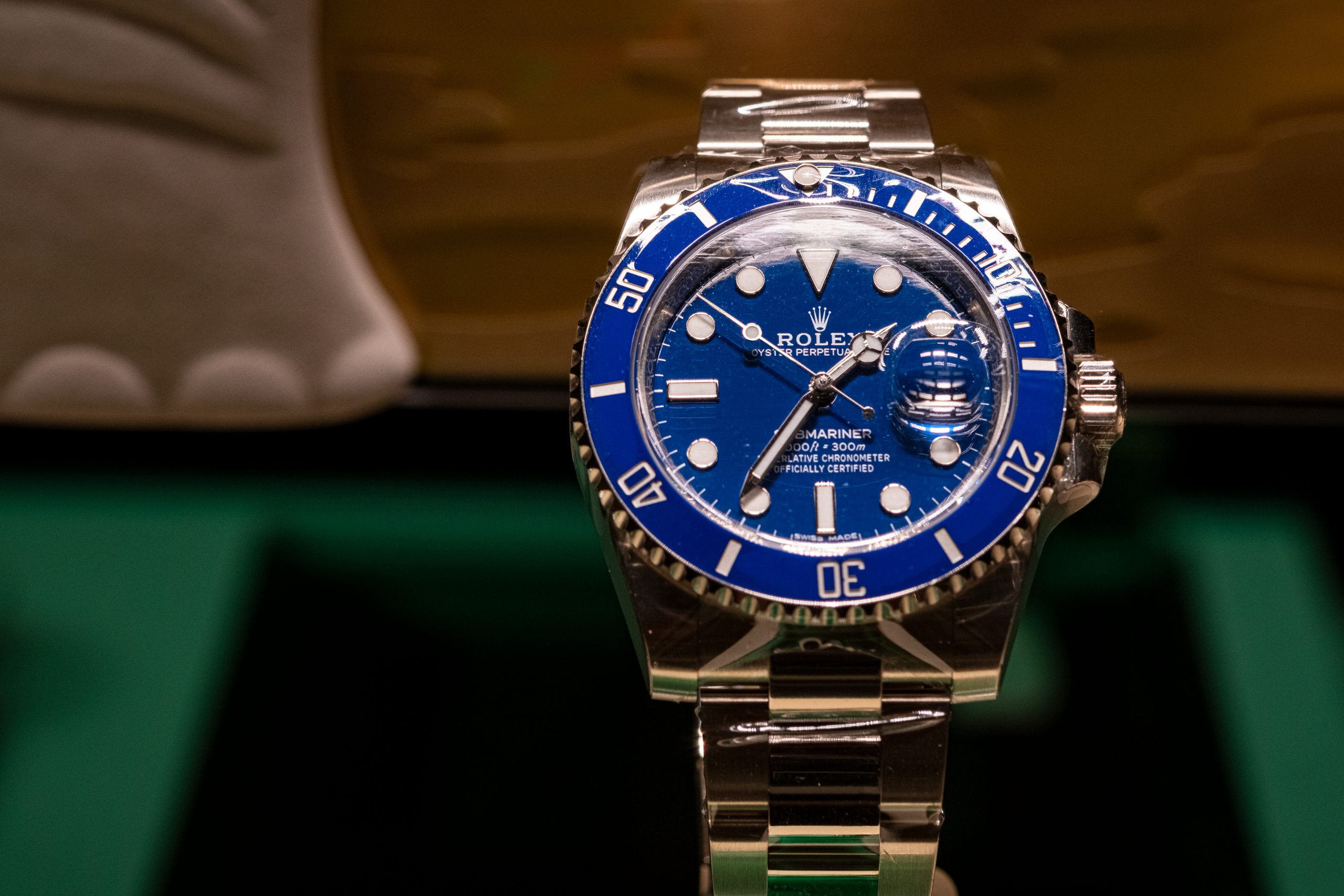
The dollar difference is measurable, not theoretical. Chrono24’s marketplace data on the pre-ceramic Rolex Submariner reference 16610 shows a watch-only example selling for roughly $8,700, while the same reference with box and papers sells for about $10,250, a 17.8% premium. Run that percentage against the same $8,700 base and you land at $10,248.60, which is where Chrono24’s own figure comes from. That’s not a rounding error or a sentimental markup; it’s what buyers on an active marketplace are actually paying for completeness.
The completeness premium also shows up in how fast a watch sells. Chrono24 reports that watches sold with box and papers move 13.1% faster than comparable watch-only listings, and there are twice as many full-set listings on the platform as watch-only ones, largely because dealers go out of their way to source a box when they only have the watch. Faster liquidity and a higher market price both matter to a lender, because they show how strong and stable the collateral’s value is.
That premium is landing in a market that is currently strong. The Bloomberg Subdial Watch Index, which tracks the 50 most-traded timepieces by transaction value, gained 8% in 2025, pushing secondary-market prices to their highest point since October 2023 as of early January 2026. A full-set watch benefits disproportionately in a rising market because both the base price and the completeness premium are climbing at the same time.
Lost Papers, Service Records, and What They Do to Your Set
Here is the risk most owners don’t think about until it’s too late: a guarantee card, once lost or damaged, is gone for good. Rolex’s own FAQ confirms that the guarantee card cannot be re-issued under any circumstances, and the original purchaser’s name on the card can never be changed. There is no replacement process, no reprint, no workaround. If the card is separated from the watch, that specific piece of the full set is permanently unrecoverable, and the watch reverts to watch-only status for valuation purposes even if everything else about it is original.
Servicing raises a related but different question: does an Authorized Service Center visit break up a full set? The honest answer is more nuanced than yes or no. Rolex recommends servicing roughly every 10 years depending on the model and how the watch is actually worn, and when a watch goes through official service, any component that no longer meets Rolex’s current functional or aesthetic specifications is replaced with a new genuine Rolex part. That means a watch can come back from an official service with box, card, and booklets all still present, and yet no longer have 100% original internal components. The box and papers stay intact; the movement inside may not be exactly what left the factory.
What official service does add is its own documentation: the Rolex Service Card issued after an authorized service confirms the work was done correctly and carries its own two-year international guarantee, separate from the original five-year purchase guarantee. That card is a genuine asset to your set, proof of maintained, factory-correct condition. The real danger is third-party service. Any work performed by a non-authorized watchmaker voids the Rolex guarantee entirely, even if the watch is still technically within its warranty period. This is exactly why lenders and buyers ask for service history in addition to the box and card: the paperwork in the box tells you the watch was purchased correctly, but the service history tells you it’s been maintained correctly since.
Does Full Set Matter for a Rolex-Secured Loan?
Box and papers are not a gate you have to pass to get a loan; they’re a factor that moves the number you’re offered. Diamond Banc evaluates every Rolex by reference number, condition, and current secondary-market pricing, using specialists who work in luxury watches specifically rather than general pawn valuation. A complete set (working watch, original box, guarantee card, and any Rolex Service Card on file) supports a stronger valuation because it removes uncertainty about authenticity and origin, the same uncertainty that shows up as a discount in resale markets. A watch-only Rolex can still qualify for a Rolex-secured loan; it will simply be assessed on the strength of the watch itself, without the completeness premium behind it.
If you’re deciding between using the watch as collateral or selling it outright, it’s worth understanding the mechanics of a Rolex equity loan before you bring the watch in, and getting a sense of what your specific reference is worth in today’s market first. Both routes benefit from bringing everything you have: the watch, the box, the card, and any service documentation, even if one or two pieces are missing.
A 5-Year-Old Datejust vs. a Discontinued or Vintage Reference
Completeness matters for every Rolex, but it doesn’t matter equally. A five-year-old Datejust purchased from an authorized retailer is still within its original guarantee window in most cases, and its authenticity is comparatively easy to verify through the retailer of record and Rolex’s own systems, even without the original card in hand. The full set still adds value and speeds up a sale, per the Chrono24 data above, but the watch’s basic legitimacy isn’t in question.
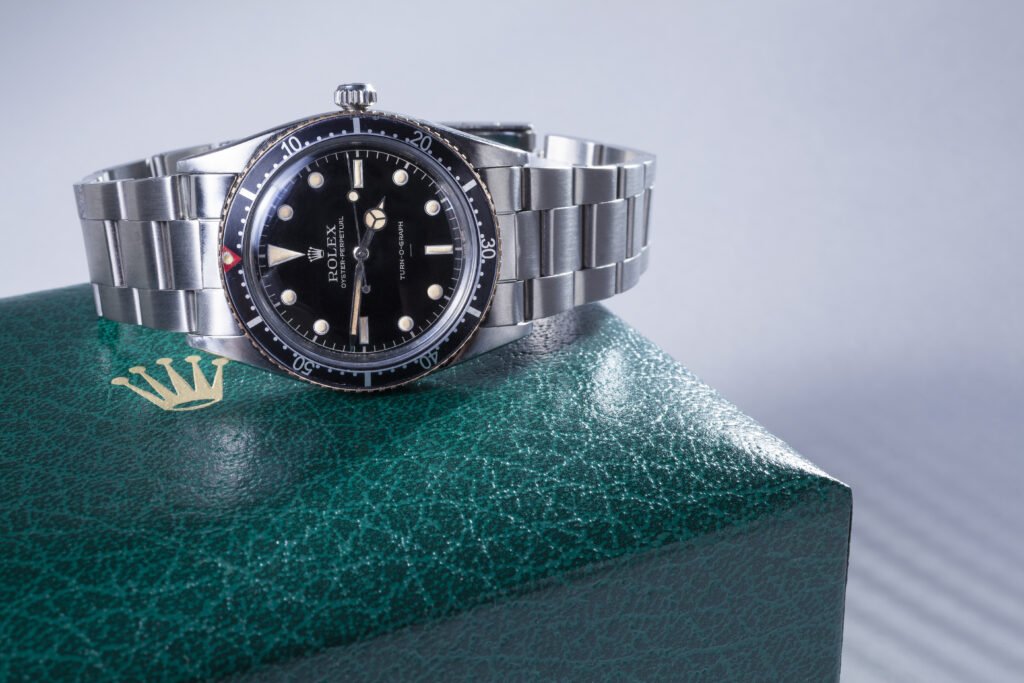
A discontinued reference, or a genuinely vintage piece, is a different situation. Once a reference is out of production, there is no current retailer network actively verifying new sales of it, and older cards were issued under different, less standardized processes than today’s guarantee system. For these watches, the box and papers often become the primary documentary evidence connecting a specific watch to a specific original sale: the dial variant, the caseback stamping, and the paperwork all need to line up. That’s a meaningful reason a full-set vintage or discontinued Rolex, like a discontinued GMT-Master II “Batman”, commands a larger completeness premium than a current-production model of similar condition. The rarer and older the reference, the more the paperwork is doing to prove the watch is exactly what it claims to be.
Patek Philippe and Other Full-Set Watches
The logic behind “watch full set loan” and “Patek full set loan” searches is the same logic driving the Rolex numbers above, because it comes from marketplace-wide data, not a Rolex-specific rule. Chrono24’s findings on faster sales and higher realized prices for complete sets apply across brands: buyers and lenders alike treat box, papers, and service records as proof of an unbroken chain of ownership and authenticity, regardless of whether the watch on the wrist says Rolex, Patek Philippe, or another manufacture. If you own a Patek and are weighing a loan against it, the same principle applies: bring everything, because a complete set narrows the range of possible valuations in your favor rather than leaving a specialist to price in the uncertainty of an incomplete history.
Getting a Loan on Your Full-Set Rolex or Patek
Whether you’re weighing a sale or a loan, the process starts the same way: a model and reference-specific valuation based on current secondary-market pricing, done by someone who works in luxury watches rather than general merchandise. Diamond Banc offers both routes, a straightforward sale through the Rolex sell page or a Rolex-secured loan that lets you keep ownership of the watch while accessing funds against it, with local market directors and physical offices in multiple cities plus secure nationwide mail-in service for owners who aren’t near a location. If you’d rather have someone manage a sale on your behalf at retail-oriented pricing, the Rolex Seller’s Agent program is worth a look as well.
Before you go in, gather what you actually have: the watch, both boxes if you kept them, the guarantee card, the booklets, and any Rolex Service Card from an authorized visit. None of it is required to start the conversation, but every piece you bring narrows the gap between a conservative estimate and the number your specific watch, with its specific history, can actually support. For a deeper look at how a Rolex functions as loan collateral generally, see this guide to using a Rolex for a jewelry equity loan.
Like what you’re reading?
Add us in Google — more like this is on the wayRelated Posts
 Instagram
 Facebook
 Tiktok
 YouTube