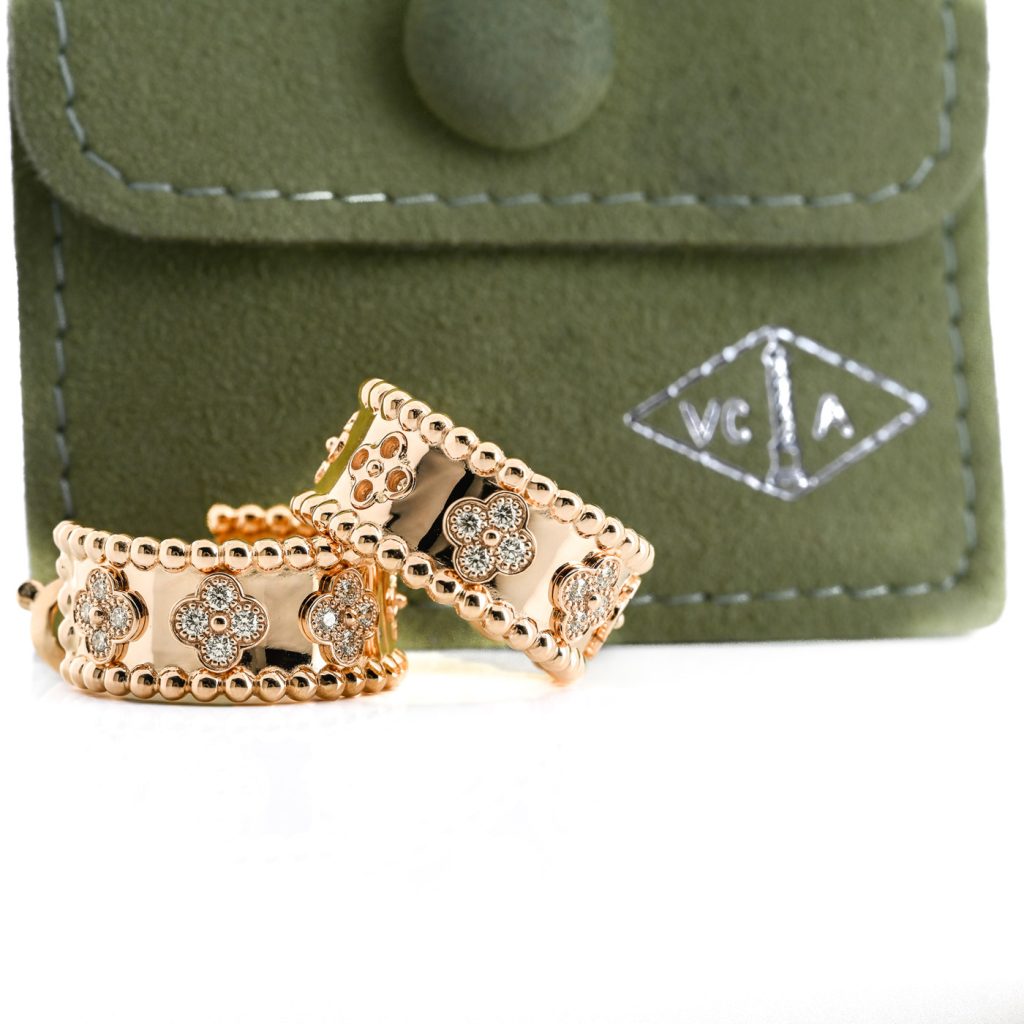
If you own a Van Cleef & Arpels piece and need cash without giving it up, a loan against Van Cleef jewelry is often a better option than a sale. But not every VCA piece is treated the same way once it’s sitting on an evaluator’s desk. A lender looking at a Van Cleef & Arpels piece as loan collateral isn’t just admiring the craftsmanship, they’re pricing three separate things: the metal, the stones, and the paperwork that proves both. Understanding how those three factors are weighed is the difference between a quick, fair offer and a frustrating back-and-forth.
What Actually Makes a Van Cleef & Arpels Piece Trustworthy as Collateral
A lender’s confidence in a piece as security comes down to how reliably it can be valued and, if necessary, resold. Three things drive that confidence with Van Cleef & Arpels specifically:
- The gold. VCA works almost exclusively in 18-karat gold, a known, measurable quantity that forms a hard floor under the loan amount regardless of what happens to fashion or demand for a specific design.
- The stones. Diamonds, coral, chrysoprase, malachite and mother-of-pearl are set to exacting standards, and certified stones (with a grading report) are priced against current auction and wholesale comparables rather than guesswork.
- The name and design longevity. Van Cleef & Arpels has sold recognizable, largely unchanged designs for decades. The Vintage Alhambra pendant, for example, still carries the same four-leaf clover motif the Maison introduced in 1968, which gives evaluators and resale markets a long, stable price history to compare against rather than a single season’s trend.
Of the three, the gold is the only piece of value a lender can verify in minutes on a scale. The stones and the name take more expertise, which is why a specialist familiar with designer jewelry, rather than a general pawn counter, will typically get you closer to the full value of the piece.
How a Loan Amount Is Actually Calculated
A loan amount isn’t built off the original retail receipt. It’s built, layer by layer, off what the piece would reliably bring if it had to be liquidated:
- Gold weight sets the floor. The metal is weighed, the karat is confirmed, and that weight is priced against the current spot rate for gold, which moves daily and should always be checked against a live gold price rather than a number from last month.
- Stone quality and carat weight add to that floor, based on certification, cut, color and clarity rather than a flat “diamonds are worth X per carat” assumption.
- Design and rarity can add further, particularly for discontinued motifs, limited editions, or pieces with strong auction comparables.
Here’s a simple version of the gold-only floor calculation, using only the metal and ignoring stones or brand premium entirely. An 18-karat yellow gold piece weighing 21.50 grams, roughly the weight of a documented Pure Alhambra bracelet, priced against an 18-karat gold value of approximately $99.94 per gram (based on an October 15, 2026 spot price of $4,144.60 per troy ounce), comes to:
21.5 grams x $99.94 = $2,148.71 in approximate gold melt value, before any diamonds, enamel work, or brand premium are added.
That number is the baseline a lender starts from, not the final offer. A piece with diamonds, a documented provenance, or a sought-after motif will be valued well above its melt weight. To see how that baseline translates into an actual loan offer, Diamond Banc’s loan specifics page explains how the floor and the stone/brand premium are combined.
Do Iconic Lines Like Alhambra Hold Value Better Than One-of-a-Kind Pieces?
Generally, yes, and for a specific reason: comparables. A standard production piece from a line like Alhambra has years of resale and auction data behind it, which makes it easier for an evaluator to justify a confident number quickly. A one-off or seasonal piece has to be priced more conservatively because there’s less data to lean on, even if the craftsmanship and materials are identical.
That doesn’t mean rare or statement pieces are worth less. High-end VCA jewelry regularly outperforms estimates at auction: a 16.01-carat diamond ring sold for roughly $458,858 at a Sotheby’s Paris sale in October 2026, narrowly beating its high estimate, and a Zip necklace in coral, chrysoprase and diamond brought $793,303 at a Phillips Geneva auction in May 2026, well above its estimated high of around $614,912. Those results show real demand for distinctive, high-carat VCA pieces, but they also show wider price ranges, which is exactly why rarer pieces take longer to value with confidence than a well-known production design.

Does VCA’s Warranty or Repair Service Change How a Piece Is Treated?
It can, in two specific ways that are easy to miss.
First, the warranty itself has changed over time. Van Cleef & Arpels watches purchased on or after April 1, 2020 carry an 8-year manufacturer’s guarantee against defects in materials and workmanship, up from just 2 years for watches purchased earlier. Two visually identical watches bought a few years apart can carry very different factory protection, so an evaluator (and you) should check the purchase date rather than assume current terms apply retroactively.
Second, and more relevant to jewelry than watches: under VCA’s own service terms, any component removed during a repair, even a free repair performed under warranty, becomes the company’s property, and the client waives any right to get the original part back. If a vintage or discontinued piece has gone through a VCA repair, it may no longer have its original clasp, prong, or stone setting, which can affect how an appraiser values the piece when assessing it as collateral. If your piece has been serviced, mention it upfront so the evaluator isn’t working off an incomplete picture.
What Paperwork Actually Matters
Documentation won’t change the gold weight, but it speeds up the process and can support a higher valuation on the stones and design. The items that matter most are the original box and certificate of authenticity, any diamond grading reports, and service records if the piece has ever been repaired or resized. A clear hallmark showing the karat (typically stamped 750 for 18-karat gold) also matters: under FTC rules, jewelry can only be described as “gold” when the word is immediately preceded by an accurate karat designation, and an item marked 14K or 18K has to actually contain that much gold to be called solid rather than plated. A correctly hallmarked piece with its original paperwork lets an evaluator confirm metal content and authenticity faster, which generally means a faster, more confident offer.
Is Vintage Van Cleef & Arpels Worth More or Less Than Current Production?
Neither answer is universal. Vintage pieces can carry a premium when they represent a discontinued design, an early production run, or a style no longer made, and auction results regularly show collectors paying well above estimate for distinctive vintage VCA. But vintage pieces are also more likely to have been repaired, resized, or altered over the decades, which, as noted above, can mean parts are no longer original. Current production benefits from intact documentation and up-to-date warranty coverage but doesn’t carry the same scarcity premium. In practice, a specialist will evaluate each piece on its own condition and provenance rather than assuming vintage or new is automatically worth more.
Risks to Know Before You Use Van Cleef & Arpels Jewelry as Collateral
- Repair history can quietly change value. If a piece has been serviced by VCA, assume any replaced component is gone for good and factor that into your expectations before you have it appraised.
- Warranty terms aren’t universal. Confirm your purchase date against VCA’s current guarantee policy rather than assuming the terms printed today applied when you bought the piece.
- Melt value is a floor, not an offer. Gold weight alone will usually understate what a well-documented, recognizable VCA piece is actually worth, so don’t let a quick scale-and-spot-price estimate set your expectations too low.
- Missing paperwork slows things down. It doesn’t make a genuine piece worthless, but it does mean more verification time before a loan amount can be finalized.
Loan or Sale: Making the Decision
A Van Cleef & Arpels-secured loan lets you access cash against the piece’s value while keeping ownership, which makes sense if you expect to want the piece back or simply need short-term liquidity rather than a permanent sale. If you’d rather convert the piece to cash outright, Diamond Banc’s Van Cleef & Arpels buying page walks through that process using the same model-specific, current-market approach to valuation described above. Either way, start with a transparent evaluation of the gold weight, the stones, and the documentation rather than a guess, and if you’re weighing a jewelry loan more broadly, Diamond Banc’s loan against jewelry guide and its piece on why Van Cleef & Arpels holds its value are useful next reads before you commit to either path.
Like what you’re reading?
Add us in Google — more like this is on the wayRelated Posts

 Instagram
 Facebook
 Tiktok
 YouTube