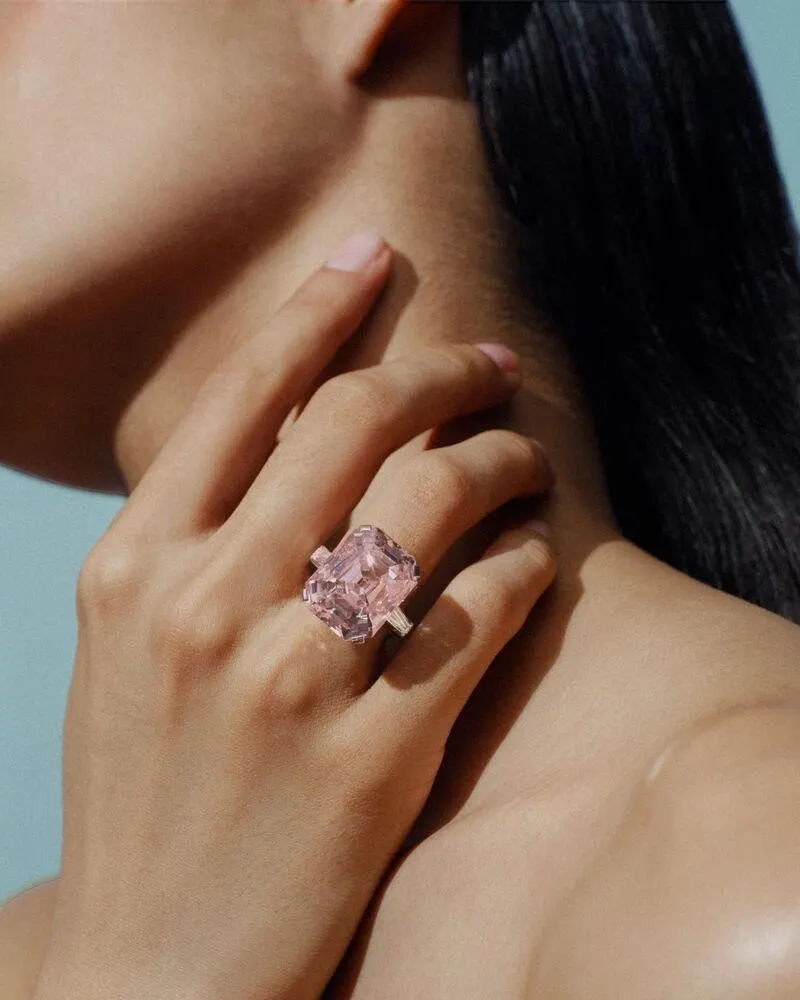
On October 13, 2026, news broke that a 24-carat Bulgari pink diamond ring, kept out of public view by the same European noble family for more than 70 years, is finally coming to auction. Christie’s will offer the stone, nicknamed “The Bulgari Pink,” at its Magnificent Jewels sale in Geneva on November 10, 2026, and according to Forbes’ coverage of the sale, the pre-sale estimate runs from CHF 10 to 15 million, or roughly $12 to 18 million. For anyone who owns a fine colored diamond, or who has wondered whether a gemstone can really serve as serious financial collateral, this auction is a useful case study in how scarcity, provenance, and grading combine to set a price tag that size.
The Bulgari Pink Diamond Auction: Dates and Details
The ring will be on public view at the Four Seasons Hotel des Bergues in Geneva from November 5 through November 10, 2026, immediately ahead of the live sale. The stone itself has an unusually documented history: it was acquired as a rough diamond in India in the 1950s by the current owner’s great-grandfather, later entrusted to Bulgari, and set into the emerald-cut ring that will cross the auction block. According to National Jeweler’s report on the consignment, this will be the stone’s first-ever appearance at auction after sitting in private hands for seven decades.
Why This Particular Stone Could Fetch $18 Million
Three things are doing the work here: size, purity, and timing. At 24 carats, the Bulgari Pink is large for a fancy colored diamond of any hue, let alone pink. It is also graded Type IIa, the rarest and chemically purest classification of natural diamond, a category that represents less than 2% of all diamonds ever discovered, per the same National Jeweler reporting. And it’s arriving at a moment when the world’s primary source of natural pink diamonds has been shut down for six years.
That source was Rio Tinto’s Argyle mine in Western Australia, which closed permanently in November 2020 after 37 years of operation. While it was running, Argyle supplied more than 90% of the world’s natural pink diamonds, yet pink stones made up less than 1% of everything the mine ever pulled out of the ground. No replacement deposit of comparable scale has emerged since the closure, which means every fine pink diamond that reaches market today is effectively drawing down a fixed, shrinking pool of existing stones rather than new supply.
What “Fancy Intense Pink” and “Type IIa” Actually Mean
These terms sound like marketing language, but they’re precise grading categories. The GIA’s fancy color system runs through nine intensity grades for colored diamonds, from Faint and Very Light up through Fancy, Fancy Intense, Fancy Vivid, Fancy Dark, and Fancy Deep. Fancy Intense and Fancy Vivid are generally the two grades that command the highest prices, since they describe the most saturated, most visually dominant color. According to the GIA’s Fancy Color Diamond Buyers Guide, that grade is assigned by evaluating a stone’s hue, tone, and saturation against reference stones, and GIA recognizes 27 distinct hues within its color-grading system. “Fancy Intense Pink” is therefore a specific, measured point on that scale, not a loose description.
Type IIa refers to something different: chemical composition rather than color. It means the diamond contains virtually no nitrogen impurities, the trait responsible for the yellowish tint in most natural diamonds. A Type IIa classification signals exceptional clarity and purity at the atomic level, which is part of why it’s treated as a premium category across the trade, independent of color grade entirely.
Why Pink Diamonds Are Scarcer Than Other Colored Stones
Colored diamonds in general are rare, but pink is scarcer than most. Blue and yellow diamonds still have active, if limited, production from various mines around the world. Pink diamonds do not, because Argyle was never just a major source, it was effectively the source, and its closure left a supply gap nothing has filled. That’s the backdrop against which the Bulgari Pink’s estimate has to be read: it isn’t just a large, well-graded stone, it’s a large, well-graded stone from a category that simply isn’t being replenished.
How the Estimate Stacks Up Against Other Famous Pink Diamond Sales
Recent auction results give some context for where $18 million sits on the spectrum. In June 2025, Christie’s sold The Marie-Therese Pink, a 10.38-carat fancy purple-pink diamond mounted by jeweler JAR, for $13.98 million, a world auction record for a JAR jewel and for a fancy purple-pink diamond, a result Christie’s itself cites alongside the Bulgari Pink’s estimate. The Pink Legacy, an 18.96-carat fancy vivid pink diamond with a higher color grade but less weight than the Bulgari Pink, sold at Christie’s Geneva in November 2018 for roughly $50 million, far above its own pre-sale estimate. And the record for any gemstone at auction still belongs to the 59.6-carat CTF Pink Star, which hammered for $71.2 million at Sotheby’s Hong Kong in 2017.
Set against those numbers, an $18 million estimate for a 24-carat Fancy Intense (rather than Fancy Vivid) pink diamond looks conservative, and auction houses have a track record of being conservative on pink diamonds specifically. Several of the sales above closed well above their pre-sale ranges, which is part of why coverage of this sale has suggested the estimate “may be just the start.”
Disclosure, Verification, and What a Buyer or Lender Needs to See
None of this value is self-evident just by looking at a stone. Federal law under the FTC’s Guides for the Jewelry, Precious Metals, and Pewter Industries (16 CFR Part 23) requires disclosure of any gemstone treatment that isn’t permanent, needs special care, or meaningfully affects the stone’s value. Color-treated and lab-grown pink diamonds exist, and under those rules they must be identified as such. That makes a GIA Colored Diamond Grading Report the document that actually separates a natural Argyle-era pink from a treated or synthetic look-alike: it confirms the color is natural, states the specific hue, tone and saturation grade, and functions as the paper trail any serious buyer, lender, or appraiser will ask for before assigning real value to a colored stone.
For the Bulgari Pink, that paper trail also includes the family provenance, Bulgari’s original setting, and Christie’s own chain-of-title documentation, three layers of verification that together explain why this particular stone can carry an eight-figure estimate with confidence rather than speculation.
Why Pink Diamonds Make Exceptionally Stable Loan Collateral
This is where the auction news connects to a more practical question: what makes an asset good collateral for a loan in the first place? A rare natural fancy colored diamond with a GIA report has two things working in its favor that a Rolex or a plain white diamond doesn’t fully share. First, the supply is fixed or shrinking rather than steady, so value doesn’t erode the way it can for assets with ongoing production. Second, a graded, certified colored diamond carries documented, third-party-verified value that doesn’t depend on brand demand cycles the way a watch does.
That doesn’t make a Rolex a weak asset, Rolex values have their own well-documented secondary-market strength, and a Rolex loan remains one of the fastest ways to unlock liquidity against a piece you already own. But a certified pink or fancy colored diamond, precisely because it’s rarer and its supply is more constrained, tends to hold its appraised value through market swings in a way few other personal assets do. If you own a fine colored diamond, whether it’s a loose stone, a ring, or a piece set by a house like Bulgari, Diamond Banc’s specialists can provide a model- and grade-specific valuation and structure a loan secured by that diamond rather than requiring you to sell it outright. You can read more about how that process works for securing a loan against a pink diamond specifically.
What This Means If You Own a Fine Colored Diamond or Bulgari Piece
You don’t need a 24-carat stone for these principles to apply. If you own a certified colored diamond, the same questions the Christie’s team had to answer apply to yours: is the color natural and documented on a GIA report, is there a clear ownership history, and does the setting or maker (Bulgari, in this case) add recognized value on top of the stone itself. Those are exactly the factors Diamond Banc’s specialists evaluate when determining what your diamond is worth today, whether you’re exploring a sale or a jewelry-secured loan.
If the piece in question was made by Bulgari specifically, whether a colored diamond ring, a watch, or another signed piece, it’s worth getting a current valuation rather than guessing, since designer-made pieces often carry a premium beyond the gemstone or metal alone. Diamond Banc works with Bulgari jewelry specifically, offering either an outright purchase or a loan secured by the piece, with local offices, nationwide service, and secure mail-in shipping for anyone who isn’t near a physical location. For stones without a setting attached, a consignment arrangement through a diamond seller’s agent is also worth considering if you want to capture full market value rather than a quick transaction.
The Bottom Line
The Bulgari Pink’s journey to auction, from a rough stone bought in India in the 1950s to a seven-figure-per-carat estimate in Geneva in 2026, is really a story about scarcity meeting documentation. The mine that once supplied the world’s pink diamonds has been closed for six years with no replacement in sight, and the stones that do exist are only as valuable as the paperwork that proves what they are. That combination, rarity plus verification, is exactly what makes a certified colored diamond such resilient collateral, whether you’re watching this sale from the sidelines or holding a comparable stone of your own.
Like what you’re reading?
Add us in Google — more like this is on the wayRelated Posts

 Instagram
 Facebook
 Tiktok
 YouTube