On the second Sunday of every month, the parking lots around the Rose Bowl fill with more than 2,500 vendors, and somewhere among the vintage denim and mid-century furniture are display cases of gold chains, estate rings, and the occasional Rolex. The Rose Bowl Flea Market has been running since November 1968, and it is one of the best places in Southern California to find a genuinely interesting piece. It is also a place where a few minutes of checking can save you from an expensive mistake.
The next markets fall on November 8 and December 13, 2026. If jewelry or a watch is on your list, here is what our Pasadena specialists look at before money changes hands.
Why Jewelry and Watches Are Different at a Flea Market
A flea market purchase is usually a private, final sale. Many vendors deal in cash only, there is rarely paperwork, and once you drive out of the lot your recourse is limited. That is fine for a $40 lamp. It matters a lot more for a $6,000 watch, because the value of fine jewelry and watches depends on details that are easy to miss under a canopy at 9 AM: metal content, stone quality, and whether the parts are original.
1. Read the Stamps on Gold and Platinum
Solid gold jewelry made for the U.S. market is usually stamped with its karat or its fineness in parts per thousand. Know these before you go:
- 10K or 417 means 41.7% gold
- 14K or 585 means 58.5% gold
- 18K or 750 means 75% gold
- PLAT, PT, or 950 indicates platinum
Marks such as GF (gold filled), GP (gold plated), HGE (heavy gold electroplate), or RGP (rolled gold plate) mean the piece is mostly base metal with a gold layer. Those pieces can be lovely to wear, but they are not priced like solid gold. A missing stamp does not automatically mean a piece is fake, especially on older or resized jewelry, but it does mean you should not pay a solid-gold price without testing.
2. Bring a 10x Loupe
A jeweler’s loupe costs a few dollars and fits in a pocket. At 10x magnification you can read tiny stamps, spot worn plating at the edges of a clasp, see chips on a diamond’s edge, and check the fine printing on a watch dial. Sloppy or uneven dial printing is one of the fastest ways to spot a counterfeit or a refinished dial.
3. Ask for the Diamond’s Grading Report, Then Verify It
If a vendor says a diamond is GIA certified, ask for the report number. The Gemological Institute of America lets anyone confirm report details through its free Report Check database. GIA also notes that many graded diamonds have the report number laser-inscribed on the girdle, visible with a 10x loupe, which is how you confirm the stone in front of you is the stone on the paper. A report that does not match the inscription, or a vendor who cannot produce either, is a reason to slow down.
4. Check a Rolex the Way a Buyer Would
Counterfeit Rolex watches have improved dramatically, so no single test is conclusive. Still, a few checks will screen out a lot:
- The Cyclops date magnifier on a genuine Rolex enlarges the date about 2.5 times, so the date should fill most of the lens. A small, flat-looking date is a warning sign.
- The rehaut, the inner ring between the crystal and the dial, is engraved with “ROLEX” and the watch’s serial number on most modern references. The engraving should be crisp and perfectly aligned with the minute markers.
- The caseback on most Rolex models, including the Submariner and Datejust, is solid. A clear display caseback on one of those models is a strong red flag.
- The seconds hand should sweep in small, quick steps rather than ticking once per second.
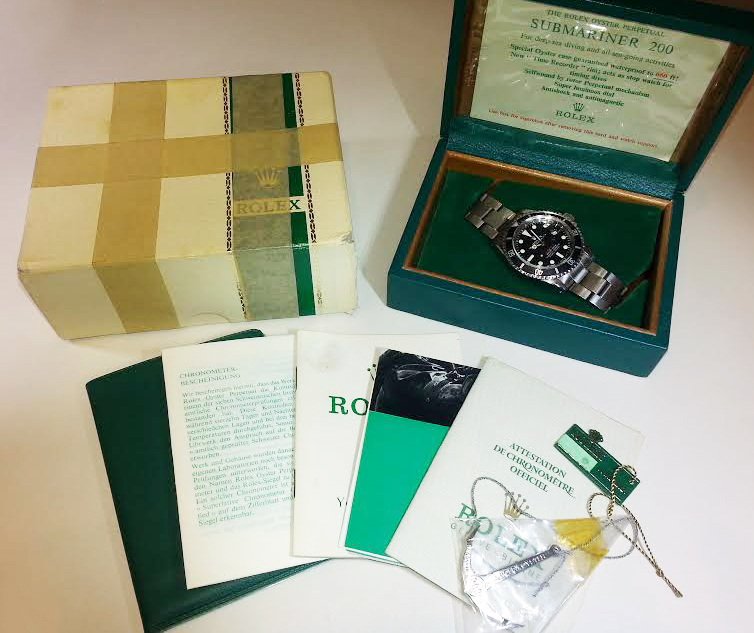
- Papers and box add value, but they are also counterfeited. Match the serial number on the card to the serial on the watch.
5. Watch for “Real but Not Original”
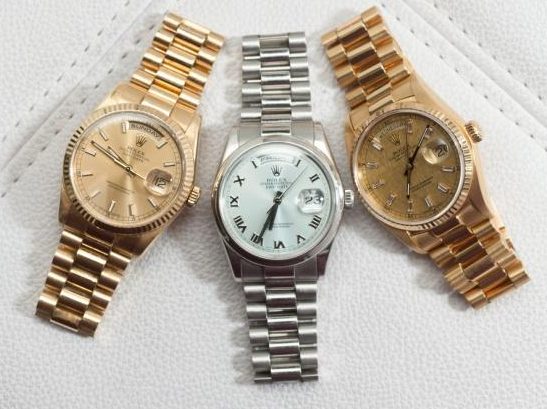
The trickiest flea market watches are not fakes. They are genuine watches with replaced parts: an aftermarket bezel, a refinished dial, a non-original bracelet, or a diamond dial added after the watch left the factory. These watches are real, but collectors and dealers value them well below an all-original example. The same goes for vintage jewelry where a center stone has been swapped or a signed piece has been repaired with unsigned parts. Ask directly whether anything has been replaced, and factor the answer into the price.
6. Treat an Unusually Low Price as Information
Experienced flea market vendors generally know what branded pieces and popular watch references are worth. A Cartier Love bracelet or a steel Rolex sports model priced far below what similar pieces sell for on the secondary market usually has a reason behind it, whether that is authenticity, condition, or missing parts. Before you negotiate, look up recent sold prices for the same model on your phone so you know what “fair” actually looks like.
7. Get a Second Opinion in Pasadena
The Rose Bowl Flea Market runs on Sundays, and Diamond Banc’s Pasadena office on Colorado Boulevard is open Monday through Friday. If you bought something that you want to understand better, or a vendor will hold a piece while you think it over, our specialists can evaluate it during the week and tell you what it is and what it would realistically bring today. There is no obligation, whether you plan to keep the piece, wear it, or sell it later.
When the time comes to sell, our Pasadena team buys Rolex watches, signed designer jewelry, diamonds, and gold and silver, and we price each piece on its secondary-market value rather than its weight alone.
Have a Flea Market Find You Want Evaluated?
Bring it to our office at 680 E. Colorado Blvd., Suite 2023, call (626) 887-8741, or book a private appointment with our Pasadena team.
Like what you’re reading?
Add us in Google — more like this is on the wayRelated Posts
 Instagram
 Facebook
 Tiktok
 YouTube