A Rolex can be more than a luxury purchase. For many owners it is a valuable asset that may be held for future appreciation, sold when timing is favorable, or used to access liquidity without giving up ownership.
That makes resale history useful, but only when it is considered alongside the costs and risks of owning a luxury watch. A complete guide to Rolex value, authentication, and selling can help establish the fundamentals before comparing Rolex performance with other luxury goods and deciding whether to keep, sell, or borrow against your watch. If you’re also evaluating the watch itself, our guide to why Rolex movements sound different explains what a normal tick, sweep, or sound means for condition and resale value.
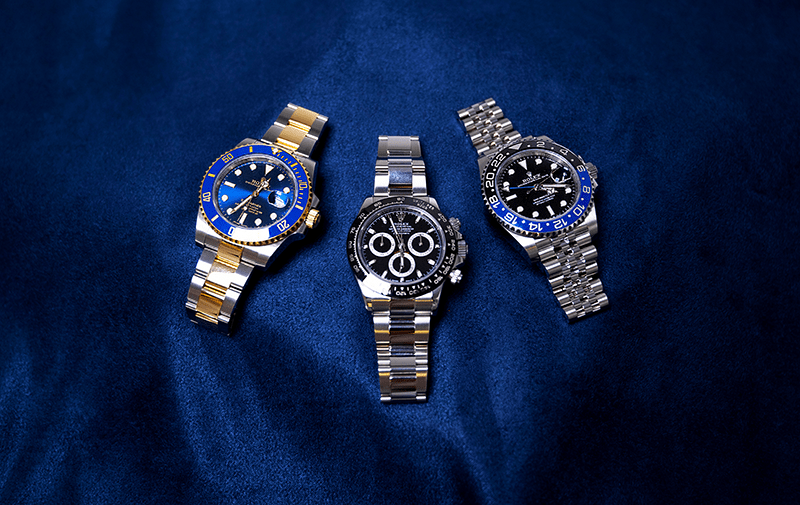
Are Rolex Watches a Good Investment Compared to Other Luxury Goods?
Rolex watches are not guaranteed investments, and no luxury asset should be treated like a risk-free security. However, they have historically held value better than most discretionary purchases, particularly when compared with cars, handbags, and seasonal designer goods. The difference is that a desirable Rolex can remain a recognized, actively traded asset after purchase, while many luxury products begin losing value as soon as they leave the store.
That distinction matters for owners deciding whether to keep, sell, or borrow against a watch. In an academic review of the watch market, researchers found that luxury watches can provide diversification benefits, though their risk-adjusted returns are not necessarily stronger than those of traditional financial assets. In other words, Rolex can be a useful store of value in the right circumstances, but it is not a promise of profit.
- Luxury cars: Depreciation is common because of mileage, maintenance, model-year changes, and the cost of ownership. Even desirable vehicles can lose substantial value after purchase.
- Handbags: A small group of limited editions may command strong resale prices, but colors, materials, condition, and changing fashion cycles can quickly narrow the buyer pool.
- Designer goods: Clothing, accessories, and trend-driven pieces often depreciate sharply as styles change and resale demand moves elsewhere.
- Rolex sports models: Stainless steel models with enduring collector demand, such as the Submariner, Daytona, and GMT-Master II, have historically shown stronger value retention than many other luxury categories.
That demand is supported by Rolex’s position in the broader watch market. Morgan Stanley reporting has identified Rolex as the leading Swiss watch brand by market share, with annual sales surpassing $10 billion. Bobs Watches also notes that several Rolex sports models historically appreciated faster than stocks and bonds, though past performance does not predict future results. Scarcity, brand recognition, serviceability, and a deep secondary market all help explain why these watches can outperform ordinary luxury purchases.
For a broader look at Rolex value, authentication, and selling guide considerations, owners should evaluate the specific reference, condition, accessories, and current market demand. Diamond Banc approaches that evaluation as a professional luxury asset buyer and lender, not a pawn shop. That first-party guidance gives owners a clear basis to weigh holding, selling, or borrowing against the watch.
Rolex Models With the Strongest Investment Track Records
Historical performance varies by reference, production period, condition, and market timing. Still, long-term resale data points to a clear pattern: established Rolex sports models, especially stainless steel references, have attracted the strongest and most consistent demand.
| Model | Approx. 15-year appreciation | Key driver |
|---|---|---|
| Datejust | Approximately 639% | High transaction volume and enduring everyday demand |
| GMT-Master II | Approximately 506% | Strong collector interest, particularly in Pepsi and Batman versions |
| Daytona | Approximately 358% | Scarcity, racing heritage, and sustained enthusiast demand |
| Submariner | Approximately 329% | Recognizable design and unusually resilient secondary-market demand |
These figures come from Happy Jewelers’ 15-year analysis. The Datejust recorded the highest percentage increase in that comparison and was also the most traded model. Daytona examples can sell for more than $53,000, depending on the reference and condition. The analysis also tracked a Submariner purchased for approximately $2,000 in 2010 that reached more than $12,000, representing an increase of over 550% during that period.
Performance depends on the market cycle
Rolex resale values have not risen in a straight line. The market gained about 250% from 2010 to 2015, followed by approximately 24% growth from 2015 to 2020. Prices then climbed about 93% between 2020 and 2022 before correcting roughly 31% from 2022 through 2025 and stabilizing afterward. The Submariner was among the most resilient references, falling only about 8% from its 2022 peak near $19,000.
That cycle is why a strong historical return should not be treated as a guaranteed forecast. Stainless steel sports models such as the Submariner, Daytona, and GMT-Master II generally hold value best, but individual references can behave differently. For broader context, review current watch auction value trends and the valuation factors for Rolex Day-Date models. The secondary luxury watch market is estimated at roughly $24 billion. With about one-third of luxury watches traded second-hand, demand can shift quickly as collectors and buyers adjust.
When Should You Borrow Against a Rolex Instead of Selling?
Selling is not the only way to turn a valuable Rolex into available capital. If you want to keep the watch because it carries sentimental value, belongs to a carefully built collection, or may continue to appreciate, a secured loan can provide liquidity without giving up ownership.
Diamond Banc is a luxury asset lender, not a traditional pawn shop. The company uses the same valuation for a Rolex loan as it does for a direct purchase, so you can compare both options without accepting a lower valuation because you choose to borrow. Loans are asset-backed, and for loans under $30,000, there is no credit check. Funding is usually completed within 24 hours after the watch is evaluated and the loan is approved.
Borrowing may make sense when you want to keep the watch
- You have an immediate need for cash but expect to want the Rolex back.
- The watch has personal meaning or is part of a collection you are not ready to liquidate.
- You believe the model has long-term value and do not want to sell during a temporary market dip.
- You prefer a secured, asset-backed option rather than applying for unsecured credit.
When you borrow, the watch remains in an insured, secure vault while the loan is outstanding. You receive access to the value tied up in the asset without managing a private sale or permanently parting with the watch. Learn more about a Rolex loan and the process for using your watch as collateral.
Selling may make sense when you are ready to liquidate
- You no longer wear the watch or want to make room for a different piece.
- You want to convert the full value into cash without retaining a repayment obligation.
- You are comfortable giving up ownership and do not expect to reacquire the watch.
- You want a straightforward purchase transaction instead of a temporary liquidity solution.
The right choice depends on whether your priority is keeping the asset or converting it permanently. A Luxury Watch Specialist can evaluate the Rolex and explain both paths clearly, allowing you to choose the option that fits your goals.
The Role of Condition and Provenance in Investment Value
Not every Rolex appreciates at the same rate, and ownership history is a major reason why. Two watches with the same reference can attract meaningfully different offers when one is in premium condition, complete, and supported by clear provenance. Market demand establishes the starting point, but the watch’s condition and completeness determine how confidently a buyer can price it for the pre-owned market.
Diamond Banc evaluates Rolex watches using current pre-owned market data, including WatchCharts and comparable private sales. That approach is different from relying on emotional value or a generic valuation model. The review considers the reference, demand, overall condition, full links, and original accessories such as the box and papers. Service records can also help document how the watch has been maintained and make its history easier to understand.
What raises a Rolex’s value?
- Full links: The original bracelet links help preserve the watch’s intended fit and completeness.
- Original box and papers: A complete factory set gives buyers stronger documentation and generally commands a premium.
- Service history: Clear records provide useful evidence of maintenance and ownership care.
- Premium condition and rarity: Minimal wear, desirable dial details, and a scarce reference can strengthen demand.
Consider two otherwise similar late-model Rolex watches. The first has its original box and papers, every factory link, and documented service history. The second has visible wear, no papers, and a shortened bracelet with missing links. Even if the reference and movement are identical, the complete watch is easier to authenticate and present to the next buyer, and it is more likely to command a premium. The incomplete watch typically sells at a discount to account for replacement parts, uncertainty, and the narrower buyer pool.
Completeness can also affect how you access value. For a late-model Rolex, a store-credit trade receives a 10% premium on top of the offer. If you are considering selling or borrowing against the watch, a Luxury Watch Specialist can explain how condition, provenance, and current market data shape your options.
What Should You Do With Your Rolex Right Now?
There is no single right answer for every owner. The best choice depends on whether you want liquidity, still enjoy wearing the watch, and need to preserve the option to own it later. Use this decision flow to choose a direction based on your current priorities.
- Keep it if you still wear it and do not need the cash. Holding can be reasonable when the watch has personal value, fits your collection, and remains in demand. Continue to protect the watch, retain its box and papers, and keep records that support its condition and provenance. Holding is not a guarantee of appreciation, but it lets you continue enjoying the watch while preserving future options.
- Sell it if you want cash and no longer wear it. A current evaluation can show what the watch may realistically bring in today’s resale market. Work with top-tier Rolex watch buyers who understand model, condition, accessories, and current demand rather than relying on a generic online estimate. Diamond Banc’s Luxury Watch Specialists can evaluate the watch and provide a competitive purchase offer or loan.
- Borrow against it if you need cash but want to keep the watch. A watch-backed loan can provide access to liquidity without requiring you to permanently give up an asset you may want to wear or retain. This is often the clearest path when the need for cash is temporary or the watch has long-term personal value. Diamond Banc is a luxury asset lender, and the same evaluation is used for a loan as for a purchase.
Before deciding, obtain a current, market-based appraisal from a professional. Real resale data is more useful than a purchase price, an old listing, or an assumption that every Rolex performs the same way. Diamond Banc’s Luxury Watch Specialists evaluate thousands of watches each year and can explain whether selling or borrowing better fits your goals.
Purchase offers are preliminary and assume the details provided are accurate, the watch is in premium condition and accompanied with full links and all factory accessories. Prices are subject to change and Diamond Banc is under no obligation to purchase your watch. If you elect not to accept our offer, the watch will be returned at no cost to you. Rest assured, we will do everything possible to make you an industry-leading offer and purchase your watch.
Frequently Asked Questions
Do Rolex watches really go up in value?
Some models and configurations have appreciated over time, but Rolex value is not guaranteed to rise every year. Market demand, model, condition, provenance, and the broader resale cycle all matter. Research on luxury watches also finds diversification benefits, while noting that returns can be volatile and may compare poorly with traditional financial assets on a risk-adjusted basis. Read the Princeton research.
Is it worth selling or keeping a 20-year-old Rolex?
It can be, especially if the watch has strong demand, excellent condition, complete links, and its original box and papers. Age alone does not determine value. A specialist should compare the exact reference and condition with current pre-owned market data before you decide whether to keep, sell, or borrow against it.
What Rolex models are generally strongest for resale?
Stainless-steel sports models such as the Submariner, Daytona, and GMT-Master II have historically attracted strong demand. Datejust models also trade actively. The best choice depends on the exact reference, configuration, condition, and current market, so a broad model ranking should not replace an individual evaluation.
Should I sell my Rolex or borrow against it?
Sell when you want to exit the asset permanently and receive purchase proceeds. Borrow when you need liquidity but want to keep ownership and the option to reclaim the watch. Diamond Banc uses the same valuation for a loan as for a direct purchase. That lets you compare both paths without a credit check because the financing is equity-backed.
What are Rolex watches worth today?
What a given Rolex is worth depends on the reference, its condition, completeness, and where that model sits in the current resale cycle, not a single published figure. Models like the Datejust, GMT-Master II, Daytona, and Submariner have shown the strongest long-term appreciation, but value still rises and falls with the broader market. A current, market-based evaluation is the only reliable way to know what a specific watch is worth right now.
Ready to Review Your Rolex Options?
A complimentary evaluation can help you make a clear decision about whether to keep your watch, access liquidity through a loan, or explore a sale. A Luxury Watch Specialist can review your Rolex and explain the next steps based on its current market position. You can schedule an appointment at a Diamond Banc location near you or start your evaluation online and discuss your options.
Like what you’re reading?
Add us in Google — more like this is on the wayRelated Posts

 Instagram
 Facebook
 Tiktok
 YouTube