The channel you choose can affect more than how quickly a diamond ring sells. Online auctions may reach more buyers, local jewelers may provide immediate cash or trade-in credit, and specialized jewelry buyers focus on evaluating luxury assets for resale. The right option depends on whether your priority is speed, reach, convenience, or a clear professional evaluation.
The best place to sell a diamond ring is usually the option that matches your priorities while giving you a transparent offer based on the ring’s quality, documentation, and current market demand. A dedicated jewelry buyer can offer expertise and a streamlined local or mail-in process. While an auction may suit sellers willing to trade time and fees for broader exposure.
Before comparing each channel, it helps to separate the promise of a high price from the amount you actually keep after fees, delays, or store-credit terms. Our guide to selling diamonds and fine jewelry provides additional context, while the comparison below focuses on how each buyer type fits different selling goals.
Get a fair offer for your diamond ring
Why the Best Place to Sell a Diamond Ring Depends on Your Priorities
There is no single answer for every seller because the best option depends on what you want from the transaction. One person may need cash quickly, while another may be willing to wait for a broader pool of buyers in pursuit of a stronger offer. Someone else may value a private, insured process or the reassurance of meeting an experienced buyer in person.
These goals can point to different selling channels. A local jeweler may provide a convenient in-person conversation, while an online auction may reach more potential buyers but require more time and effort. A dedicated jewelry buyer can offer a middle path, combining specialized knowledge with a streamlined evaluation. The right choice begins with identifying which tradeoff matters least to you.
- Fast cash: If timing is your main concern, prioritize a buyer that can evaluate the ring promptly and explain when funds are available. Immediate access may matter more than spending extra time testing multiple channels.
- Maximum payout: If your goal is the strongest possible offer, compare buyers that understand diamond quality, brand, market demand, and resale potential. A broader audience can sometimes improve competition, but fees, shipping, and waiting periods can affect what you ultimately receive.
- Secure and insured handling: Look for a clearly documented process, secure shipping or appointment procedures, and appropriate insurance during transit. Your comfort with how the ring is handled is part of the transaction’s value.
- Minimal effort: Some sellers prefer not to photograph the ring, create a listing, answer messages, negotiate with strangers, or manage a sale after accepting an offer. A professional buyer may reduce those responsibilities by handling the evaluation directly.
- Local, in-person service: Meeting with a buyer can make it easier to ask questions, present supporting documents, and understand how the ring is assessed. It may also be preferable when you do not want to ship a valuable piece.
Your priorities may also overlap. For example, you may want a fast offer without sacrificing secure handling, or an in-person evaluation without limiting yourself to a trade-in. Original paperwork, including a GIA report when available, can help a buyer verify the ring’s details, but it is not the only factor in an offer.
Once you know whether speed, payout, convenience, security, or personal service leads your decision, the main selling channels become easier to compare. The next section breaks down what each option involves and where it tends to fit best.
The Main Channels for Selling a Diamond Ring
The right selling channel depends on whether you value broad exposure, immediate cash, convenience, or a specialized evaluation. Each option has a different balance of effort, timing, privacy, and potential offer.
- Online auction or marketplace: Listing the ring online can put it in front of a broader audience, which may create competition and potentially lead to a higher offer. The tradeoff is that you manage the listing, buyer questions, shipping, payment, and transaction risk. Auction and marketplace fees can also reduce the amount you ultimately receive.
- Online jewelry buyer: An established online buyer can provide a convenient way to submit information, ship the ring securely, and receive an offer without visiting a store. This may suit someone who wants a streamlined process, but you should review the buyer’s evaluation method, insurance coverage, payment terms, and return policy before sending valuable jewelry.
- Local jeweler trade-in: A local jeweler offers face-to-face service and may be able to evaluate the ring quickly. This route can make sense if you plan to purchase another piece from the same store. However, some jewelers offer more in store credit than they offer in cash for a trade-in, so clarify which type of offer you are comparing.
- Pawn shop: A pawn shop may provide a fast transaction when speed matters most. The convenience can come with a lower offer because the business typically needs room for resale and assumes risk in a short, collateral-based transaction. A pawn shop is one option, but it is not the same as working with a dedicated jewelry buyer.
- Dedicated expert buyer with a mail-in option: A professional diamond and jewelry buyer can focus the evaluation on the ring’s characteristics and resale market rather than treating it as general collateral. A secure mail-in program can extend that expertise beyond local offices, making it useful when there is no convenient buyer nearby. Confirm how the item is insured, how the evaluation works, and when funds are released.
Whichever channel you choose, gather the ring’s documentation first. A GIA certificate or original paperwork can help verify the diamond’s details and support a stronger offer. It does not replace an evaluation, but it gives the buyer reliable information about the stone’s characteristics. For more context on the process, see this guide to selling diamonds and fine jewelry.
Online Auction vs. Local Jeweler vs. Expert Buyer: Pros and Cons
Each selling channel trades something different: speed, reach, convenience, privacy, or control over the final offer. The right comparison depends on whether you want to maximize exposure, receive cash quickly. Or work with a specialist who can evaluate the ring and manage the transaction securely.
| Channel | Speed | Price potential | Fees or commissions | Security | Effort |
|---|---|---|---|---|---|
| Online auction | Variable; depends on auction timing | Potentially higher because of broader reach | Listing, buyer, payment, or final-sale fees may apply | Requires careful platform and buyer review | High; photos, descriptions, shipping, questions, and fulfillment |
| Local jeweler | Often immediate | May be stronger as store credit than as cash | Usually reflected in the offer or trade-in terms | In-person transaction with an established business | Low to moderate; visit the store and compare terms |
| Online buyer | Moderate; requires shipping and evaluation | Convenient, but varies by buyer expertise and resale model | Review shipping, insurance, and return terms before sending | Use insured shipping and confirm the company’s process | Moderate; submit details, package the ring, and review the offer |
| Dedicated expert buyer, such as Diamond Banc | Fast; local and mail-in options are available | Built around specialist evaluation of luxury assets | Ask how the offer is calculated and whether any deductions apply | Professional evaluation with a secure transaction process | Low to moderate; schedule an evaluation or use the secure mail-in service |
| Pawn shop | Usually very fast | Often lower because the item supports a collateral-based loan or quick resale | Interest, loan terms, or other charges may apply if borrowing | In-person, but policies and expertise vary widely | Low; convenient when speed matters most |
Online auctions can produce a higher gross price, but that possibility comes with broader marketing and more work, and the net amount depends on fees. A local jeweler may be convenient, especially if you are trading toward another purchase, but ask whether the quoted amount is cash or store credit. A dedicated expert buyer offers a more focused alternative: Diamond Banc specializes in diamonds. Fine jewelry, luxury watches, and handbags and uses both local offices and a secure national mail-in service. Keep original certification or purchase paperwork available, since documentation can help a buyer verify the ring’s details and prepare an informed offer.
What Diamond Banc Pays vs. What Others Pay
The strongest offers usually come from a buyer who understands both the asset’s fair market value and how to resell it. A fair market value appraisal establishes a baseline: the price a willing buyer would pay a willing seller under normal conditions. That baseline is more useful than an arbitrary percentage of the original retail price or a quick estimate based only on carat weight. The Gemological Institute of America notes that quality, market availability, and local desirability all influence resale value. Learn more about selling diamonds and fine jewelry before comparing offers.
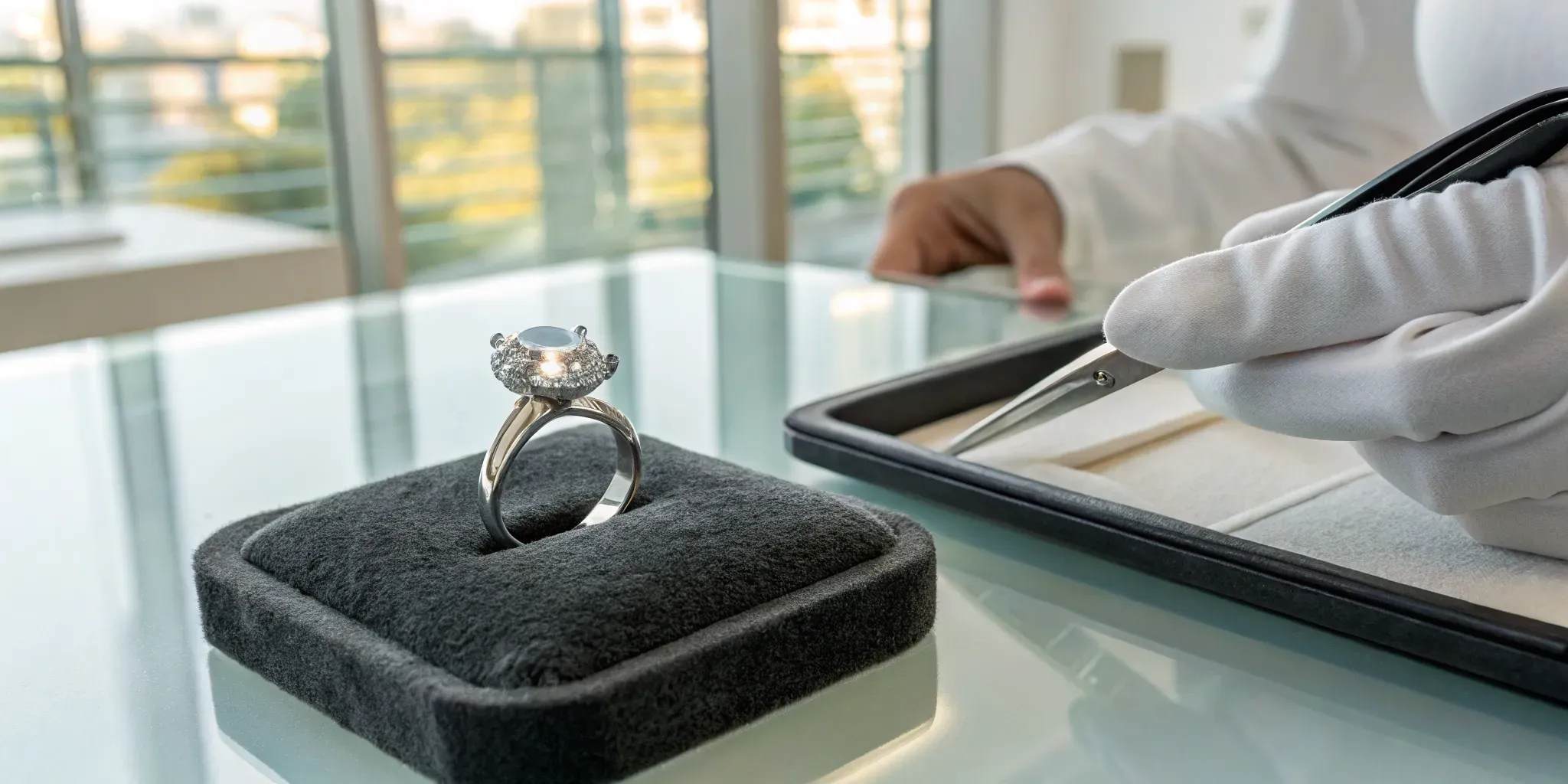
Diamond Banc evaluates luxury assets with the resale market in mind. Its team specializes in purchasing diamonds, fine jewelry, luxury watches, and handbags, rather than treating a diamond ring as generic collateral. That distinction matters because an experienced buyer can assess the details that shape demand. Including the quality of the stone, the design and condition of the mounting, brand recognition, and current market interest. The 4Cs, brand, and demand all contribute to a diamond’s price, but none should be considered in isolation.
Why expertise can support a stronger offer
A dedicated jewelry buyer typically purchases with a clear wholesale and resale strategy. The buyer can determine where the piece fits in the market, what customers are looking for, and how to price it responsibly after acquisition. This expertise can allow the buyer to pay closer to an informed market value while still accounting for the costs and risk of resale.
Diamond Banc also uses a hybrid model, with local offices and a secure national mail-in service. That gives sellers a choice between an in-person evaluation and a remote process without forcing the ring into a one-size-fits-all transaction.
How other channels affect your net proceeds
Pawn shops generally lend against collateral and protect themselves with deep discounts. The resulting offer may be convenient, but it is not designed to reflect the full resale potential of a high-value diamond or finished piece of jewelry.
An auction can reach more potential buyers and may produce a higher gross selling price. However, seller fees, buyer premiums, shipping, insurance, and the time required to complete the sale reduce what you actually keep. A local jeweler may provide immediate cash, while trade-in offers can be higher when issued as store credit rather than cash. Compare the net amount, timeline, and conditions of each offer, not just the headline number.
The Fastest Way to Get a Fair Offer
A fast offer should still reflect the details that make your diamond valuable. Use this sequence to prepare the right information, understand what buyers are assessing, and compare the terms before you accept.
- Gather the diamond’s details and documents. Locate the original GIA report, purchase paperwork, receipts, insurance appraisal, and any service records you have. Note the center stone’s carat weight, shape, setting, metal type, and designer or brand name. Original certification paperwork is not always required, but it can help a buyer verify the stone and make a stronger offer. If documents are missing, do not assume you cannot sell. A qualified buyer can still examine the ring directly.
- Understand what drives the value. The 4Cs, cut, color, carat, and clarity, provide the foundation for assessing a diamond. Brand name and current market demand can also influence the offer. Two rings that look similar at a glance may differ meaningfully in quality or desirability. For a starting point, find out what your diamond is worth, then treat that result as a guide rather than a guaranteed purchase price.
- Choose a professional evaluation. Look for an experienced jewelry buyer or evaluator who can explain how the stone, mounting, documentation, and current market affect the offer. Be precise about credentials: diamonds may be GIA certified, but GIA does not certify individual appraisers. GIA advises consumers to ask about an appraiser’s education and experience, so request that information before relying on an evaluation. An expert should be willing to explain the reasoning behind the offer in clear language.
- Compare offers across channels. Consider the total outcome, not just the headline number. An online auction may reach more buyers, while a local jeweler may provide immediate cash. A trade-in may be presented as a higher amount in store credit than in cash. Ask about commissions, shipping, insurance, waiting periods, payment method, and whether the offer is for the complete ring or only the center stone. Comparing like-for-like terms helps you identify a genuinely fair offer.
- Accept a secure offer you understand. Before handing over the ring, confirm the buyer’s identity, evaluation terms, return or cancellation policy, and funding timeline in writing. A straightforward transaction should explain what happens next and how your property is protected. If the process feels rushed or the terms change without explanation, pause and ask questions. The best place to sell a diamond ring is the channel that combines a credible evaluation, transparent terms, and secure payment.
How to Get Started With Diamond Banc
Getting started is designed to be straightforward, whether you prefer an in-person conversation or a secure online process. Diamond Banc specializes in purchasing diamonds, fine jewelry, luxury watches, and handbags. So the evaluation is handled by a professional buyer familiar with high-value assets rather than a general resale marketplace.
1. Share the details of your ring
Begin by submitting information about the ring and requesting an evaluation. Include clear photographs, any available grading report, original paperwork, and details about the setting or designer. Documentation is not always required, but a GIA certificate or original paperwork can help verify the diamond’s characteristics and support a more informed offer. If you would like to sell your diamond jewelry, you can start online and provide the relevant details for review.
2. Complete a professional evaluation
A Diamond Banc expert reviews the piece using the information available, the diamond’s quality, and current market considerations. Diamond pricing reflects more than carat weight alone. Cut, color, clarity, brand, and market demand all affect how a piece is assessed. The goal is to explain the reasoning behind the evaluation clearly, so you understand the basis of the offer before deciding what to do next.
For local sellers, the evaluation can take place through a Diamond Banc office. If visiting an office is inconvenient, the national mail-in program provides a secure alternative. This hybrid model gives sellers a choice between a local appointment and a streamlined process from home.
3. Review your offer and choose your funding method
After the evaluation, you receive a secure offer for consideration. There is no need to make a decision before you understand the terms. If the offer works for you, Diamond Banc provides fast funding, with many transactions completed within 24 hours after receiving the asset. The exact timing can depend on the item and the selected process.
If you prefer to meet with an expert in person, schedule an appointment at a convenient office. If distance or timing makes that difficult, the mail-in option lets you pursue the same professional buying process without a local location nearby.
Find out what your diamond ring is worth
Frequently Asked Questions
How can I sell my diamond ring for the most money?
Compare more than one buyer type, ask whether the offer is cash or store credit, and provide the ring’s GIA report or original paperwork when available. An expert buyer can explain how the diamond’s quality, market availability, design, and current demand affect the offer.
Is it better to sell a diamond ring online or in person?
Online auctions may reach more buyers and sometimes produce higher offers, but they can require more time and involve fees. An in-person buyer offers a direct evaluation and a faster decision. A secure mail-in program can provide a middle option when no local office is convenient.
What factors influence the price of a diamond ring?
The 4Cs, cut, color, carat weight, and clarity, are important, along with the setting, brand, condition, market availability, and buyer demand. A fair-market appraisal provides a baseline, but an actual offer also reflects the buyer’s resale channel and current inventory needs.
How much is a 1 carat diamond worth to sell?
There is no reliable single price based on carat weight alone. Two one-carat diamonds can receive different offers because their cut, color, clarity, certification, shape, brand, condition, and market demand differ. A professional evaluation is more useful than a generic online estimate.
Do I need proof of purchase to sell my diamond ring?
Proof of purchase is not always required, but a GIA report, original receipt, insurance appraisal, or other documentation can help verify the ring and its characteristics. If you do not have paperwork, a qualified buyer can still inspect the piece and explain what information is available from the evaluation.
Get Started With a Professional Diamond Ring Offer
A professional evaluation can help you compare your options and understand what your diamond ring may be worth before you decide how to sell. Get started online to request an offer for your diamond ring from an experienced jewelry buyer, then choose the next step that fits your needs.
Like what you’re reading?
Related Posts
 Instagram
 Facebook
 Tiktok
 YouTube