Fancy blue diamonds are rare, naturally occurring diamonds with visible blue color caused by boron impurities in their crystal structure. These diamonds are not graded using the traditional D-to-Z scale for colorless stones; instead, they are assessed based on the intensity of their color.
According to the Gemological Institute of America (GIA), there are seven recognized grades: Faint Blue, Very Light Blue, Light Blue, Fancy Light Blue, Fancy Blue, Fancy Intense Blue, and Fancy Vivid Blue, with Fancy Vivid Blue being the most saturated and valuable.
Subtle secondary hues, such as gray, violet, or green, are present and either enhance or detract from the diamond’s value, depending on its strength and balance. To verify the authenticity of a fancy blue diamond, request a GIA certificate that confirms the color origin as natural and states its grade, carat weight, cut, and clarity.
Use tools such as UV light to check for natural fluorescence patterns, and have the diamond assessed by a certified gemologist using magnification and spectroscopy. When buying, consider four key factors: color saturation, which affects price the most; secondary tones, which influence appearance; clarity and cut, which impact brilliance; and carat weight, which drives value in combination with the color grade.
Always compare similar GIA-graded stones side by side under neutral lighting. Avoid unverified sources or diamonds lacking full grading reports. This ensures the stone is natural, untreated, and accurately classified, protecting long-term value and authenticity. Diamond Banc, a trusted name in the U.S. luxury diamond market, provides expert evaluations, GIA-grade verification support, and unmatched transparency for clients seeking to buy, sell, or secure loans against rare diamonds, including fancy blue varieties.
Table of Contents
- What is the Fancy Blue Diamond?
- What is the History of Fancy Blue Diamonds?
- What are the Different Grades of Blue Diamonds?
- What Makes Fancy Blue Diamonds So Rare?
- What Factors Created the Blue Hue in Diamonds?
- What Are The Most Expensive Fancy Blue Diamonds In The U.S.?
- What Properties Of A Fancy Blue Diamond Determine Its Value?
- What Are the Best Ways to Verify Fancy Blue Diamond Authenticity?
- What Should You Consider When Buying a Fancy Blue Diamond?
- What Are the Price Ranges of Fancy Blue Diamonds?
- Why Do Blue Diamonds Command Such High Prices?
- Can Blue Diamonds Be an Investment Asset?
- How to Use a Fancy Blue Diamond to Get a Loan?
- What Is the Ideal Cut for a Blue Diamond?
- Does a Fancy Blue Diamond Shape Affect Its Value?
- How Does a Natural Fancy Blue Diamond Differ From a Treated One?
- Why Buy Blue Diamonds on the Secondary Market?
What is the Fancy Blue Diamond?
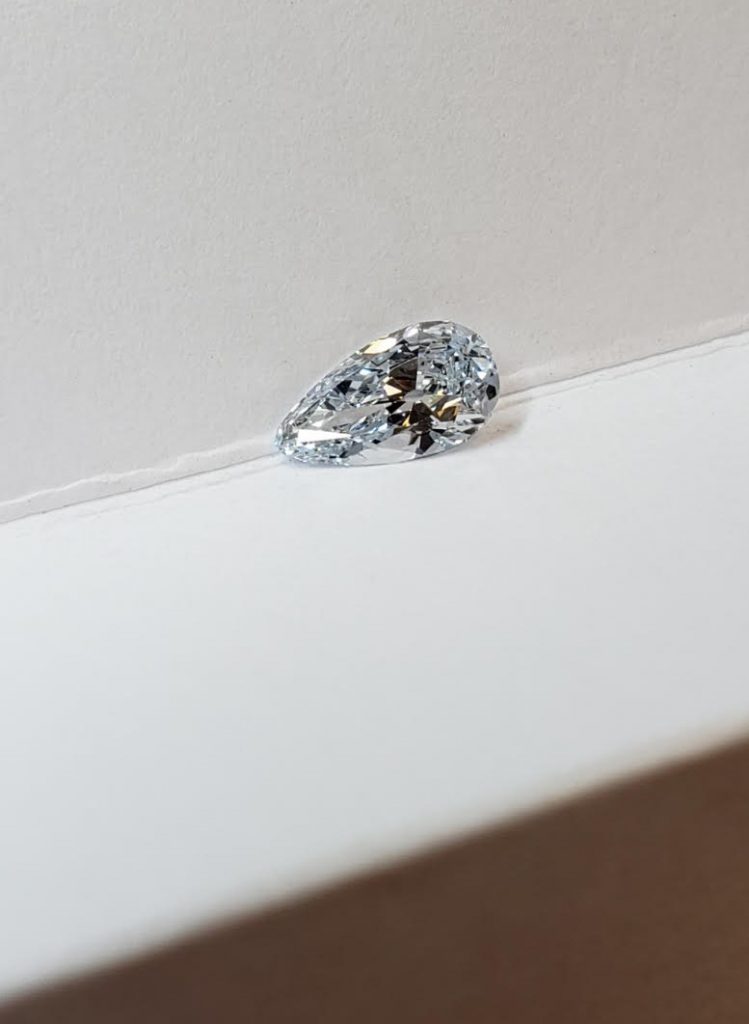
A fancy blue diamond is a naturally colored diamond that displays a noticeable blue hue due to the presence of boron atoms within its crystal structure. The blue color deepens as the boron concentration increases. Unlike colorless diamonds, which are graded based on the absence of color, fancy blue diamonds are graded by the intensity and purity of their color, as recognized by the Gemological Institute of America (GIA).
The most famous example of a fancy blue diamond in the U.S. is the Hope Diamond, a 45.52-carat deep blue diamond housed in the Smithsonian National Museum of Natural History in Washington, D.C. It is renowned for its distinctive color and storied history.
Natural fancy blue diamonds are created deep within the Earth’s mantle under extreme heat and pressure over billions of years. During their formation, boron atoms replace carbon atoms in the diamond’s lattice, resulting in the absorption of red, yellow, and green light, leaving a blue appearance. This natural process is rare, making these diamonds among the most valuable and sought-after in the world.
Lab-grown blue diamonds are also available in the market. These are created using high-pressure, high-temperature (HPHT) or chemical vapor deposition (CVD) methods and are engineered to replicate the appearance of natural stones. However, their resale value is significantly lower, and they are always labeled as synthetic.
While lab-grown diamonds are affordable for fashion purposes, they do not retain the investment value or rarity that natural fancy blue diamonds possess, making them a less desirable choice for collectors and serious buyers in the U.S. market.
What is the History of Fancy Blue Diamonds?
Fancy blue diamonds have a history that spans over a billion years, beginning deep within the Earth’s mantle. These rare gems formed when boron atoms bonded with carbon under extreme heat and pressure, a natural process that gives diamonds their distinct blue hue.
Over millions of years, geological activity brought these stones closer to the Earth’s surface, where miners eventually discovered them. Historical records show that the earliest known blue diamonds surfaced in India’s Golconda mines, with stones like the Hope Diamond gaining international fame by the 17th century.
Over time, fancy blue diamonds became symbols of power, wealth, and mystery. Their scarcity and striking appearance elevated them in royal collections and among elite jewelers. In recent decades, advanced gemological tools have enabled experts to gain a deeper understanding of gemstone composition and certify authenticity.
Today, natural fancy blue diamonds are recognized not only for their beauty but also for their geological significance, investment value, and historical prominence in auctions and private collections.
What are the Different Grades of Blue Diamonds?
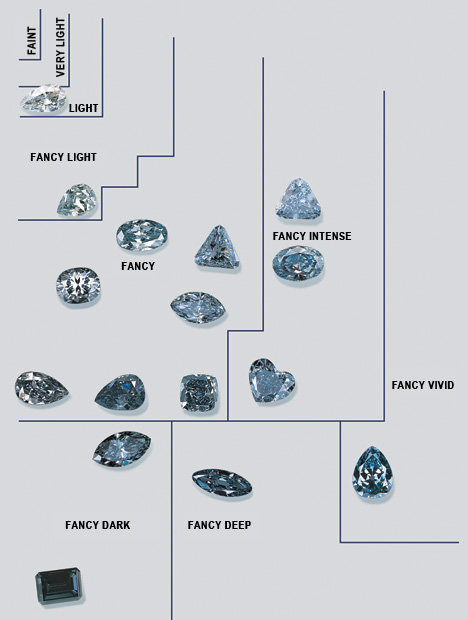
The different grades of blue diamonds include Faint Blue, Very Light Blue, Light Blue, Fancy Light Blue, Fancy Blue, Fancy Intense Blue, Fancy Vivid Blue, Fancy Deep Blue, and Fancy Dark Blue. These grades are defined by the Gemological Institute of America (GIA), which evaluates fancy colored diamonds based on three key elements: hue (the dominant color), tone (lightness or darkness), and saturation (color intensity or purity).
Faint Blue
Faint Blue diamonds show only a minimal trace of blue, barely detectable to the naked eye. These diamonds have a weak hue, very light tone, and extremely low saturation. Because of their subtlety and common occurrence, they are the least valuable of all blue diamond grades.
Very Light Blue
Very Light Blue diamonds have a slightly stronger blue hue than Faint Blue but still lack any real richness. The tone remains light, and saturation is still low, resulting in a soft overall appearance. While more visible than Faint Blue, they stay on the lower end of the value spectrum.
Light Blue
Light Blue diamonds display a more pronounced blue hue with a light to moderate tone and slightly higher saturation. These are still not classified as “fancy,” but they are more visually noticeable and appealing to buyers seeking a gentle blue appearance.
Fancy Light Blue
Fancy Light Blue diamonds mark the official beginning of the GIA’s fancy color category. These stones exhibit a balanced blue hue, moderate tone, and visible saturation. As the first grade to carry the “fancy” designation, they are more rare and valuable than the lighter grades.
Fancy Blue
Fancy Blue diamonds offer a well-balanced color that is visible across the stone. The hue is strong, the tone is medium, and the saturation is significantly higher. These diamonds are highly desirable due to their dissymmetrical color and tone symmetry.
Fancy Intense Blue
Fancy Intense Blue diamonds are vibrant, displaying pure blue hues with high saturation and balanced tone. These stones are rare, investment-grade gems favored by collectors due to their brilliance and color strength.
Fancy Vivid Blue
A Fancy Vivid Blue diamond represents the highest point of saturation and color purity. The hue is bold, the tone is vivid, and the saturation is at its peak. These diamonds are extremely rare and command the highest per-carat prices on the global market due to their unmatched brilliance and depth.
Fancy Deep Blue
Fancy Deep Blue diamond possesses a strong blue hue with a noticeably dark tone and high saturation. While they are intense in color, the darkness reduces overall brightness. Their dramatic look appeals to buyers seeking bold aesthetics at slightly lower prices than vivid grades.
Fancy Dark Blue
Fancy Dark Blue diamonds are the darkest on the scale, featuring extremely deep tone and variable saturation. The blue appears shadowed or muted due to the depth. Although they are rare, their market value depends on clarity and overall brilliance.
All of these grades are determined through GIA’s structured methodology, where hue, tone, and saturation interact to form the final color designation. As a U.S.-based expert in luxury diamonds, Diamond Banc offers trusted GIA-verified evaluations, enabling clients to accurately understand the rarity and value of blue diamonds for secure transactions, investments, or resale.
What Makes Fancy Blue Diamonds So Rare?
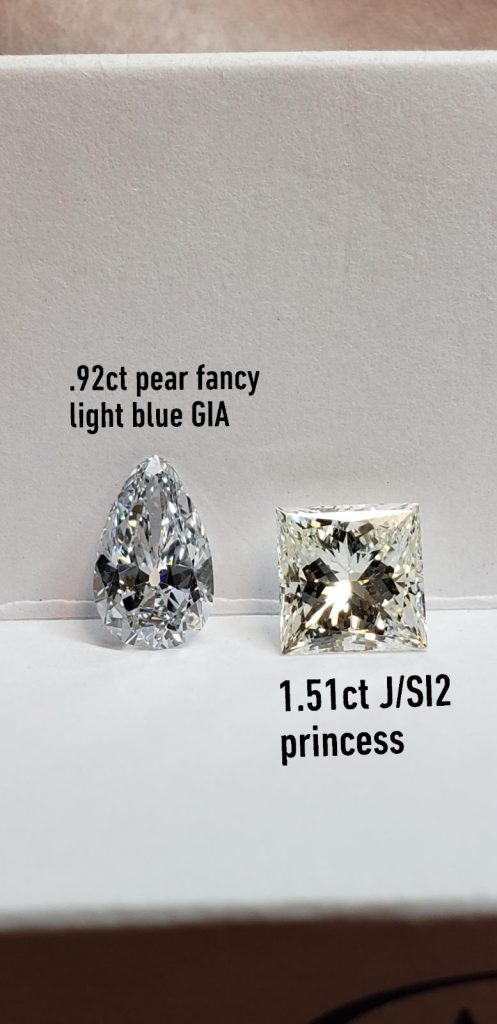
The things that make fancy blue diamonds so rare include their unique geological formation, the presence of trace amounts of boron, limited mining sources, strict color grading standards, and their classification as Type IIb diamonds.
Compared to white diamonds, which are found in abundance, natural fancy blue diamonds are exceptionally scarce, with only one blue diamond discovered for every 10,000 colorless diamonds mined. This rarity drives both their market value and prestige in the luxury world.
The factors that make fancy blue diamonds rare:
- Geological Formation
Fancy blue diamonds are formed deep in the Earth’s mantle under intense heat and pressure at depths greater than those of other diamond types. This process takes billions of years and requires particular geological conditions, which are uncommon, making their natural occurrence exceptionally rare.
- Trace Amount of Boron
The blue hue results from the presence of boron atoms within the diamond’s crystal lattice. Since boron is rarely found where diamonds form, only a tiny fraction of diamonds contain it. This rare chemical impurity is what gives fancy blue diamonds their distinct color and contributes directly to their scarcity.
- Limited Mining Locations
Natural fancy blue diamonds are sourced from a minimal number of mines worldwide. The most prominent include the Cullinan Mine in South Africa and, historically, the Golconda mines in India. The limited geographic distribution means global supply remains extremely low.
- Color Grading
To be classified as fancy blue, a diamond must meet the Gemological Institute of America (GIA) standards for hue, tone, and saturation. Many blue-tinted diamonds do not qualify, further reducing the number of diamonds that are sold as true fancy blues.
- Type IIb Diamonds
Fancy blue diamonds are typically Type IIb, the rarest diamond type, accounting for less than 0.1% of all natural diamonds. They are also electrically conductive, a trait not found in other diamonds, adding another layer of uniqueness.
These geological, chemical, and gemological factors combine to make fancy blue diamonds one of the rarest and most coveted gemstones in the world. Diamond Banc offers expert support across the U.S. for clients looking to accurately appraise, verify, or leverage the value of their fancy blue diamond assets.
What Factors Created the Blue Hue in Diamonds?
The factors that create the blue hue in diamonds are primarily the presence of boron, the absence of nitrogen, the unique formation process, and the overall rarity of these conditions. Each factor contributes to both the appearance and the value of natural fancy blue diamonds, setting them apart from all other colored stones.
- Boron’s Role
Boron is the primary element responsible for the blue color in diamonds. When boron substitutes for carbon at the atomic level, it changes how the diamond interacts with light. This substitution causes the absorption of red, yellow, and green wavelengths, allowing blue light to be reflected. Blue diamonds are typically classified as Type IIb, a rare diamond type that represents less than 0.1% of all natural diamonds. In addition to color, boron also gives these diamonds a unique trait, like electrical conductivity, which is not found in other diamond types.
- Nitrogen’s Influence
Unlike most other colored diamonds, such as yellow or brown, which owe their color to nitrogen impurities, blue diamonds are notable for the absence of nitrogen in their structure. This chemical purity ensures that boron’s optical effect is not masked or altered, allowing the pure blue hue to dominate. The lack of nitrogen is critical because even trace amounts could affect the color balance, making nitrogen-free blue diamonds chemically unique.
- Formation
Blue diamonds are formed deeper in the Earth’s mantle than most other diamonds, at depths exceeding 600 kilometers. These extreme depths create the necessary pressure and temperature for boron atoms to integrate into the diamond’s crystal structure.
Boron is more likely to be present in these deep zones, making such formations extraordinarily rare. Over billions of years, tectonic activity slowly pushes these diamonds toward the surface. These conditions are far more intense than those required for white or yellow diamonds, making the formation of blue diamonds a geological anomaly.
- Rarity
The rarity of blue diamonds is attributed to the unique combination of boron presence and nitrogen absence, along with deep formation conditions, which together occur only in highly specific geological settings. As a result, fewer than one in 10,000 diamonds mined globally are natural fancy blue diamonds.
Most originate from a handful of locations, including the Cullinan Mine in South Africa and the historic Golconda mines in India. Almost all of them fall under the Type IIb classification, which is the rarest among all diamond types. Their extreme scarcity, coupled with high demand in the luxury market, makes them one of the most valuable and investment-worthy gemstones.
These rare traits make fancy blue diamonds uniquely significant in both gemology and the luxury market. Diamond Banc proudly supports U.S.-based clients by offering expert GIA-backed evaluations, helping them unlock the full value of their fancy blue diamond assets with precision and confidence.
What Are The Most Expensive Fancy Blue Diamonds In The U.S.?
The most expensive fancy blue diamonds in the United States are celebrated for their exceptional color, clarity, and rarity. These gems have achieved record-breaking prices at auctions, reflecting their unparalleled allure and investment value.
- De Beers Blue
The De Beers Blue is a 15.10-carat step-cut Fancy Vivid Blue diamond, renowned for its internally flawless clarity and exceptional hue. In April 2022, it sold for $57.5 million at Sotheby’s Hong Kong, making it one of the most expensive blue diamonds ever auctioned.
- Blue Moon of Josephine
This 12.03-carat cushion-shaped Fancy Vivid Blue diamond, graded internally flawless, fetched $48.47 million at Sotheby’s Geneva in November 2015. The sale set a world record for the price per carat, exceeding $4 million.
- Apollo and Artemis Diamonds
The Apollo Blue and Artemis Pink are a pair of pear-shaped diamonds weighing 14.54 and 16.00 carats, respectively. Sold together as earrings for $57.4 million at Sotheby’s Geneva in May 2017, they set a record for the most expensive earrings ever auctioned.
- The Zoe Diamond
Weighing 9.75 carats, the Zoe Diamond is a pear-shaped Fancy Vivid Blue diamond that sold for $32.6 million at Sotheby’s New York in November 2014. At the time, it achieved a record price per carat for any diamond.
- De Beers Millennium Jewel 4
Part of the De Beers Millennium collection, this 10.10-carat, oval-shaped, Fancy Vivid Blue diamond sold for approximately $31.8 million at Sotheby’s in Hong Kong in April 2016. It was the highest price ever achieved for a jewel sold in Asia during the time.
- The Infinite Blue
An 11.28-carat radiant-cut Fancy Vivid Blue diamond, The Infinite Blue, was sold for $25.3 million at Sotheby’s Hong Kong in October 2023. Its exceptional color and clarity contributed to its high valuation.
- The Mediterranean Blue
This 10.03-carat cushion-shaped Fancy Vivid Blue diamond fetched $21.5 million at Sotheby’s Geneva in May 2025. Its mesmerizing color and impressive size make it an extraordinary rarity on the auction market.
These extraordinary diamonds exemplify the pinnacle of rarity and value in the gemstone market. At Diamond Banc, we specialize in evaluating and purchasing such exceptional gems, offering our U.S. clients unparalleled expertise and service.
What Properties Of A Fancy Blue Diamond Determine Its Value?
The value of a fancy blue diamond is primarily determined by four key properties, i.e., color, clarity, cut, and carat weight. Each of these factors contributes to the diamond’s rarity, beauty, and market price.
- Color
Color is the most critical factor in assessing a fancy blue diamond’s value. The Gemological Institute of America (GIA) grades blue diamonds based on hue, tone, and saturation, with classifications ranging from Faint Blue to Fancy Vivid Blue. Diamonds with a pure, intense blue hue and minimal secondary colors (such as gray or green) are the most sought after and command the highest prices. For instance, Fancy Vivid Blue diamonds are exceptionally rare and sell for millions per carat.
- Clarity
Clarity refers to the presence of internal inclusions or external blemishes within the diamond. While color is paramount, clarity still influences value. Diamonds with higher clarity grades, such as Flawless (FL) or Internally Flawless (IF), are more valuable. However, due to the rarity of blue diamonds, even those with slight inclusions are highly prized if they exhibit exceptional color.
- Cut
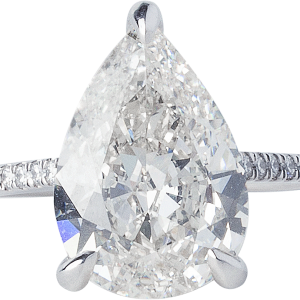
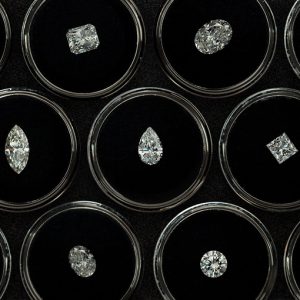
The cut of a diamond affects its brilliance and overall appearance. For fancy colored diamonds, including blue ones, the cut is optimized to enhance color intensity rather than maximize sparkle. Popular cuts for blue diamonds include cushion, radiant, and pear shapes, which intensify the stone’s color. A well-executed cut significantly increases a blue diamond’s visual appeal and market value.
- Carat Weight
The carat weight measures the diamond’s size. Larger blue diamonds are exceedingly rare and, therefore, more valuable. The price per carat increases disproportionately with size; for example, a 2-carat blue diamond is worth significantly more per carat than a 1-carat stone of similar quality. This premium reflects the scarcity of larger specimens in the market.
Understanding these properties is essential for anyone interested in purchasing or investing in fancy blue diamonds. Diamond Banc provides expert evaluations and guidance to help U.S. clients make informed decisions about their blue diamond assets.
What Are the Best Ways to Verify Fancy Blue Diamond Authenticity?
The best ways to verify the authenticity of a fancy blue diamond involve combining laboratory certification, physical examination, and expert evaluation. Since blue diamonds are rare and valuable, confirming their natural origin and untreated condition is essential before buying, selling, or insuring them.
- Request a GIA Certificate (or Similar from IGI/AGS)
The first and most important step is to request a grading certificate from a recognized authority, such as the Gemological Institute of America (GIA), the International Gemological Institute (IGI), or the American Gem Society (AGS). These documents include details about the diamond’s color, origin (natural or treated), clarity, carat, cut, and overall authenticity. This certificate serves as the foundation for verification.
- Check for Laser Inscription on the Diamond’s Girdle
Most certified diamonds have a laser inscription on the girdle that includes the certificate number. This inscription allows buyers to physically match the diamond to its grading report, ensuring that the stone and documentation are correctly paired.
- Verify Color Origin on the Certificate
The certificate will state whether the blue color is natural or artificially treated. This distinction is crucial because treated blue diamonds (irradiated or HPHT) are less valuable than natural fancy blues. Always check this field carefully.
- Use a Reputable Jeweler or Dealer
Work only with licensed, reputable jewelers or diamond dealers who provide full transparency, proper documentation, and post-sale support. Trusted professionals adhere to ethical practices and refrain from selling treated or synthetic diamonds as natural.
- Get a Professional Appraisal from a Certified Gemologist
A GIA-trained or certified gemologist examines the diamond in person, confirms lab results, and provides a formal appraisal. This step is essential when insuring or selling the stone and adds an extra layer of verification.
- Inspect Under Magnification for Natural Inclusions
Using a jeweler’s loupe or microscope, check for natural inclusions or growth patterns. These internal features enable experts to distinguish natural diamonds from lab-grown or treated ones, which exhibit distinct internal structures.
- Use a Diamond Tester
While electronic diamond testers measure thermal conductivity, they are not always reliable for fancy colored diamonds like blue stones. However, they still assist in identifying obvious synthetics or simulants as a secondary tool.
- Confirm Fluorescence Info in Lab Reports
Fluorescence data in GIA or IGI reports reveal additional clues about a diamond’s origin and authenticity. Blue diamonds fluoresce differently depending on whether they are natural or lab-grown, especially under ultraviolet light.
- Cross-Check Report Number on GIA’s Official Website
Always verify the grading report number by visiting GIA’s Report Check Tool. This ensures that the document is authentic and that the diamond’s specifications match the original laboratory record.
Each of these steps plays a critical role in validating the authenticity of a fancy blue diamond. Diamond Banc offers expert support for U.S. clients to confirm the legitimacy of their diamonds, backed by certified gemologists, GIA grading, and transparent evaluation services.
What Should You Consider When Buying a Fancy Blue Diamond?
When buying a fancy blue diamond, you must consider five core factors: color grade, origin (natural vs. treated), clarity and cut, carat weight, and certification. Each of these plays a direct role in determining the diamond’s authenticity, rarity, and long-term value. Understanding these ensures you invest in a genuine, high-value gemstone.
First, prioritize the color grade. Blue diamonds are evaluated based on hue, tone, and saturation. The Gemological Institute of America (GIA) classifies them from faint blue to fancy vivid blue, with fancy vivid being the most intense, rare, and valuable. A pure, vivid hue with no secondary tones (like gray or green) is more desirable.
Second, confirm the origin of the diamond’s color. A diamond’s certificate must state whether its color is natural or artificially treated (via HPHT or irradiation). Only natural blue diamonds hold long-term investment value and collector appeal.
Third, assess clarity and cut. Although color is the top priority in fancy diamonds, a well-cut stone that maximizes color reflection and a high clarity grade (e.g., IF or VVS) significantly enhances brilliance and resale potential.
Fourth, consider carat weight, since rarity increases exponentially with size. A Fancy Vivid Blue diamond over 1 carat is already extremely rare, and larger stones command much higher per-carat prices.
Fifth, it requires a GIA certificate to verify all characteristics. Certification protects buyers from synthetic stones or misleading claims and confirms the diamond’s specifications with international standards.
At Diamond Banc, we combine these principles with unmatched industry experience. We provide GIA-accredited fancy blue diamonds, expert gemologists, and transparent market-based pricing. Our U.S.-based offices and reputation for discretion, accuracy, and value protection make Diamond Banc the most trusted source for buying rare, fancy blue diamonds with confidence.
What Are the Price Ranges of Fancy Blue Diamonds?
Fancy blue diamond prices start around $200,000 per carat for Fancy Light Blue and can exceed $4 million per carat for Fancy Vivid Blue stones with excellent clarity and cut. Factors such as origin, carat weight, GIA certification, and the absence of secondary hues all contribute to increased pricing.
Natural, untreated stones over 1 carat fetch premium rates, especially if they’re Type IIb. Historical auction data shows record-setting prices for vivid color stones. Buyers should evaluate the GIA report, verify the origin, and compare prices across reputable sellers to ensure a true market value.
Why Do Blue Diamonds Command Such High Prices?
Blue diamonds command high prices due to their extreme rarity, geological uniqueness, and strong market demand. Less than 0.1% of diamonds mined are natural blue, and even fewer meet Fancy Vivid standards. These diamonds form under rare conditions with boron inclusion and no nitrogen, adding to their exclusivity.
Auction sales consistently show collector willingness to pay record-setting prices for high-carat, intense blue stones. Their rarity, combined with long-term appreciation and luxury appeal, makes them some of the most valuable gemstones in the world.
Can Blue Diamonds Be an Investment Asset?
Yes. Fancy blue diamonds, especially natural, untreated, GIA-accredited stones, are recognized as tangible investment assets. They hold and appreciate in value over time, especially if graded Fancy Intense or Fancy Vivid.
Global auction houses consistently report increased demand and rising prices per carat for top-grade stones. Their rarity, mobility, and privacy benefits make them ideal for wealth preservation. Unlike stocks, they are not subject to market volatility and are used by high-net-worth individuals as secure, portable stores of value.
How to Use a Fancy Blue Diamond to Get a Loan?
You can use a fancy blue diamond to get a loan by leveraging it as collateral with a trusted lender. This option allows you to access fast capital without selling your diamond. At Diamond Banc, loans are based on the diamond’s GIA-accredited attributes, including carat weight, clarity, and color grade. Once evaluated, a loan amount is offered, funds are quickly disbursed, and the diamond is kept fully insured in secure storage for the duration of the loan.
What Is the Ideal Cut for a Blue Diamond?
The ideal cut for a fancy blue diamond is one that maximizes color saturation rather than brilliance alone. Cuts like cushion, radiant, and pear are preferred because they reflect light in ways that enhance hue intensity.
GIA color grading considers how color shows through the face-up view, making cut a crucial factor. Round cuts are less common, as they dilute the color. Buyers should prioritize symmetry and depth in the cut to preserve the full visual impact and value of the blue tone.
Does a Fancy Blue Diamond Shape Affect Its Value?
Yes. The shape of a fancy blue diamond directly affects how color is perceived and priced. Shapes like cushion and radiant enhance color intensity, while others like emerald or round may reduce saturation. As color is the primary value driver for fancy diamonds, shape plays a strategic role in market valuation. Some cuts are more efficient at showing strong color, impacting both aesthetic appeal and resale potential.
How Does a Natural Fancy Blue Diamond Differ From a Treated One?
Natural fancy blue diamonds derive their color from boron atoms formed during deep Earth processes, whereas treated diamonds acquire color artificially through high-pressure, high-temperature (HPHT) treatment or irradiation. Treated diamonds are less rare and significantly less valuable.
GIA certificates clearly label the color origin. Natural stones are Type IIb, electrically conductive, and typically auctioned for millions per carat. Treated diamonds are beautiful but lack long-term investment appeal. Always check for a GIA report confirming natural origin to protect your investment and ensure authenticity.
Why Buy Blue Diamonds on the Secondary Market?
Buying fancy blue diamonds on the secondary market provides access to rare stones at below-retail prices. Buyers can find GIA-accredited, investment-grade diamonds previously held in private collections or estates. This market offers better selection, real-world pricing, and verified provenance, especially for larger carat Fancy Vivid stones. Secondary dealers, such as Diamond Banc, also provide expert evaluations and transparency, making it safer than retail or auction bids.
Like what you’re reading?
Add us in Google — more like this is on the wayRelated Posts

 Instagram
 Facebook
 Tiktok
 YouTube