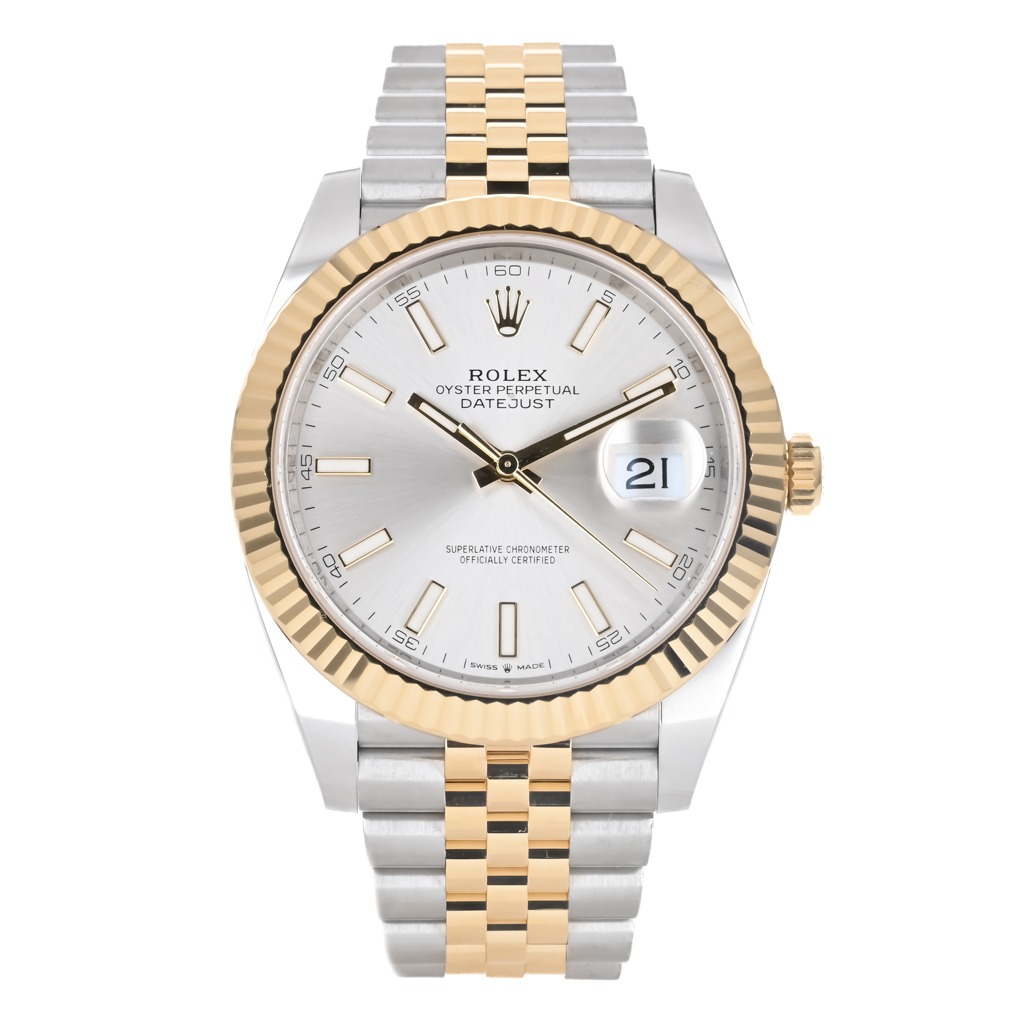
If you own a Rolex Datejust with a slate gray dial and green minute track, you already know the watch doesn’t say “Wimbledon” anywhere on it. Collectors gave it that name, and the name stuck well enough that it now drives more searches than most official Rolex dial colors. If you’re trying to figure out which reference you actually have, what a Rolex Datejust Wimbledon is worth right now, or whether it’s worth holding versus selling, the details below come from the reference numbers and market data, not the nickname.
Why Collectors Call It the Wimbledon Dial
The slate-and-green color combination first appeared in 2009 on the 41mm Datejust II, reference 116333, a two-tone steel and yellow gold model with a fluted bezel on an Oyster bracelet. The green hour markers and minute track against a gray-slate background reminded watch collectors of the All England Lawn Tennis Club’s signature dark green and white, and the nickname was born outside of Rolex entirely. Rolex itself has never officially named any watch or dial “Wimbledon” in its own product literature, which is the first thing to understand before you go looking for the term on a box, a warranty card, or a dealer invoice. It won’t be there. What matters for identifying a genuine piece is the reference number and the factory dial code, not a nickname a seller has added to a listing title.
Which References Actually Carry the Rolex Datejust Wimbledon Dial
The Wimbledon dial has appeared across three distinct generations of Datejust, each tied to a specific reference:
- Reference 116333 (2009 to 2016): The original Wimbledon-dial Datejust II, a 41mm two-tone steel and yellow gold model running the older Calibre 3136 movement.
- Reference 126334 (2016/2017 to present): When the Datejust II was replaced by the slimmer Datejust 41, Rolex carried the dial forward onto this reference and, for the first time, offered it on a Jubilee bracelet as well as the Oyster bracelet. This is the modern 41mm Wimbledon most buyers encounter today, and watch-market data ties the current generation of 126334 to a production start in June 2017.
- Reference 126201 (reimagined in 2018): The 36mm Wimbledon Datejust was updated with the newer Calibre 3235 movement and a 70-hour power reserve, including diamond-set dial options for buyers who want the look with added stone settings.
So yes, the Wimbledon dial exists in both 36mm and 41mm cases, but they are different references with different movements and different production histories, not simply two sizes of the same watch.
41mm or 36mm: Which Wimbledon Sees More Demand
The clearest signal here comes from trading data on the modern 41mm reference. WatchCharts reports a one-year sales volume of 10,659 units across tracked listings for reference 126334, with a median of just 30 days on the market before a listing sells. That level of turnover points to deep, consistent liquidity for the 41mm Wimbledon. Public market data on the 36mm reference 126201 is thinner, which doesn’t mean it’s undesirable, only that it trades in smaller numbers and with less publicly tracked pricing history than its larger sibling. If you’re deciding between the two purely on how quickly a buyer or lender can confirm current value, the 41mm has the more documented track record.

Does the Rolex Datejust Wimbledon Hold Its Value?
Reference 126334 is one of the more thoroughly tracked Datejust models on the secondary market, which makes it a useful benchmark for the Wimbledon dial generally. Rolex’s own site lists US retail for the 41mm Datejust in Oystersteel and white gold with a fluted bezel at $11,650 for several standard dial configurations, with other dial options on the same reference priced slightly higher. Against that retail figure, independent tracking shows the reference trading well above list: as of October 18, 2026, WatchCharts puts the current secondary-market price at $14,203, with a one-year value retention of plus 21.9 percent. Because that price moves with daily market activity, treat any specific number as a snapshot rather than a fixed figure, and check the live listing when you need a current read.
What that combination of numbers tells an owner is straightforward: this reference has been selling above its original retail price and has done so consistently enough over the past year to show positive retention rather than depreciation. That’s a meaningfully different position than most watches are in relative to their own retail price, and it’s the kind of detail worth knowing before you decide whether to find out what your Datejust is worth right now or hold onto it.
How to Confirm Your Dial Is a Genuine Factory Wimbledon
Because “Wimbledon” is a nickname and not a Rolex term, a listing or an appraisal that simply calls a watch a “Wimbledon” hasn’t actually confirmed anything. The dial’s authenticity has to be checked against the reference number stamped on the watch and the dial code itself, not the name a seller chose to use. This matters most if you’re having the piece appraised for a loan or a sale: a correct reference number (116333, 126334, or 126201) paired with the matching dial generation is what confirms a factory-original piece, not the word “Wimbledon” on an online listing. This is exactly the kind of check that benefits from model- and reference-specific experience rather than a general pawn-shop assessment, since the difference between a factory dial and a later replacement isn’t always obvious without knowing what the correct configuration looks like for that specific reference.
Why the Movement Generation Matters
The two movement generations behind the Wimbledon dial aren’t interchangeable in terms of parts and service. Early pieces from 2009 to 2016 (reference 116333) run the older Calibre 3136, while every Wimbledon reference since 2016 and 2017 (126334 and the reimagined 126201) runs the newer Calibre 3235. That generational split affects parts availability and what you should expect from a service visit, since Rolex’s service network and parts supply chain are built around the current Calibre 3235 architecture rather than the older movement. If you own an original 2009 to 2016 piece, it’s worth knowing which generation you have before you assume service costs or timelines will match a newer Datejust 41.
What This Means If You’re Ready to Act
If you’ve confirmed your reference and you’re deciding what to do next, a documented, reference-correct Rolex Datejust Wimbledon gives you more than one option. You can get a model- and reference-specific valuation and sell your Datejust outright, working with a specialist who prices against current secondary-market data rather than a flat pawn-shop estimate. Or, if you’d rather keep the watch, you can use it as collateral for a Rolex-secured loan and access funds against its value without giving it up permanently. Diamond Banc handles both paths through local offices and nationwide secure shipping, so you’re not limited to whichever option happens to be convenient geographically.
Either way, start with the reference number, not the nickname. If you’re unsure what your specific dial and reference combination is worth, that’s the question to answer first before deciding whether selling or a loan makes more sense for you. For a broader look at pricing your watch correctly, Diamond Banc’s guide on the best place to sell a Rolex covers what to expect from the process beyond this one dial variant. And if diamond-set dial options are part of what drew you to the Wimbledon look, it’s worth reading how added stones on a Rolex dial can affect value and verification, covered in Diamond Banc’s piece on aftermarket diamond Rolex dials.
Like what you’re reading?
Add us in Google — more like this is on the wayRelated Posts
 Instagram
 Facebook
 Tiktok
 YouTube