When you sell valuable jewelry, the highest advertised price is not necessarily the most money you keep. The right choice depends on how quickly you need funds, how long you are willing to wait, and what the agreement says about fees, risk, and control.
In jewelry consignment vs selling outright, consignment may produce greater upside for a rare or high-value piece, but the timing and final proceeds are less certain. Selling outright provides a known offer and greater speed, which can be more valuable when certainty matters more than waiting for a buyer.
Neither option is automatically better. A useful comparison starts with the transaction itself: who owns the jewelry while it is marketed, how buyers are reached, and when you actually receive your money. Understanding those details makes it easier to judge whether consignment fits your piece and priorities.
Get a fair offer for your diamond ring
How Jewelry Consignment Works
In a consignment arrangement, you do not sell the jewelry immediately. Instead, you authorize a seller’s agent to market the piece, present it to potential buyers, and manage the sales process on your behalf. The jewelry remains in that process until a buyer agrees to the terms. This creates a different tradeoff from accepting a direct offer: consignment may create more upside, but the timing and final proceeds are less certain.
A seller’s agent can expand the audience beyond a single local buyer. Diamond Banc states that it markets consigned items nationwide through dealer networks, including RapNet, and reaches more than 20,000 qualified buyers. That broader exposure may be useful for an item whose value depends on finding a buyer with a specific interest, budget, or appreciation for its characteristics. You can learn more about its jewelry consignment services before deciding whether the model fits your goals.
The item stays in a selling process
Consignment is not the same as receiving a guaranteed offer. With a direct purchase, the seller evaluates the jewelry and presents a known offer for the owner to accept or decline. With consignment, the goal is to locate a buyer through ongoing marketing. The result depends on factors such as buyer interest, the piece’s characteristics, and the terms established in the agreement. Until the jewelry sells, you may be waiting for both a buyer and a final amount.
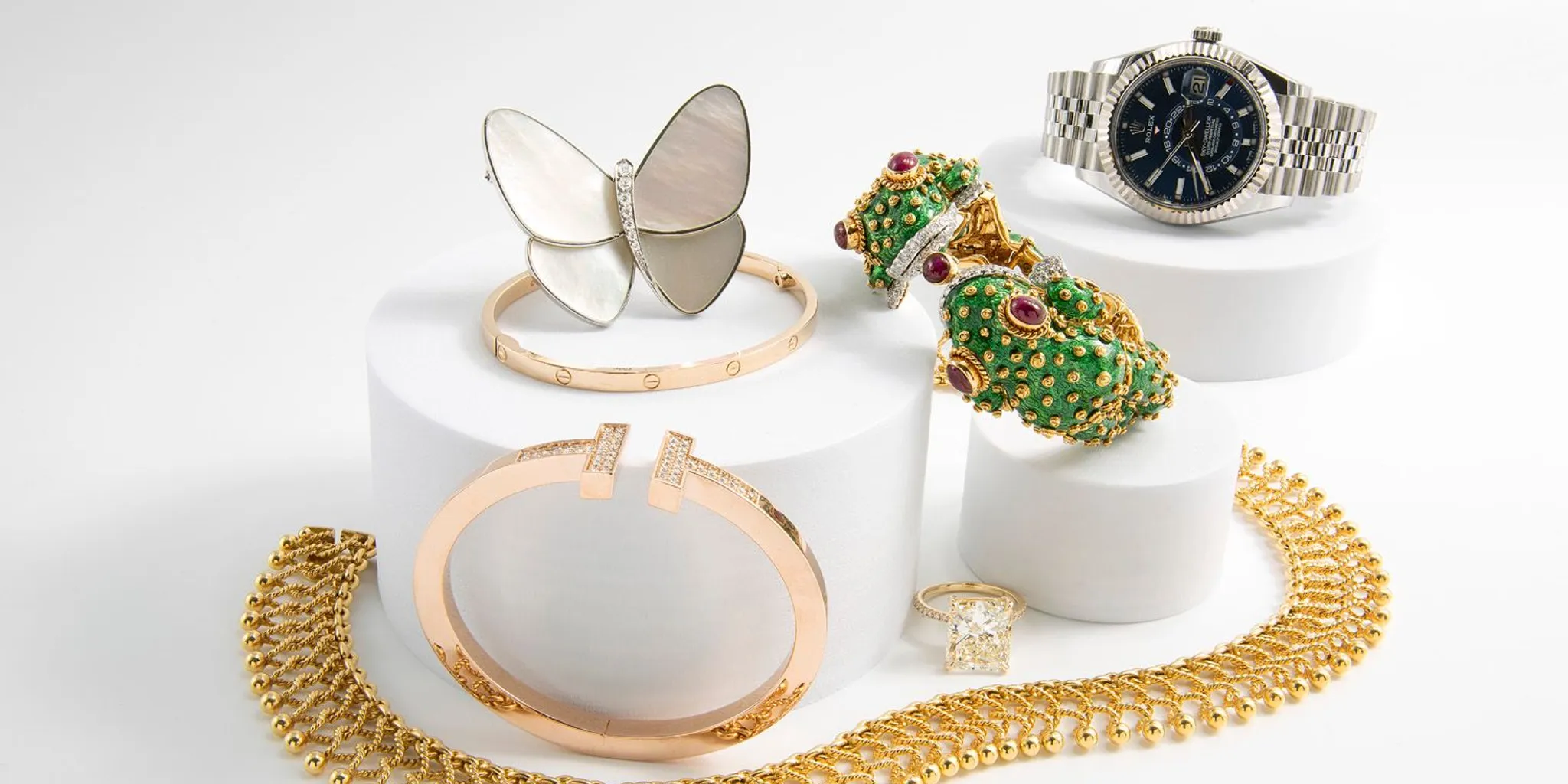
This model is often associated with distinctive or higher-value pieces, including 4-carat-plus diamonds, rare vintage Rolex watches, important signed pieces, and estate jewelry. Those categories are not automatic indicators that consignment is the right choice. They simply illustrate the types of items that may benefit from specialized exposure and a longer sales process.
Questions to answer before signing
Read the agreement carefully and ask how the asking price will be established. Confirm who can approve changes to that price and how buyer negotiations will be handled. Clarify when the consignment period begins and ends, what happens if the item does not sell, and when you receive payment after a completed sale. Ask for every cost in writing, including any commission or expenses related to shipping, insurance, storage, or an advance. Most importantly, confirm whether you can withdraw the item, how it will be returned, and whether any conditions or charges apply.
Consignment can be a reasonable option for an owner who is comfortable waiting and wants access to a wider market. It is less suitable when the priority is a known outcome and immediate certainty. The right comparison is not simply a possible sale price versus a direct offer. It is the expected net proceeds, timing, control, and risk under each agreement.
How Selling Jewelry Outright Works
An outright sale is a completed transaction rather than an ongoing effort to find a buyer. A professional buyer evaluates the jewelry, presents a specific offer, and, if you accept, ownership transfers to the buyer. The amount is known before you finalize the sale, which makes this option useful when certainty matters as much as the possible price.
You receive a defined offer
The process begins with an evaluation of the piece and its market position. The assessment may consider the gemstones, precious metals, craftsmanship, brand, condition, documentation, and current demand. For unusual, signed, antique, or estate jewelry, relevant comparables and the item’s condition can affect the outcome. Bring any laboratory reports, receipts, service records, original packaging, or provenance that helps establish what you own. Do not assume that an insurance appraisal, retail purchase price, or sentimental value equals a likely cash offer. Those figures can serve different purposes.
A clear evaluation should also explain what the offer covers and what happens next. Ask whether the offer is for the complete piece, how ownership is transferred, whether any deductions apply, and what return terms exist if you decline. Diamond Banc emphasizes insured shipping, secure storage, and free return shipping when an offer is declined. Those details matter when sending valuable jewelry for review, especially if you are using a nationwide mail-in service rather than visiting a location. You can learn more about the process of selling jewelry for cash before deciding whether a direct sale fits your plans.
Speed and certainty are the main tradeoffs
Unlike consignment, a direct purchase does not require waiting for the item to be marketed, shown to prospective buyers, negotiated, and completed. Once you accept the known offer and complete the required transaction steps, the item is no longer your responsibility to sell. That can simplify decisions after an inheritance, divorce, relocation, or a change in financial priorities. It can also reduce uncertainty for anyone who needs a defined amount of liquidity on a particular timeline.
The tradeoff is that you are accepting today’s offer instead of retaining ownership while another party tests the market. A consignment arrangement may create more upside for some pieces, but timing and final proceeds are less certain. The right comparison is therefore not a hoped-for asking price against a direct offer. Compare the expected net proceeds, the time involved, the terms, and the value of knowing exactly what you will receive. For more detail on the factors behind an evaluation, review how jewelry offers are valued.
Outright selling can be a strong fit when you prioritize a straightforward transfer, prompt payment, and a predictable result. If you have more time and believe the piece could benefit from broader market exposure, consignment may deserve comparison before you choose.
Which Pays More: Jewelry Consignment or Selling Outright? Jewelry Consignment vs Selling Outright
There is no universal winner. Consignment may produce greater upside when a distinctive piece reaches the right buyer, while an outright sale trades some potential upside for a known offer and greater certainty. The better choice depends on what you value most: the highest possible net proceeds, immediate access to cash, control over the process, or a predictable end point.
| Factor | Consignment | Selling outright |
|---|---|---|
| Net proceeds | May be higher if the item sells well. Subtract agreed costs or commission. | Known in advance through the offer, with no waiting for a final sale. |
| Timing | Depends on buyer interest and the selling period. | Designed for immediate cash and a faster resolution. |
| Control | You may have input on positioning and asking price, subject to the agreement. | You decide whether to accept the presented offer. |
| Certainty | Less certain until a buyer commits and the transaction closes. | Greater certainty once you accept the offer and transfer ownership. |
| Market reach | Can access broader dealer and buyer networks for specialized pieces. | Relies on the buyer’s evaluation and purchasing capacity at that time. |
| Seller effort | Requires patience and comfort with an ongoing sales process. | Requires less ongoing involvement after the evaluation and acceptance. |
Compare the money you keep, not just the advertised price
A consignment price can look attractive at first glance. The headline figure is not necessarily what you receive. Before comparing options, ask how the final amount will be calculated and whether any commission, shipping, insurance, storage, marketing, discounting, or other costs affect the proceeds. Get the terms in writing, including what happens if the item does not sell within the agreed period.
An outright offer is easier to evaluate because it gives you a specific amount and a clear decision point. That does not automatically make it the highest possible outcome, but it does make the tradeoff visible. You can compare the offer with the realistic net amount you might receive through consignment, rather than comparing it with an optimistic asking price.
Market reach can matter for rare or highly specialized jewelry. Diamond Banc says its seller’s-agent service markets consigned items nationwide through dealer networks, including RapNet and more than 20,000 qualified buyers. Jewelry consignment services may therefore suit a seller willing to wait for a stronger match. By contrast, a direct purchase is built around a known offer, immediate cash, and certainty. The right decision is the one that best matches your timing and your confidence in the net result.
When Is Consignment Worth the Wait?
Consignment may be worth considering when you are a patient seller and the jewelry has characteristics that could benefit from broader market exposure. The goal is not simply to put a higher number on a listing. It is to give the right buyer time to find the piece, while understanding that the timing and final proceeds remain uncertain.
This approach can make sense for rare or high-value jewelry, especially when the item has qualities that are difficult to price through a quick transaction. Diamond Banc identifies typical consignor pieces as 4-carat-plus diamonds, rare vintage Rolex watches, important signed pieces, and estate jewelry. These characteristics do not guarantee a sale or a particular return, but they can make access to specialized buyers more relevant.
You can wait for the right market
Time matters because demand is not uniform across jewelry categories. A distinctive design, desirable maker, documented history, unusual gemstone, or strong condition may appeal to a narrower audience than a more common piece. Consignment gives a seller’s agent time to present the item to a larger network instead of accepting the first available offer. Diamond Banc says it markets consigned items nationwide through dealer networks, including RapNet and more than 20,000 qualified buyers. That reach may improve the chance of finding an interested buyer, but it cannot remove market risk.
Your documentation supports informed marketing
Documentation can help experts and prospective buyers understand what they are evaluating. Gather laboratory reports, original receipts, signed-box or service records, provenance documents, and details about repairs or alterations when available. For estate and vintage pieces, history and authenticity may matter alongside metal weight or gemstone specifications. Missing paperwork does not automatically make consignment unsuitable, but it may require additional evaluation and can affect how confidently the piece is positioned.
Consignment is less suitable when you need a firm amount by a specific date. Want to end your ownership immediately, or prefer a known offer over an uncertain outcome. In those situations, an outright sale may better match your priorities. If liquidity is important but you still want to explore consignment. Ask whether the seller’s-agent service provides an interest-free advance and how that advance relates to the final transaction. Confirm all current terms before proceeding. Confirm the current terms and understand how any advance relates to the final transaction before proceeding.
How to Choose the Right Option for Your Jewelry
The best choice depends less on a universal promise of the highest price and more on what you need the transaction to accomplish. Use this checklist before handing over an heirloom, designer piece, diamond, or watch.
- Start with your timeline. If you need a known outcome quickly, an outright sale is usually the simpler path. Consignment may require waiting for the right buyer, and the timing can vary with demand, pricing, and the item itself.
- Decide whether you want to transfer ownership. An outright sale exchanges the item for an agreed offer. Consignment keeps the item in a selling process until it sells or the agreement ends. If you may want to keep the piece, ask whether a jewelry equity loan is a better fit than either sale option.
- Compare net proceeds. Ask how the proposed amount is calculated and what will be deducted. For consignment, clarify commission, shipping, insurance, storage, advances, discounts, and any other costs. A higher asking price does not automatically create a higher amount in your account.
- Ask how the item will be valued. Quality, market availability, desirability, condition, documentation, and comparable pieces can all affect an offer. A useful explanation of how jewelry offers are valued can help you ask better questions.
- Review security and return terms. Confirm how the piece will be shipped, stored, insured, and returned if it does not sell or you decline an offer. Diamond Banc emphasizes fully insured shipping, secure storage, and free return shipping when an offer is declined, but always review the current terms for your transaction.
- Compare more than one path. Sellers commonly seek two or three quotes before deciding. A guide to choosing a trusted jewelry buyer can help you compare expertise, transparency, process, and fit instead of looking at one number in isolation.
Think of the decision as a choice between certainty and potential upside. Selling outright may be right when speed, simplicity, and a known offer matter most. Consignment may be worth exploring when the item is distinctive, the market reach matters, and you can accept an uncertain timeline. The right professional should explain both paths clearly and let you choose without pressure.
Frequently Asked Questions
Is it better to sell jewelry or consign it?
It depends on your priority. Selling outright provides a known offer and faster payment, while consignment keeps the piece in the market and may produce more upside. Compare the expected net proceeds after fees with the value of speed, certainty, and control.
What is the most profitable way to sell jewelry?
There is no universally most profitable option. The result depends on the jewelry’s quality, availability, demand, condition, documentation, timing, and transaction terms. GIA explains that fair market value reflects what a willing buyer would pay a willing seller and can provide a baseline for deciding what to ask: GIA’s fair-market-value guidance.
How long does jewelry consignment take?
There is no guaranteed timeline. A piece may sell within weeks, take several months, or remain unsold if buyer interest or pricing is limited. Before signing, ask how long the agreement lasts, what happens if the item does not sell, and whether pricing can change.
What fees should I ask about before consigning jewelry?
Ask for every deduction in writing, including commission, shipping, insurance, storage, appraisal, discounts, and any advance-related terms. Then calculate your expected net proceeds, not just the projected selling price. Terms vary by provider, so do not assume an industry range applies to a specific agreement.
Can I keep my jewelry and still access liquidity?
Possibly. A jewelry equity loan is an alternative when you want to retain ownership while accessing funds, but it is a different transaction from selling or consigning. Review the interest, repayment terms, collateral requirements, and total cost before choosing it.
Find out what your diamond ring is worth
Like what you’re reading?
Related Posts

 Instagram
 Facebook
 Tiktok
 YouTube