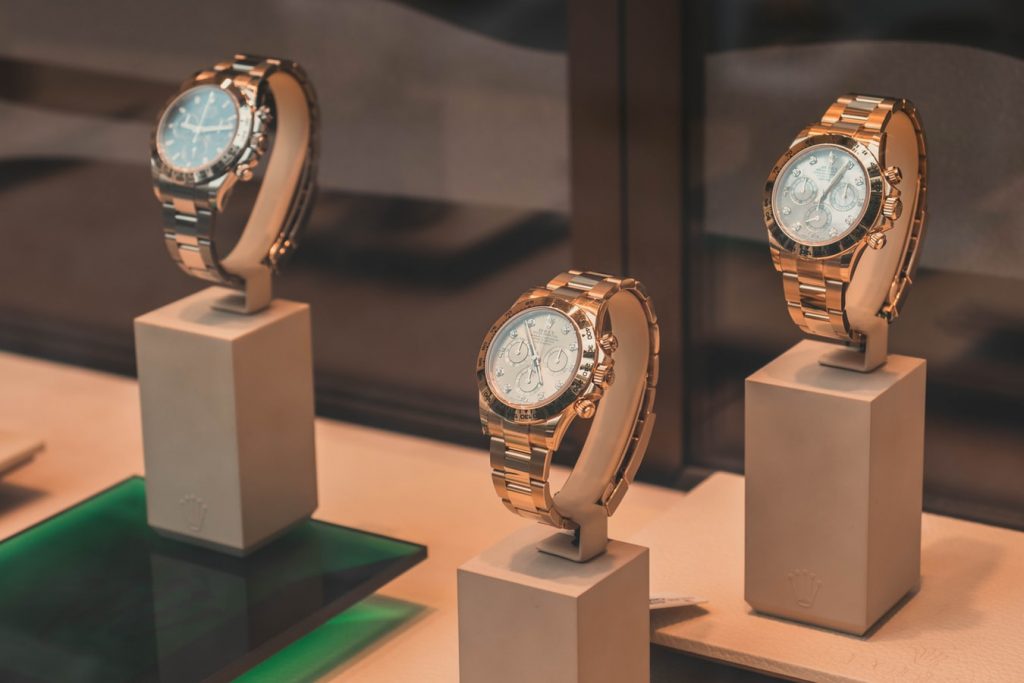
If you own a Rolex Cosmograph Daytona, or you’re trying to figure out exactly what one is worth, the reference number stamped on the case matters more than it looks. The Rolex Daytona 126500 replaced the 116500LN in 2023, and the two generations are close enough in appearance that owners frequently aren’t sure which one they actually have. That distinction affects what the watch is worth today, what changed mechanically, and what you can expect from service and warranty coverage going forward.
What Actually Changed Between the 116500 and the 126500
The shift from 116500LN to 126500LN happened in 2023, when Rolex moved the steel Daytona onto the newer case architecture already used across much of its catalogue, visible in the extra digit at the front of the reference number. Inside, the bigger change is the movement. The current 126500LN runs Rolex’s Calibre 4131, which keeps the Daytona’s column-wheel chronograph layout but adds a paramagnetic blue Parachrom hairspring, Paraflex shock absorbers, and a power reserve extended to 72 hours, while the case remains waterproof to 100 metres.
Day to day, the difference is modest. Both the 116500LN and the 126500LN are 40mm steel Daytonas with a black Cerachrom bezel and an Oystersteel bracelet, and most people would recognize either one as “the Daytona” without hesitation. The power reserve is the one change an owner actually notices: the 116500LN’s movement needed winding or wearing sooner to keep accurate time, while the 126500LN can sit unworn over a weekend and still be running when you pick it back up on Monday.
What Rolex didn’t do was use the new movement as an excuse for a steep price increase. The brand kept the 126500LN’s launch pricing close to what the outgoing 116500LN had cost, and subsequent annual price increases on the steel Daytona have generally been smaller than what’s been applied to the gold and two-tone references in the same family. That restraint matters for anyone comparing what they paid years ago to what the watch costs new today: the gap is real, but it hasn’t been driven by the movement upgrade itself.
How to Tell a 126500 from a 116500 at a Glance
This is the question that trips up most owners, and honestly, it should. The two generations share the same case size and the same black Cerachrom bezel family, so there’s no dial color, bezel style, or bracelet detail that reliably separates them from across the room. The only dependable way to confirm which one you own is the full reference number itself, the “116500LN” versus “126500LN-0001” or “126500LN-0002,” which appears on the watch’s accompanying papers, on the original sales receipt, or engraved on the watch. If you don’t have the paperwork, a specialist who handles Rolex daily can confirm the exact reference by inspecting the watch directly.
This isn’t a cosmetic detail. The two generations trade at different secondary-market values, and the specific suffix (LN versus LN-0001 versus LN-0002) also tells you which dial variant you have, white/panda or black. Getting the reference wrong when you’re trying to value the watch means working from the wrong comparable entirely.
What a Daytona 126500 Is Worth Today
Rolex’s own listing puts the current US retail price of the 126500LN at $16,900 as of 2026. That’s the official number, the one you’d pay at an authorized dealer if a model is available to purchase at list price, which for the steel Daytona is still often not guaranteed.
The secondary market tells a different story. Live market pricing tracked by WatchCharts showed the white/panda-dial 126500LN-0001 trading around $34,719 and the black-dial 126500LN-0002 around $29,067 as of late October 2026, both well above the official retail figure. That gap reflects a real, ongoing premium for the steel Daytona on the secondary market, even though that premium has narrowed considerably from the extremes seen during the 2022 boom in watch prices. In other words, the steel Daytona still commands more than its sticker price, but anyone paying a grey-market premium today is taking on more price risk than someone buying at retail, since that premium has already compressed once and can move again.
If you’re trying to value your own 126500 or 116500, the exact dial reference and condition matter as much as the generation. A watch that’s been serviced, has its original box and papers, and shows minimal wear will price differently from one with a stretched bracelet or an unverifiable service history, even within the same reference number.
Servicing and Warranty: What’s Different Now
The Calibre 4131 doesn’t change how often the watch needs attention. Rolex’s own guidance remains roughly the same across its modern catalogue: a full service approximately every ten years, depending on the model and how the watch is actually worn, to keep accuracy and water resistance where they should be. That guidance applies to the 126500LN exactly as it applied to the 116500LN before it.
Parts availability isn’t a concern for owners of the older reference either. Rolex guarantees spare parts for a model for at least 35 years after it’s discontinued, which means a 116500LN that’s no longer sold new can still be serviced with genuine Rolex parts for decades to come.
Warranty coverage is where people most often get confused, and it’s worth being precise. Every new Rolex purchased from an authorized dealer carries a five-year international warranty that starts on the original purchase date and transfers with the watch if it changes hands, it doesn’t reset for a new owner. A separate, shorter warranty applies only to work done during a paid service, covering the parts and labor from that specific repair. These two coverages are not interchangeable: if something is repaired under the original five-year warranty in year three, the original five-year clock still runs out at year five from the purchase date, not from the date of the repair. Knowing which warranty applies, and when it expires, matters if you’re evaluating a pre-owned 116500LN or 126500LN and want to know what’s actually still covered.
What This Means If You’re Deciding What to Do With Yours
Whether you’re holding a 116500LN you bought years ago or a current 126500LN, the practical questions are the same: what is it actually worth right now, and what are your options for turning that value into cash or liquidity without necessarily parting with it. Because the secondary-market premium on the steel Daytona depends heavily on the exact reference and dial variant, a reference-specific valuation is the only way to get an accurate number, a generic “Daytona” estimate isn’t precise enough to act on.
If you’ve decided to sell, working with a specialist who prices Rolex by exact reference, rather than a general pawn shop, matters more for a Daytona than for almost any other Rolex model, given how much the value swings between generations and dial variants. Diamond Banc’s Daytona valuation team prices watches against current secondary-market data rather than outdated retail comparisons, and it’s part of why Diamond Banc has built a reputation as one of the best places to sell a Rolex for owners who want an accurate, model-specific number.
If you’d rather keep the watch, a Rolex-secured loan lets you access cash using the Daytona as collateral without selling it outright, which is often the better fit for an owner who expects the watch’s value to hold or who simply isn’t ready to part with it. If you want to see how loan amounts are typically structured against a Daytona specifically, it’s worth reading through how a Rolex Daytona loan is actually calculated before you decide which option makes more sense for your situation.
Either way, start with the reference number, not the general model name. “Daytona” alone tells you almost nothing about what the watch is worth; 116500LN versus 126500LN-0001 versus 126500LN-0002 tells you almost everything.
Like what you’re reading?
Add us in Google — more like this is on the wayRelated Posts
 Instagram
 Facebook
 Tiktok
 YouTube