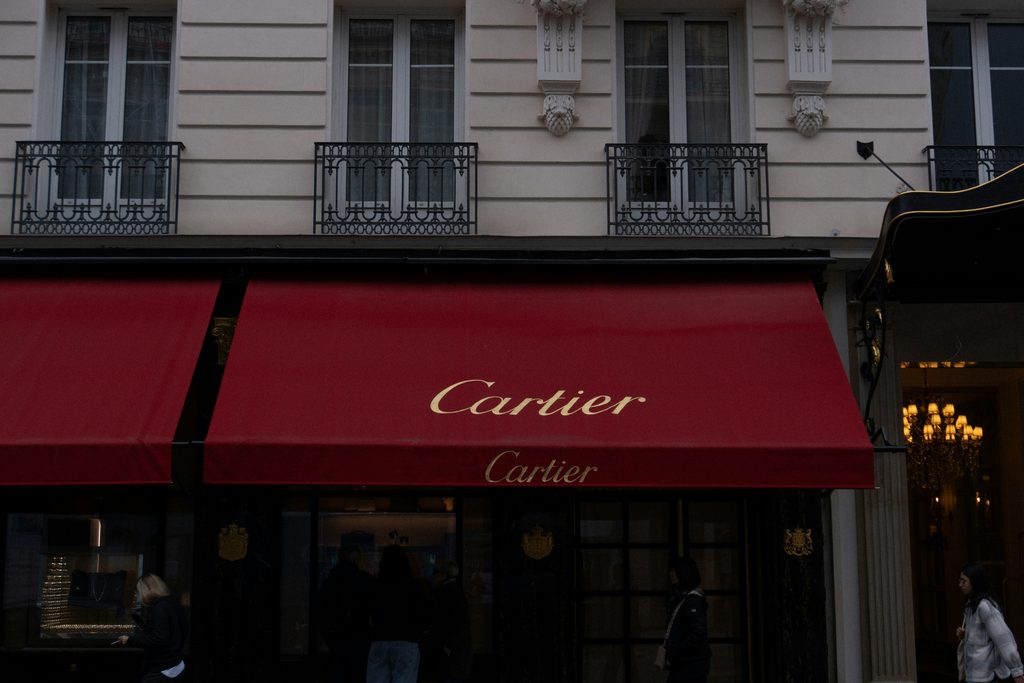
On October 27, 2026, news broke that a rare Cartier opal tiara once worn by the Duchess of Devonshire is heading to Sotheby’s auction block. The piece carries a story most jewelry never will: a royal commission, a coronation appearance second only to the Queen’s own jewels, and a recent red-carpet moment. For anyone who owns vintage or signed Cartier jewelry, this sale is worth watching closely, not because every piece has this kind of history, but because it shows exactly how auction houses and buyers price the difference between a beautiful object and a documented one.
What the Cartier Opal Tiara Is, and Why It’s Making News Now
The piece is a transformable black opal and diamond tiara that converts into a necklace, with five detachable brooches, made by Cartier around 1937 for Mary Cavendish, then Marchioness of Hartington and later Duchess of Devonshire. Family tradition holds that the black opals themselves were a gift to the Marquess and Marchioness during a government tour of Australia and New Zealand in 1936 and 1937, and Cartier set them into the Art Deco design the family commissioned on their return.
The tiara’s most famous outing came in 1953, when the by-then Dowager Duchess of Devonshire, serving as Mistress of the Robes, wore it as a necklace alongside the Devonshire palmette tiara at Queen Elizabeth II’s coronation, making it one of the most photographed jewels of the ceremony outside the Queen’s own regalia. More recently, Sotheby’s loaned the piece to director Emerald Fennell, who wore it as a necklace to the London premiere of Wuthering Heights in February 2026, after it had been exhibited at the Cartier retrospective at London’s Victoria & Albert Museum. That combination of royal history, museum exhibition, and a contemporary celebrity moment is precisely what put the tiara back in headlines this fall.
When and Where It’s Selling, and What Sotheby’s Expects It to Bring
Sotheby’s will offer the tiara at its Royal & Noble Jewels sale in Geneva on November 11, 2026, with a presale estimate of CHF 780,000 to 1,100,000, roughly $940,000 to $1.3 million. Because that range is tied to the Swiss franc and to bidder interest that can shift in the weeks before a sale, readers who want the number as it stands can check Sotheby’s own lot listing rather than treat any figure here as fixed. The sale is part of an annual Geneva tradition for Sotheby’s, and the house has pointed out that its last several editions of this sale sold every lot offered, a result that reflects how collectors treat this particular auction as a reliable venue for pieces with strong documentation.
Why Provenance Adds More Value Than the Materials Alone
It’s tempting to look at a tiara’s gold, diamonds, and opals and assume the estimate is simply those materials priced out. It isn’t. The gap between intrinsic value and realized price is almost always the story behind the piece, and auction results bear that out dramatically. When Christie’s sold Elizabeth Taylor’s jewelry collection in 2011, the lots realized $115.9 million against a presale estimate of roughly $30 million, with nearly every piece exceeding its estimate. One necklace from that sale, a Cartier-set pearl called La Peregrina, brought $11,842,500 against a high estimate of $3 million, a result driven almost entirely by who had worn it and where it had been seen.
The lesson for any owner of vintage or signed jewelry is that a documented, unbroken chain of ownership, exhibition history, and public appearances is what separates a strong auction result from an ordinary one. A piece without that paper trail is still valuable, but it will be valued chiefly on its materials and craftsmanship rather than its story.
Does Your Vintage Cartier Need the Same Documentation?
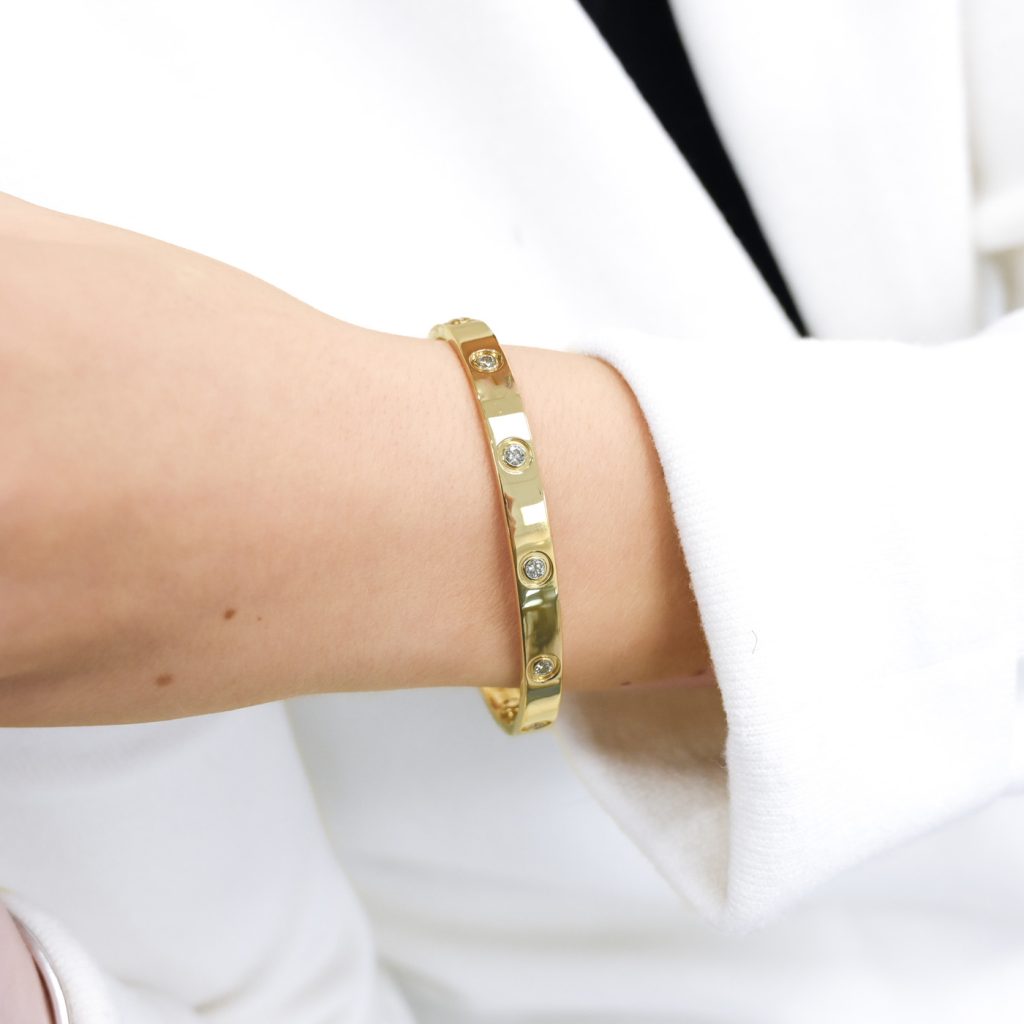
Most people who own a vintage Cartier bracelet, brooch, or watch don’t have a royal commission or a coronation photo to point to, and that’s fine. What matters practically is whatever documentation does exist: original receipts, service records, Cartier certificates of authenticity, appraisals, or even family letters that establish when and how the piece was acquired. That paperwork won’t turn a family heirloom into a museum piece, but it does two things that matter at the point of sale. It confirms authenticity faster, and it supports a stronger valuation than an unverified piece would get. If you’re trying to understand what your own piece might be worth before deciding to sell, a resource like how much a Cartier watch is worth walks through how reference numbers, condition, and documentation each factor into a valuation.
Opals, Treatment, and What It Means for Sellers
Opals are more delicate than diamonds and more likely to have been treated in ways that affect both care and value. Under the FTC’s Jewelry Guides, a seller must disclose a gemstone treatment if it isn’t permanent, if it creates special care requirements, or if it has a significant effect on the stone’s value. Common treatments that trigger this disclosure requirement include heating, irradiation, oiling, waxing, resin impregnation, fracture filling, diffusion treatment, dyeing, and bleaching. If you own a vintage opal piece, whether it’s a tiara-grade stone or a simpler ring, it’s worth confirming its treatment status before getting a formal appraisal or offer. Undisclosed or unknown treatment history can slow down a sale or a loan approval, while clear documentation keeps the process moving.
Auction, Dealer Sale, or a Loan: Matching the Option to the Piece
A royal provenance piece like the Devonshire tiara belongs at a specialist auction house, where the story itself can be marketed to the right bidders over months of lead time. Most vintage Cartier jewelry doesn’t need that process, and often shouldn’t wait for it. Consignment timelines at major auction houses typically run several months from acceptance to sale, auction houses charge seller’s commissions on top of their estimates, and there’s no guarantee a given lot sells at or above estimate once bidding happens.
If you want a faster, more predictable outcome, there are two more practical paths. You can sell your Cartier jewelry directly for same-day funds based on a model-specific, current market valuation, or you can keep the piece and use it as collateral through a Rolex or Cartier-secured loan if you need liquidity now but expect to want the piece back later. A loan preserves ownership while still unlocking value, which matters if a piece has sentimental weight that an auction result can’t replace. Diamond Banc’s specialists evaluate Cartier pieces using current secondary-market pricing and model or reference-specific detail, the same categories of information that drive auction estimates, just without the months-long timeline or the uncertainty of a live sale.
What This Means If You’re Deciding What to Do With Your Own Piece
The Devonshire tiara’s estimate, between roughly $940,000 and $1.3 million, is a benchmark for what a documented, exhibition-worthy piece with royal history can command, not a reference point for an ordinary vintage Cartier item. But the underlying logic applies at every price level: authenticity, condition, documentation, and current market demand drive what a buyer will pay, whether that buyer is a Geneva auction room or a specialist evaluating your piece in person. If you’re trying to decide between consigning a piece for a future sale, selling it outright, or using it as collateral while you decide, it helps to talk to someone who values vintage Cartier pieces daily rather than guessing based on a single auction headline. For readers curious about other distinctive Cartier designs and what collectors pay for them, the Cartier Love bracelet’s history is a good next read, since it shows how a piece’s design story, separate from royal provenance, can still support strong resale value.
Like what you’re reading?
Add us in Google — more like this is on the wayRelated Posts


 Instagram
 Facebook
 Tiktok
 YouTube