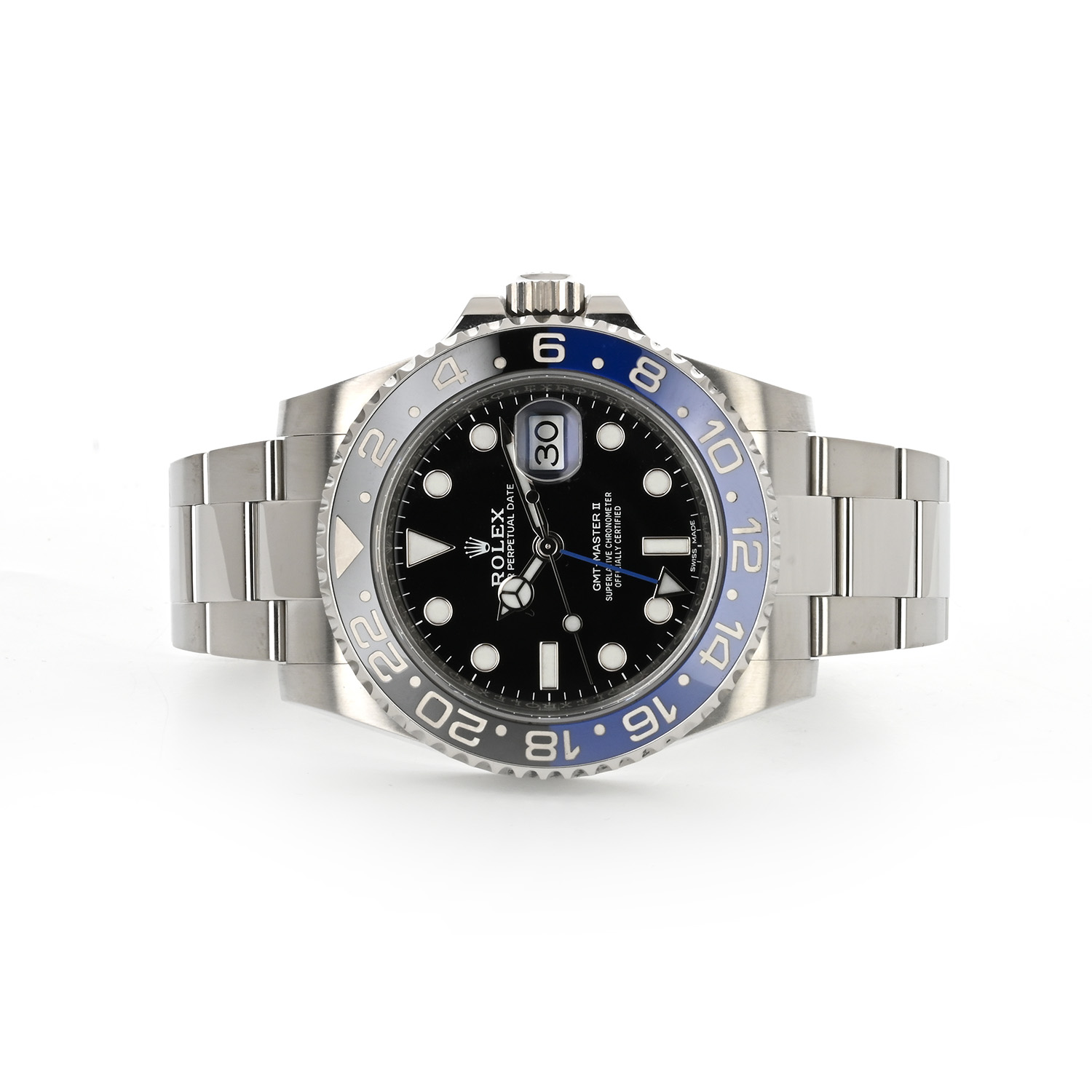
A solid 18K gold Rolex GMT-Master II is set to headline Miller & Miller Auctions’ Luxury & Important Watches sale on November 12, 2026, according to an announcement the auction house made on October 27, 2026. For anyone who owns a GMT-Master II, whether a vintage gold reference pulled from a single owner’s collection or a current steel model worn every day, the lineup and its presale estimates give a dated, verifiable snapshot of what this watch is actually commanding right now, and which details separate a strong valuation from a disappointing one.
Inside the November 12 Auction Lineup
The headline lot is a solid 18K gold Rolex GMT-Master II Reference 16718, a single-owner watch powered by the automatic Calibre 3185, with a 40mm case and a substantial assembled weight of 160.41 grams. It carries a presale estimate of CA$25,000 to CA$30,000. The watch is being sold without its original box or papers, and its timekeeping accuracy was untested at cataloguing, a detail worth returning to below.
The same sale features a Rolex Day-Date Reference 18078 “President” estimated at CA$22,000 to CA$28,000 and a Rolex “Red” Submariner Reference 1680 in steel estimated at CA$20,000 to CA$25,000, across 95 total lots. The sale runs online-only with no in-person bidding, and the live webcast starts at 5:00 p.m. Eastern. Miller & Miller’s Consignment Director for Watches described it as the house’s third and final luxury watch sale of 2026, pointing to a strong mix of brands, eras, price points, and precious metals, many of them one-owner pieces.
Gold vs. Steel: Why the GMT-Master II’s Metal Changes the Math
The metal a GMT-Master II is cased in does more than change its color. It changes manufacturing cost, melt value, and how the watch is priced new, which in turn shapes what it’s worth used. Current-production steel GMT-Master II models list from Rolex at $11,800 to $12,500 USD depending on bezel and bracelet configuration, while two-tone and solid-gold versions run from roughly $20,050 up to $57,500 USD. That spread explains why a vintage, all-gold reference like the 16718 heading to auction carries a different value conversation than a steel sports model: it’s being measured against a much higher new-retail baseline, even before factoring in its age, condition, or missing papers.
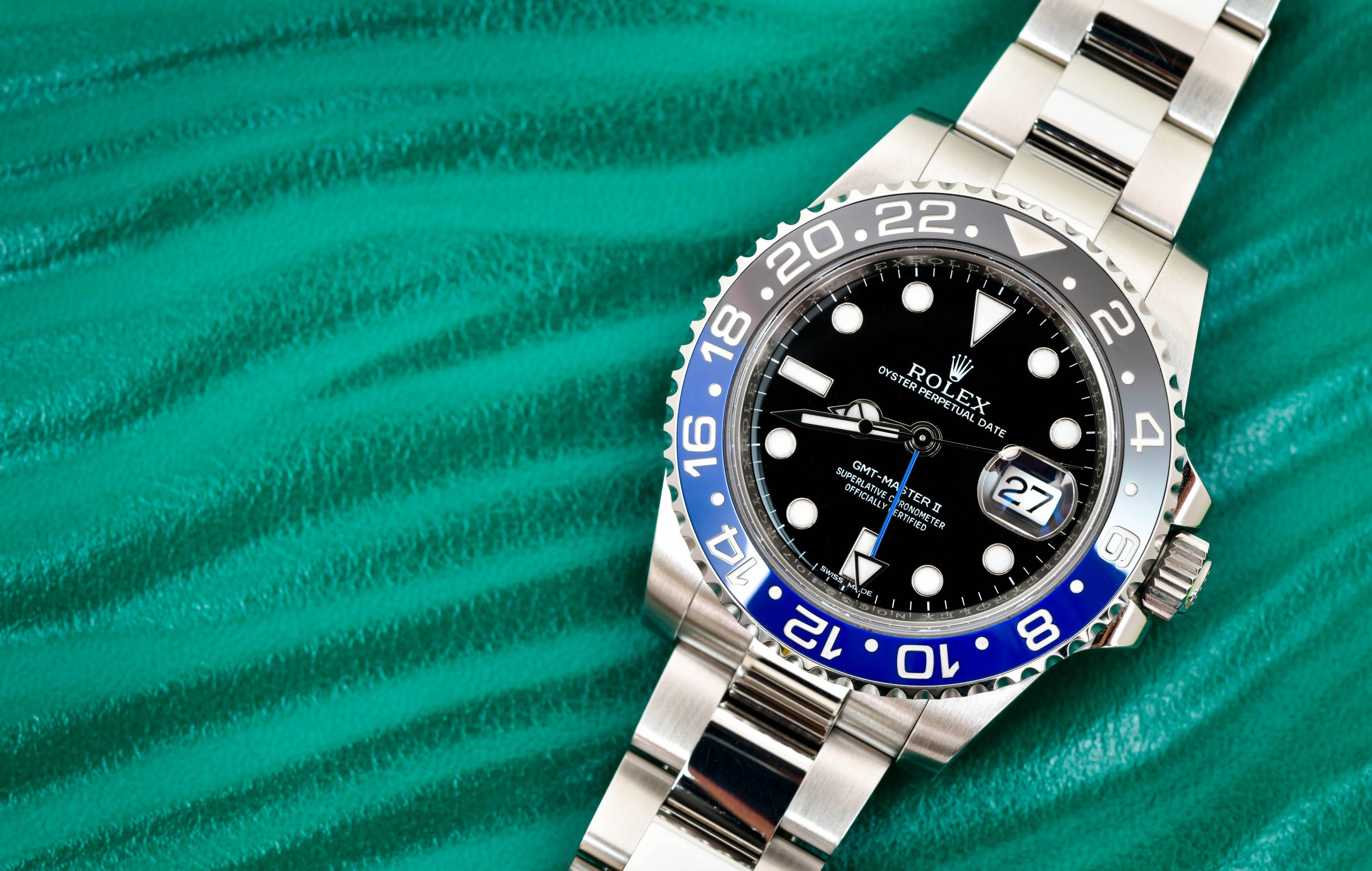
It also explains why dial and bezel variations matter so much to GMT-Master II buyers generally. Collectors distinguish sharply between the red-and-blue “Pepsi,” the black-and-blue “Batman,” and other two-tone color combinations, and that distinction affects demand and price as much as metal does. If you’re trying to place your own watch in that landscape, our GMT-Master II Pepsi value guide and our notes on selling a Batman GMT-Master II walk through how reference and bezel color shift value independent of metal.
What the CA$25,000-30,000 Estimate Tells Current Owners
An auction estimate isn’t a retail price and it isn’t a loan appraisal, but it is real-time evidence of where informed buyers expect a specific watch to land. A vintage, solid-gold GMT-Master II estimated at CA$25,000 to CA$30,000 sits meaningfully below the top of Rolex’s current gold GMT-Master II pricing, which reflects the usual gap between a decades-old watch without box, papers, or a documented service history and a brand-new piece backed by a factory warranty. That gap is the single biggest thing to understand if you’re sizing up what your own GMT-Master II, gold or steel, might be worth today: condition, documentation, and verified function routinely move the number more than the reference itself does.
If you want a number specific to your watch rather than a general estimate, a model- and reference-specific valuation is the only way to get one responsibly. Diamond Banc’s specialists evaluate GMT-Master II watches against current secondary-market activity, not a generic price list, whether you’re exploring our GMT-Master II sell page or simply want to know where your watch stands.
Box, Papers, and an Untested Movement: Why the Missing Pieces Matter
The headline lot’s listing is explicit about what’s missing: no original box, no papers, and accuracy that hadn’t been verified at the time of cataloguing. Those are exactly the factors that pull a hammer price down even on an otherwise desirable vintage GMT-Master II, and they matter just as much outside an auction room. A lender or buyer evaluating the same watch has to price in the uncertainty of an unverified movement and the loss of provenance that papers provide, since they confirm the watch’s authenticity and original configuration.
This is also where a transparent, in-person valuation earns its keep. Diamond Banc’s specialists physically inspect a GMT-Master II, metal, movement, bracelet, dial, and any accompanying documentation, and explain how each factor affects the number before you decide anything. That’s a different experience than a generic pawn counter, and it’s the reason owners researching the best place to sell a rolex typically look for a buyer with specific luxury watch expertise rather than general secondhand experience.
Service Guidelines for a Vintage GMT-Master II
A Calibre 3185 GMT-Master II like the one heading to auction dates to the 1990s, which raises a practical question for anyone holding a similar watch: when did it last see a watchmaker, and does that matter for value? Rolex recommends professional servicing approximately every 10 years to maintain accuracy and water resistance, though the company notes the right interval depends on the specific model and how the watch is actually worn. That 10-year figure is a general guideline, not a hard rule, and it’s worth treating as a ceiling rather than a target for an older caliber: lubricants and gaskets in a 1990s-era movement age faster than the synthetic materials used in modern watches, so a vintage GMT-Master II that hasn’t been serviced in over a decade may need attention sooner than a current model would.
A full factory overhaul takes a minimum of four to six weeks and begins with a diagnostic exam by a Rolex-trained watchmaker, while new watches purchased through an official retailer carry a five-year international guarantee that a decades-old piece obviously no longer has. None of this means a vintage GMT-Master II without recent service is worthless. It means the cost and timeline of bringing it current should factor into any decision to sell it outright versus using it as collateral, since a loan doesn’t require resolving service questions first the way a sale to a retail buyer might.
What This Means If You Own a GMT-Master II
If the November auction has you wondering what your own watch is worth, the honest answer depends on the same variables Miller & Miller’s catalogue spells out for its lead lot: reference, metal, documentation, and verified condition. A steel GMT-Master II and a solid-gold 16718 are not competing for the same dollars, and a watch with box and papers in running order will consistently outperform an otherwise identical piece without them.
From there, you have two straightforward paths. You can sell the watch outright through our GMT-Master II buying page and receive a model-specific offer based on today’s market, or, if you’d rather keep the watch, you can use it as collateral through a Rolex-secured loan while retaining ownership. Both options are available through local physical offices or nationwide via secure mail-in shipping, with human luxury-asset specialists handling the valuation either way rather than a generic pricing formula.
Whatever reference you’re holding, treat an auction estimate the way you’d treat any other market data point: useful context, dated to the day it was published, and no substitute for someone who’s actually examined your specific watch.
Like what you’re reading?
Add us in Google — more like this is on the wayRelated Posts
 Instagram
 Facebook
 Tiktok
 YouTube