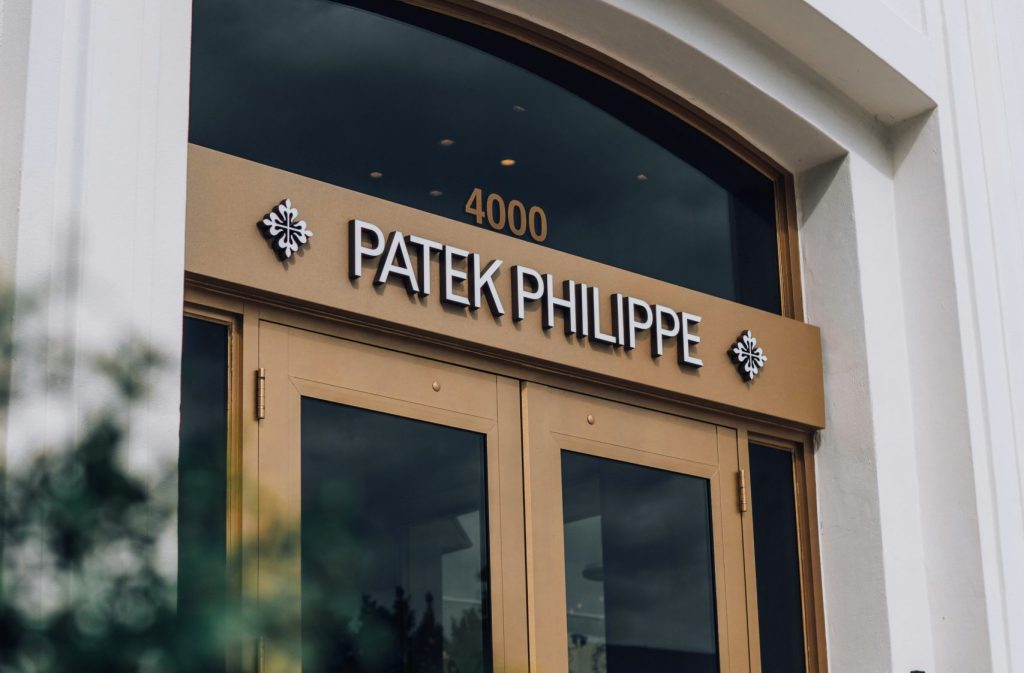
On October 22, 2026, news broke that an ultra-rare Patek Philippe dual-time watch is headed to auction with an estimate as high as $1.6 million. The piece, a Patek Philippe Dual Time Ref. 3452/1, is one of only seven ever made and will cross the block at Christie’s Important Watches sale in New York on December 4, 2026, with a pre-sale estimate of $800,000 to $1.6 million. If you own a vintage Patek, a rare dual-time complication, or even a well-kept Rolex GMT, this auction is a useful reference point for what collectors are actually paying right now, and for what your own options look like if you’d rather not wait months for a sale to close.
The $1.6 Million Patek Philippe Dual-Time Up for Auction
The Ref. 3452/1 traces back to a prototype built by watchmaker Louis Cottier around 1954. It was the first Patek Philippe twin-dial dual-time watch driven by a single automatic movement, rather than two separate movements working side by side, a mechanical simplification that was significant enough to shape how later dual-time watches were designed. This particular example is also notable for a reason that has nothing to do with mechanics: it has stayed in one family for two generations and is the last of the seven known Ref. 3452/3452-1 watches to be publicly unveiled, making it the first to reach the market in roughly twenty years.
That combination, a landmark movement, genuine scarcity, and decades out of public view, is exactly what pushes an estimate into seven figures. It’s also a reminder that auction headlines describe a specific watch’s specific story. A reader with a vintage Patek or a dual-time Rolex in a drawer should treat this number as context, not as an appraisal of their own piece.
Why “One of Seven” Really Matters
Scarcity numbers get thrown around loosely in watch marketing, but in this case the count is precise and documented. Of the seven Ref. 3452/3452-1 watches ever produced, two are believed to have been made in 1960, two in 1961, and the remaining three by 1963, and each example differs slightly in dial, case material, or lug design. That means no two of the seven are identical, so collectors aren’t just bidding on “a 3452,” they’re bidding on a specific variant with its own case metal, dial finish, and ownership history. For any vintage watch, reference number alone rarely tells the whole story. Two watches with the same model number can differ meaningfully in value based on dial condition, originality of parts, and documented provenance, which is exactly why reference-specific, condition-specific valuation matters more than a quick model lookup.
Dual Time vs. GMT: What You’re Actually Comparing
A true dual-time watch, like the Ref. 3452/1, displays two full time zones simultaneously on separate dials or sub-dials, each with its own hour and minute hands running independently. A GMT complication, the one found on a Rolex GMT-Master II, uses a single extra hand and a rotating 24-hour bezel to track a second time zone off the same movement. Both solve the same traveler’s problem, but a dual-time watch with independent dials is mechanically more complex to build, which is part of why historically significant dual-time pieces from Patek Philippe command such outsized estimates compared to even a desirable modern GMT.
What a $1.6 Million Hammer Price Actually Costs the Buyer
The $1.6 million figure making headlines is Christie’s high estimate for the hammer price, the amount the winning bid reaches, not the final bill the buyer pays or the amount the seller receives. Auction houses add a buyer’s premium on top of the hammer, and Christie’s current fee schedule, effective since September 1, 2025, charges 27% on the hammer price up to $1.5 million, 22% on the portion between $1.5 million and $8 million, and 15% above that.
Run the math at the high end of the estimate. If this Patek Dual-Time hammers at $1.6 million, the buyer’s premium adds 27% of the first $1.5 million ($405,000) plus 22% of the remaining $100,000 ($22,000). That brings the buyer’s total cost to $2,027,000 before any applicable taxes, which is roughly 27% more than the headline number. On the seller’s side, the house’s commission is negotiated separately and comes out of the hammer price before the consignor sees a check. Whenever you read an eye-catching auction estimate, remember it describes neither what the buyer ultimately pays nor what the seller ultimately nets.
Does Servicing a Vintage Watch Hurt Its Value?
Service done the wrong way is one of the fastest ways to erode a vintage watch’s value. Over-polishing a case can soften or erase the sharp edges collectors look for, and swapping in a non-original dial or set of hands, even a correct-looking replacement, can turn a six-figure watch into a much more ordinary one in the eyes of a serious buyer. Patek Philippe takes this seriously enough that watches typically over 45 years old are routed to a dedicated restoration team in Geneva whose entire job is preserving a timepiece’s original technical and aesthetic condition, using original components and techniques specific to the era the watch was built. When original parts aren’t available, that team hand-recreates them from a stock of original components, cases, and production tools the company maintains going back to 1839.
For a modern Patek, routine factory service costs are published and predictable: current maximum service costs range from CHF 1,000 for a standard automatic movement up to CHF 2,700 for the most complex chronograph complications, before tax. The bigger risk for a vintage piece isn’t the cost of proper service, it’s the irreversible damage of improper service. If you own something old and valuable, verify who’s opening the case before you hand it over.
How Does a Vintage Patek Compare to a New Dual-Time Watch Today?
It’s worth putting the auction estimate next to what a new dual-time-equivalent watch costs today. A new stainless steel Rolex GMT-Master II currently carries an MSRP of roughly $11,800 to $12,300 from authorized dealers as of late 2026, and secondary-market demand often pushes that higher still: the steel “Batgirl” GMT-Master II, for example, has an authorized-dealer price of $11,800 but has traded at an estimated market price above $17,000. Even at that premium, a desirable modern GMT sits two orders of magnitude below a rare vintage Patek dual-time. That gap is the clearest illustration of what rarity and horological history are worth to serious collectors versus what a well-made current-production watch commands on its own merits.
If You Own a Vintage or Dual-Time Watch, You Don’t Have to Wait for an Auction
Auctions take months from consignment to payout, and even then the final number depends on who’s in the room that day. If you own a Patek Philippe, a vintage dual-time piece, or a Rolex GMT and want to know what it’s actually worth in today’s market, Diamond Banc provides model- and reference-specific valuations based on current secondary-market pricing, not a generic estimate.
From there, you have two straightforward paths. You can sell your watch outright through Diamond Banc’s Patek Philippe buying service and receive payment directly rather than waiting for a sale date, consignment period, and buyer’s premium to work through the process. Or, if you’d rather keep the watch, you can use it as collateral for a loan through loans on watches, getting cash now while retaining ownership and the option to reclaim your piece later. Both options are handled by specialists in luxury watches rather than general pawn-shop staff, with local offices, secure mail-in shipping for those outside a Diamond Banc market, and nationwide service either way.
For more on how auction results translate into real-world value for pieces like yours, see Diamond Banc’s coverage of how auction news moves watch values and the recent Titanic-linked Patek Philippe auction, as well as a broader look at what drives Patek Philippe values across references and eras.
Like what you’re reading?
Add us in Google — more like this is on the wayRelated Posts


 Instagram
 Facebook
 Tiktok
 YouTube