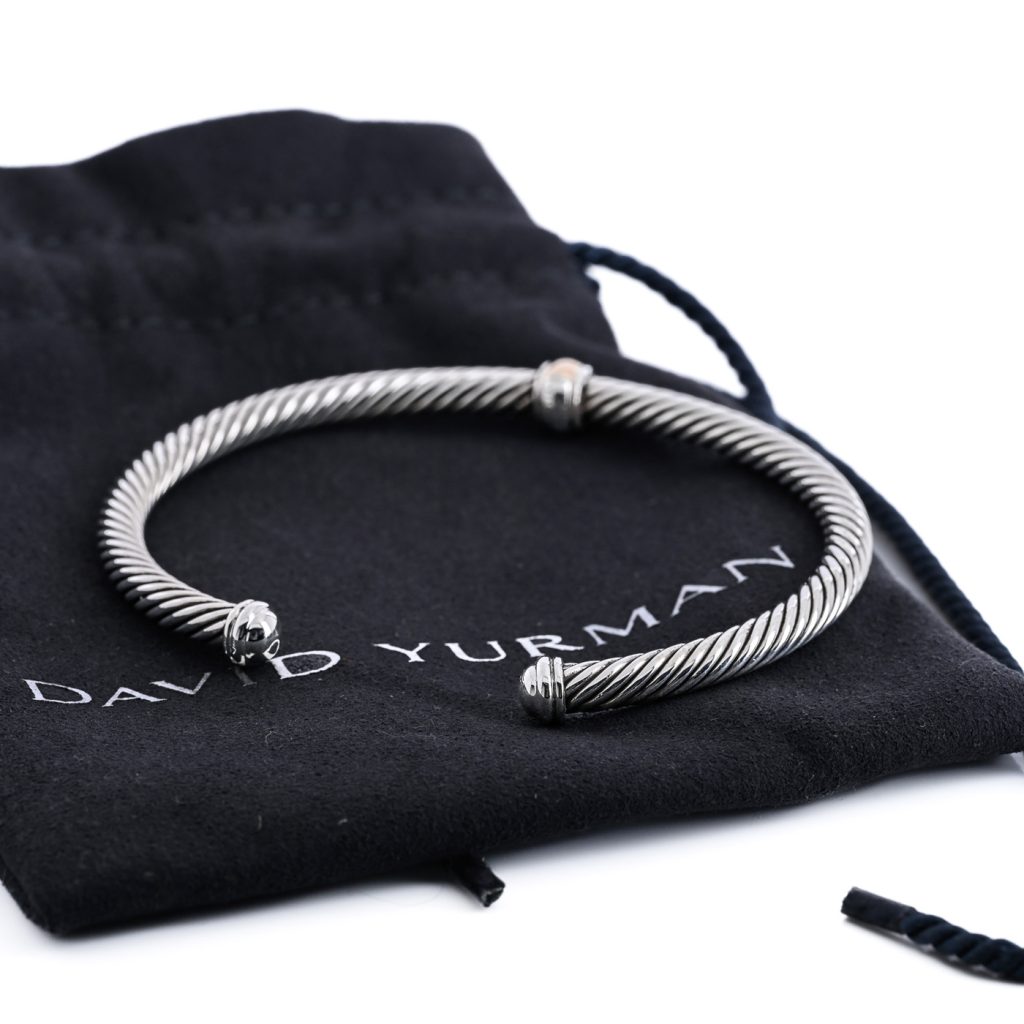
A David Yurman Cable bracelet retails for as much as $1,170 directly from the brand, depending on the gemstone accent, as of October 2026. If you’re considering a loan against that bracelet, or any other David Yurman piece sitting in a drawer, the number that matters isn’t what you paid for it. It’s what a lender can verify: the metal, the stones, and the condition. That gap between retail positioning and collateral value is where most owners get surprised, in both directions.
How Lenders Actually Value David Yurman Jewelry
David Yurman’s retail pricing reflects design, craftsmanship, and brand positioning as much as it reflects raw material content. A lender evaluating that bracelet for a collateral loan isn’t paying for the name on the box. They’re assessing three things: the verified weight and karat of any gold present, the quality of any diamonds or gemstones (graded against the standard of color, clarity, cut, and carat weight that the diamond industry uses for exactly this kind of objective comparison), and the overall condition of the piece. The retail price is a design premium layered on top of those measurable components, and design premiums don’t survive an appraisal the way gold weight and diamond grading do.
This is why two people can own what looks like “the same” David Yurman bracelet and be offered very different numbers. What David Yurman charges at checkout reflects craftsmanship and brand. What a lender offers reflects what the underlying materials are verified to be.
Sterling Silver vs. Gold-Accented: The Value Gap Is Real
David Yurman sells most of its signature Cable designs in two versions: sterling silver alone, or sterling silver paired with 14K yellow gold accents. At retail, that difference is already significant. A Cable Flex bracelet in pure sterling silver lists at $295, while the identical design with 14K gold added lists at $395, per David Yurman’s own pricing as of October 2026. That roughly 34% retail premium for gold content only widens on the collateral side, because gold carries a verifiable, tracked spot price, while sterling silver, though it has real value, carries far less value per gram.
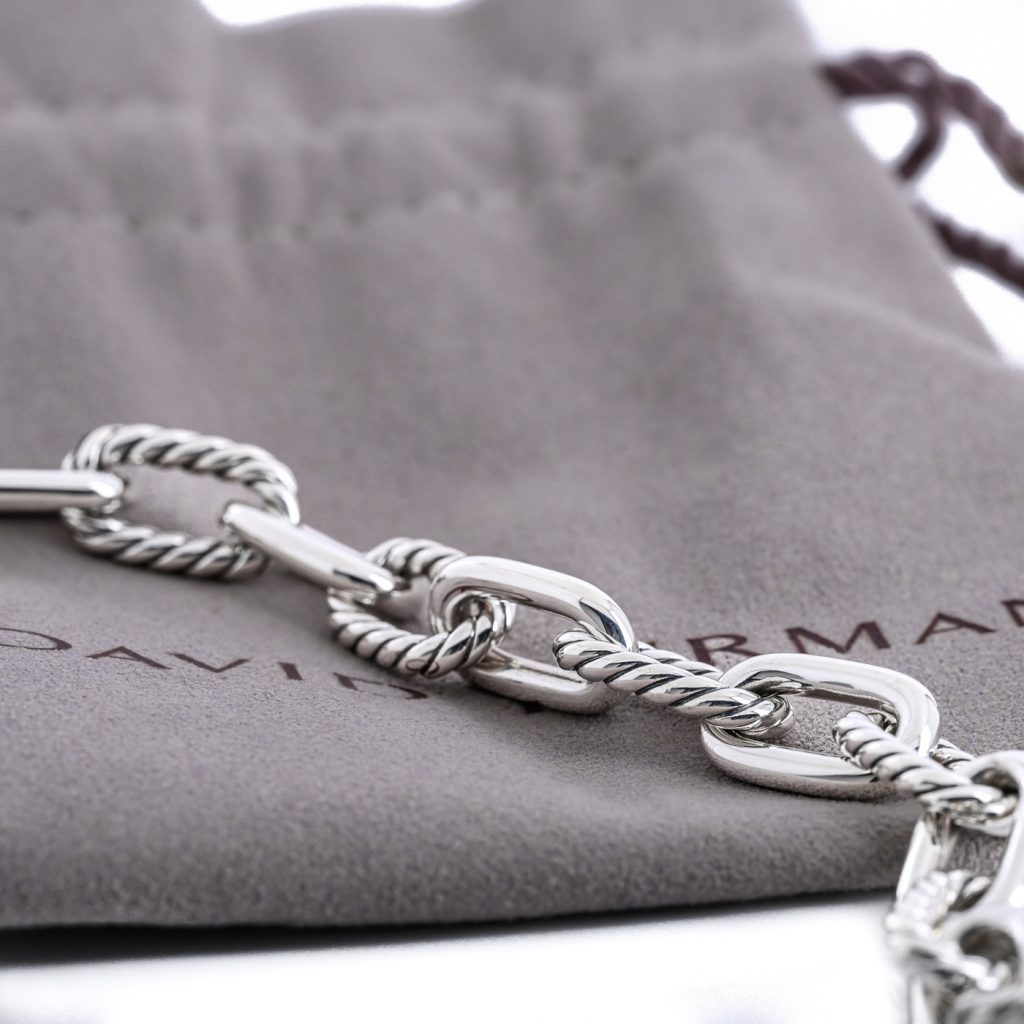
The same pattern shows up across the brand’s other lines. A men’s Cable Cuff in sterling silver with 14K gold runs $675 to $850 depending on stone accent, and the Buckle Classic Cable Bracelet in sterling silver with 14K gold lists at $1,500. In every case, the gold-bearing version costs meaningfully more than its silver-only counterpart, and that same gold content is exactly what a lender can price against a published spot rate. Silver can’t be priced the same way; it’s valued on weight and craftsmanship rather than a daily-quoted market rate.
In practical terms: a sterling-silver-only David Yurman piece, no gold, no diamonds, can still qualify for a loan, but it will be valued primarily on silver weight and condition rather than brand name alone. A piece with 14K gold accents of meaningful weight, or set diamonds, will carry a noticeably higher loan value than the same design without them. Owners deciding which piece in a collection to use as collateral should expect the gold-accented and diamond-set versions to outperform the silver-only equivalents every time. For a closer look at what silver-only pieces are worth on their own, our guide on reselling sterling silver David Yurman jewelry walks through that comparison.
Why the ’14K’ or ‘925’ Stamp Isn’t the Final Word
Every David Yurman piece carries a metal stamp, 14K, 18K, or 925 for sterling silver, but a stamp alone doesn’t settle the question for a lender. Under federal rules governing jewelry marking, gold jewelry must carry an accurate karat quality mark alongside the maker’s registered trademark, and pieces described as “gold filled” or “gold overlay” must disclose both the karat of the gold layer and the plating method used. A gold-filled piece, which requires at least a 1/20th gold-by-weight layer to carry that designation, is a fundamentally different asset than a solid-karat piece, even if both carry gold-related language on the stamp. A genuine David Yurman piece is correctly marked at the factory, but wear, repairs, and aftermarket alterations can change what’s actually present over time, so a lender verifies the stamp against the physical piece rather than relying on it alone.
That verification step is also why branded jewelry benefits from a transparent valuation process more than generic pieces do. The brand name can create an assumption of value that the physical metal and stones need to independently confirm before a number gets attached to it.
What Drives the Loan Value: Metal, Stones, or the Name?
Of the three, metal weight and karat do the most predictable work, because gold has a live, published price that doesn’t depend on who’s asking. Spot gold priced at $4,128.00 per troy ounce as of October 5, 2026, which works out to $132.72 per gram of pure 24K gold and $77.41 per gram of 14K gold given its 58.33% purity. That figure is the floor under any gold-accented David Yurman piece, regardless of design or when it was purchased.
Diamonds and gemstones add value on top of that floor, but only to the extent they can be graded against color, clarity, cut, and carat weight. A stone the owner simply describes as “a nice diamond” doesn’t carry a defensible number until it’s actually assessed. The David Yurman name itself matters least of the three for loan purposes, though it isn’t worthless: recognizable, verifiable designer craftsmanship supports resale marketability, which is part of what a lender weighs when setting terms. But name recognition alone, without verifiable metal and stone content, won’t move the number by much on its own.
A Worked Example: What 10 Grams of 14K Gold Is Actually Worth
Say a David Yurman piece, a wide cuff or a buckle bracelet, contains 10 grams of 14K gold. At the October 5, 2026 spot price, that gold content alone calculates to approximately $774 (10 grams multiplied by 58.33% purity, multiplied by $132.72 per gram). That’s before any additional value is added for the sterling silver base, for diamonds or gemstone accents, or for the piece’s condition and design. Notice what that number has nothing to do with: the $1,500 retail price of a Buckle Classic Cable Bracelet in the same metal combination. The loan conversation starts with verified gold weight, not the price tag from the original purchase.
Gold’s spot price moves daily, so the melt-value component of any piece should be checked against a current benchmark rather than treated as fixed. That’s part of why a transparent valuation process should walk you through how that day’s numbers were applied to your specific piece, not just hand you a total.
Getting a Loan Against David Yurman Jewelry
If you’re deciding between using a David Yurman piece as collateral or selling it outright, the valuation process is largely the same either way: verified metal weight and karat, graded stones, and condition. The difference is what happens afterward. A David Yurman-secured loan lets you keep the piece and get it back once the loan is repaid, while selling it to a David Yurman buyer converts it to cash outright with no obligation to repurchase.
Either path benefits from working with specialists who handle designer jewelry regularly rather than a general pawn shop that may default to scrap-metal pricing on a piece with more value than that. Diamond Banc’s local market directors and luxury-asset specialists evaluate David Yurman pieces using current secondary-market pricing and model-specific grading, whether you’re working with one of Diamond Banc’s physical offices or shipping a piece in through secure, insured mail-in service. You can review how the loan terms and process work before deciding which piece, or pieces, to bring in.
For a broader look at how jewelry-secured loans work before you bring anything in, our loan against jewelry guide covers the process end to end.
Common Questions Before You Bring a Piece In
Does my sterling-silver-only piece qualify at all? Yes. Silver has real, if modest, collateral value, and a well-made David Yurman design in silver alone can still support a meaningful loan, just at a lower level than the same design with gold or diamonds added.
Does my original receipt or retail price matter? Not directly. It’s useful for confirming authenticity and provenance, but the loan amount is based on what’s verified in hand, not on what the register rang up at the time of purchase.
What if I was told my piece has diamonds of a certain grade? A verbal description isn’t a grade. Diamonds are assessed against the color, clarity, cut, and carat weight standard at the time of appraisal, regardless of what accompanied the original sale.
How much more is a gold-accented piece worth than the same design in silver alone? At retail, the gap runs around 30 to 35 percent on comparable Cable designs. On the collateral side, the gap tends to be larger, because the gold portion is priced against a daily spot rate while the silver portion is not.
Bringing in a David Yurman piece, whether it’s a single Cable bracelet or a full collection, starts with that same verification process. Knowing in advance what actually moves the number, metal weight, karat, graded stones, and condition, makes it easier to decide which pieces to use as collateral and which to set aside.
Like what you’re reading?
Add us in Google — more like this is on the wayRelated Posts

 Instagram
 Facebook
 Tiktok
 YouTube