Common Rolex Counterfeits and How to Spot Them
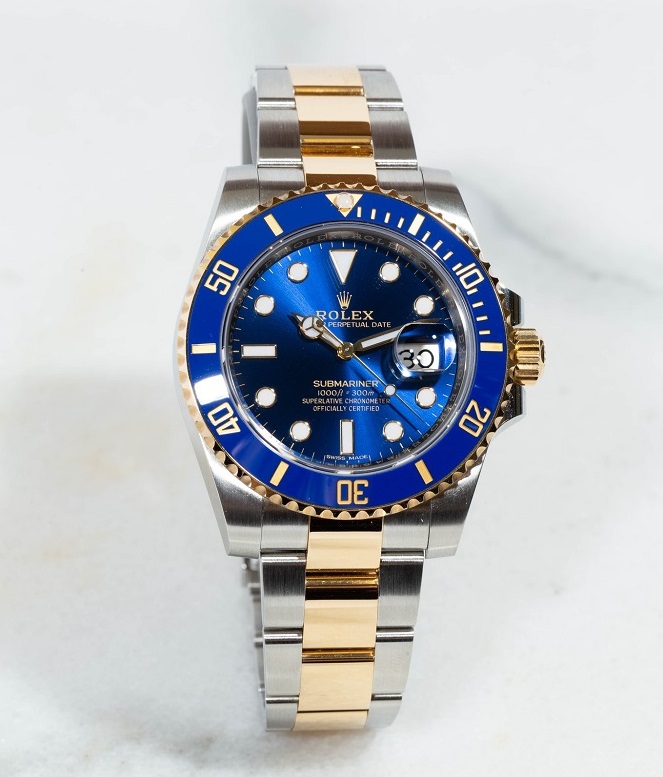
Common counterfeit Rolexes, often dubbed “super clones,” typically feature inaccurate, lighter-weight materials, inferior “ticking” quartz movements, and sloppy, uneven dial printing.
Rolex accounts for roughly half of all counterfeit luxury watches seized worldwide. The fakes have gotten dramatically better. According to major pre-owned watch dealers, only about 20 percent of counterfeits are now visually identifiable without close inspection. A decade ago, that number was closer to 80 percent.
Knowing what to look for can save you thousands whether you’re buying pre-owned or verifying a watch you already own. The good news is that even the best fakes still get certain details wrong.
At Diamond Banc, our team authenticates Rolex watches daily using the same checks outlined below. If you’d rather skip the guesswork, contact us now or visit one of our locations for a professional evaluation.
Which Rolex Models Get Counterfeited Most Often
The Submariner is the single most counterfeited Rolex in the world. The 116610LN and 126610LN black-dial references lead the way.
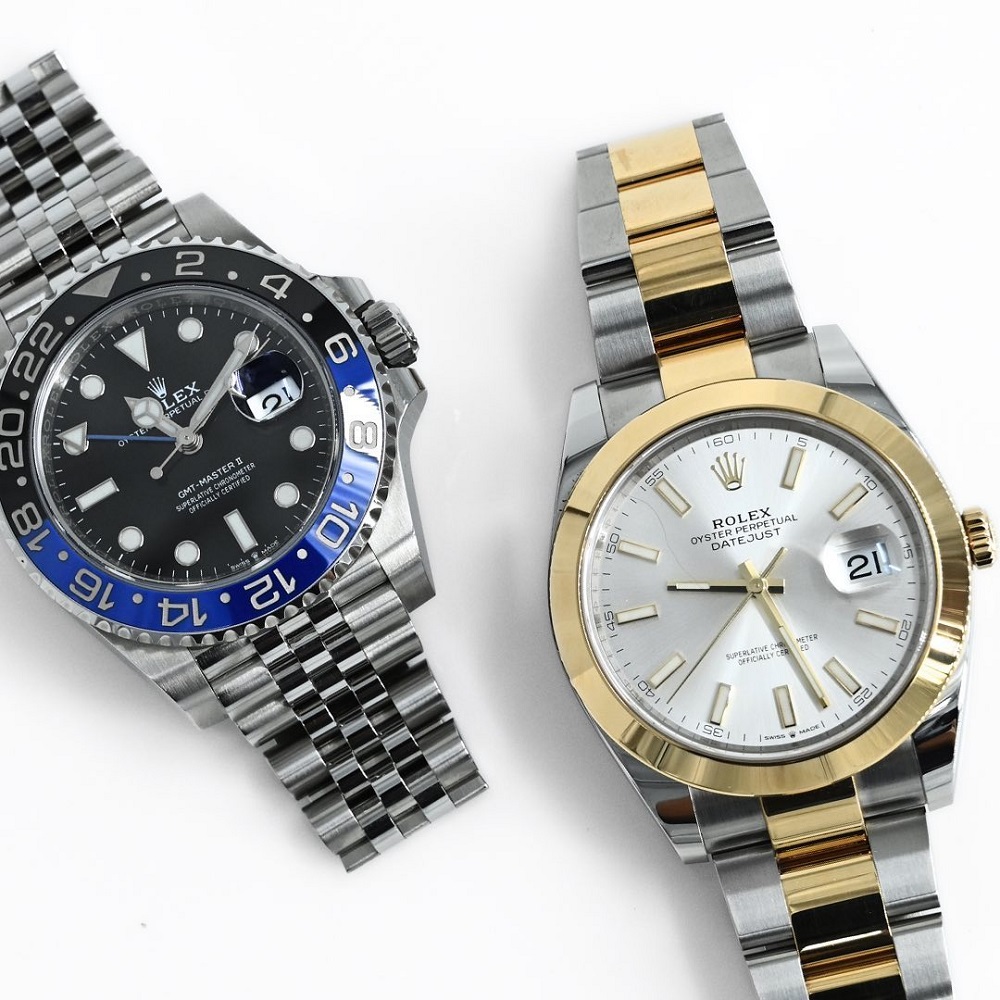
The Daytona ranks second, especially the white-dial 116500LN. The GMT-Master II comes third, driven by the availability of convincing clone movements that mimic its independently adjustable hour hand. The Datejust and Day-Date round out the top five.
One instant tell: Rolex has never produced the Day-Date in a steel and gold two-tone configuration. If you encounter a two-tone Day-Date, it is counterfeit. Genuine Day-Dates come exclusively in full precious metal.
Start with the Crystal
Two of the most reliable authentication checks involve the sapphire crystal. Both can be performed quickly without any special tools beyond a basic loupe.
The Laser-Etched Crown
Rolex began etching a tiny crown logo at the 6 o’clock position on the crystal starting around 2001. It became standard on all models by 2004. The one exception is the Milgauss 116400GV, which uses a green-tinted crystal.
On a genuine Rolex, the LEC is nearly invisible to the naked eye. You typically need a loupe and the right angle of light to find it. If you can spot it immediately without magnification, that’s a red flag. Counterfeits tend to make the crown too visible, too large, or blurry around the edges.
The Cyclops Lens
Rolex uses 2.5x magnification on the Cyclops lens over the date window. Fakes frequently use a weaker lens, often around 1.5x. Hold the watch at arm’s length. On a genuine Rolex, the magnified date should appear noticeably larger and fill the lens cleanly.
The Rehaut Engraving
The rehaut is the angled inner ring between the dial and the crystal. Starting around 2004 and becoming standard by 2008, Rolex laser-engraves “ROLEX ROLEX ROLEX” around this ring. The serial number sits at 6 o’clock and a crown logo at 12 o’clock. On a genuine watch, the engraving is crisp, uniform, and precisely aligned. No blurring, no uneven spacing.
Counterfeits often produce rehaut text that looks fuzzy, poorly centered, or inconsistently deep. The serial number should also match the warranty card. On transitional models from 2005 to 2008, the serial also appears engraved between the lugs at 6 o’clock. Both numbers should match.
Weight, Steel, and the Feel in Your Hand
Genuine Rolex watches are heavy. A stainless steel Submariner weighs approximately 155 grams. A gold Day-Date President can reach over 200 grams. Counterfeits are almost always noticeably lighter.
Why 904L Steel Matters
Rolex uses 904L stainless steel (Oystersteel) on all steel models. This alloy has higher chromium, nickel, and copper content than the 316L steel used by virtually all counterfeiters. 904L polishes to a brighter, whiter sheen and resists corrosion more effectively. A side-by-side comparison with a known genuine Rolex often reveals a visible difference in surface finish.
The Movement and Second Hand
Modern Rolex movements beat eight times per second. This produces the signature smooth, sweeping second hand. If the second hand ticks in one-second jumps, the watch contains a quartz movement and is almost certainly counterfeit. The only exceptions are the Oysterquartz (1977 to 2001) and the rare Texano.
Higher-quality fakes do use automatic movements that sweep. But they often lack precision. In a quiet room, a genuine Rolex produces a smooth hum, while many fakes sound slightly rougher. This is one of the harder checks to perform without experience, which is why professional authentication matters for high-value purchases.
The Caseback Rule
On the vast majority of Rolex watches, the caseback is smooth, solid, and completely blank. If a watch has a see-through caseback, it is almost certainly not genuine. This is one of the easiest checks and catches a surprising number of fakes.
The exceptions are few: the Rolex 1908, the platinum Cosmograph Daytona, the Le Mans Daytona (all 2023), and the discontinued Cellini Prince (2005 to 2015). Outside of those, a transparent caseback is an immediate disqualifier.
Model-Specific Red Flags
Beyond the universal checks above, certain Rolex models have authentication points unique to their design. These are quick tests that apply only to specific references.
Function
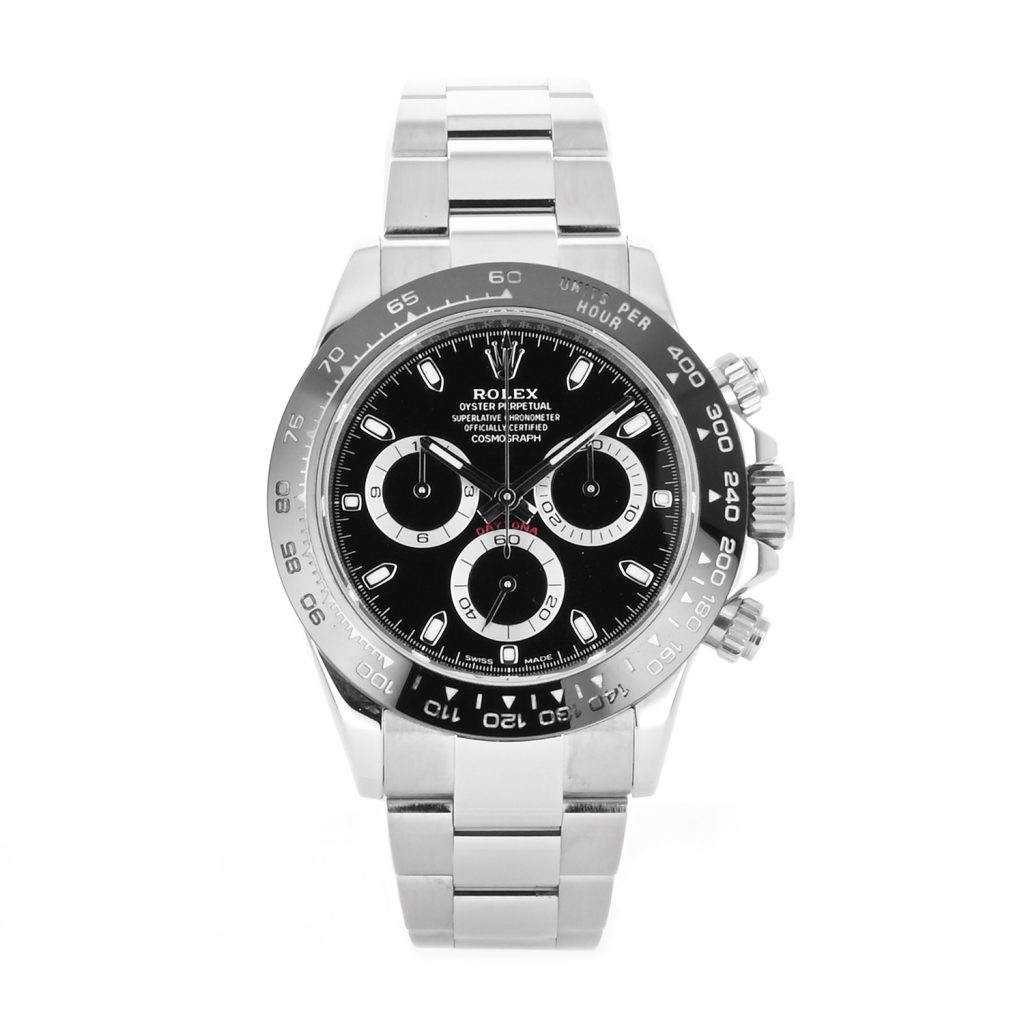
On a genuine Daytona, all three subdials are functional. The pushers should feel smooth and firm. The central chronograph hand should snap back to 12 o’clock precisely when you press reset. Fakes frequently have decorative-only subdials that don’t move.
The Triplock Crown Seal
On the Submariner, Daytona, Sea-Dweller, Yacht-Master, and post-2007 GMT-Master II, unscrew the crown fully. Look for a small black rubber gasket at the base of the crown tube. This is the Triplock crown seal. Its absence on any of these models is a strong indicator of a counterfeit.
When Professional Authentication Is Worth It
The checks above will catch most fakes. But the best replicas can fool even experienced collectors at a glance. Industry data suggests roughly 10 percent of pre-owned Rolex watches submitted to major dealers turn out to be counterfeit.
Diamond Banc authenticates every watch we evaluate using visual checks, precision measuring tools, and movement inspection. Whether you’re looking to sell, explore a Rolex equity loan, or confirm what you have is real, contact Diamond Banc today or use our free Rolex Calculator to get started.
Frequently Asked Questions
What is the most counterfeited Rolex model?
The Submariner is the most counterfeited Rolex in the world, with the 116610LN and 126610LN black-dial references faked most often. The Daytona, GMT-Master II, Datejust, and Day-Date round out the top five.
How can I tell if my Rolex is real by looking at the crystal?
Check for the laser-etched crown (LEC) at the 6 o’clock position on the crystal. On a genuine Rolex, it is nearly invisible without a loupe. If you can see it easily with the naked eye, that is a red flag.
What magnification does a real Rolex Cyclops lens have?
A genuine Rolex Cyclops lens magnifies the date by 2.5x. Counterfeits typically use a weaker lens, often around 1.5x, that barely enlarges the date.
Do all Rolex watches have a laser-etched crown on the crystal?
Almost all modern Rolex watches produced after 2004 have the LEC. The one exception is the Milgauss 116400GV, which uses a green-tinted crystal that Rolex chose to leave unetched.
How much should a real Rolex Submariner weigh?
A stainless steel Rolex Submariner weighs approximately 155 grams with a full Oyster bracelet. Counterfeits are almost always noticeably lighter due to the use of inferior metals.
Does a real Rolex tick or sweep?
A genuine modern Rolex has a smooth, sweeping second hand that beats eight times per second. If the second hand ticks in one-second jumps, the watch is almost certainly counterfeit. The only exceptions are the Oysterquartz (1977 to 2001) and the rare Texano.
Should a Rolex have a see-through caseback?
Almost never. The vast majority of Rolex watches have a solid, blank caseback. The only models with transparent casebacks are the Rolex 1908, the platinum Cosmograph Daytona, the Le Mans Daytona (all introduced 2023), and the discontinued Cellini Prince (2005 to 2015).
Has Rolex ever made a two-tone Day-Date?
No. Rolex has never produced the Day-Date in a steel and gold two-tone configuration. Genuine Day-Dates come exclusively in full precious metal, either 18k gold or platinum. A two-tone Day-Date is always counterfeit.
What is the rehaut on a Rolex and how do I check it?
The rehaut is the angled inner ring between the dial and the crystal. On genuine Rolex watches produced after 2008, it features laser-engraved “ROLEX ROLEX ROLEX” text with the serial number at 6 o’clock. The engraving should be crisp and uniform with no blurring.
What percentage of pre-owned Rolex watches are fake?
According to Watchfinder & Co., roughly 10 percent of pre-owned watches submitted to major dealers are identified as counterfeit, with Rolex being the most frequently faked brand. Only about 20 percent of today’s counterfeits can be identified by sight alone.
 Instagram
 Facebook
 Tiktok
 YouTube