Is Your Diamond Certified? The Importance of GIA Certification When Selling Diamonds
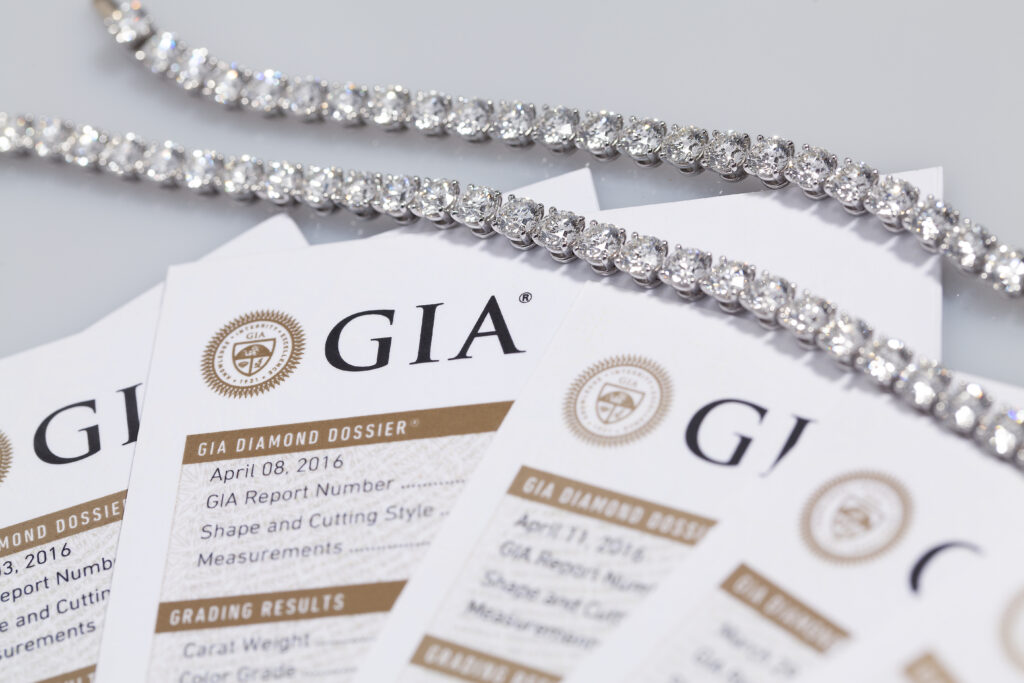
When it comes time to sell diamonds, whether it’s a diamond engagement ring, loose stone, or inherited diamond jewelry, knowing your gem’s exact quality is key to securing a fair price. For sellers who want to protect their investment and ensure transparency in the transaction, a GIA certification is an essential tool.
Diamond Banc places great importance on professional evaluations and industry-accepted standards. One of the most recognized benchmarks in the jewelry industry is the GIA diamond grading report, which provides an unbiased evaluation of a diamond’s characteristics.
Let’s break down why a GIA-accredited diamond holds greater value, trust, and marketability, and why you should consider securing a GIA certificate before you sell diamonds.
Table of Contents
- What Is GIA Certification?
- Why GIA Certification Matters When Selling Diamonds
- How GIA Certification Impacts Diamond Value
- GIA vs. Other Labs
- Impact on Informed Decision-Making
- The Role of Diamond Grading in the Jewelry Industry
- GIA Report Number: Tracking and Security
- What If You Don’t Have GIA Certification?
- Make Informed Decisions with GIA Certification!
- Frequently Asked Questions
What Is GIA Certification?
GIA, or the Gemological Institute of America, is a nonprofit organization and the world’s leading authority on diamond grading and gem identification. Established in 1931, GIA set the international standard for evaluating natural diamonds and precious stones through its detailed grading system.
The GIA developed the universally accepted “Four Cs”: color, clarity, carat weight, and cut, which remain the foundation of all diamond certification today.
A GIA report, sometimes referred to as a GIA diamond grading report or GIA certificate, includes in-depth information about a diamond’s authenticity and key characteristics. Each report has a unique GIA report number that corresponds with the specific stone, ensuring traceability and security in the resale market.
Why GIA Certification Matters When Selling Diamonds
1. Verifies Authenticity and Natural Origin
A GIA diamond report confirms that a stone is a natural diamond, not synthetic or lab-created. This distinction is critical, as non-certified diamonds or lab-grown options have significantly lower resale value. If you’re looking to sell diamonds and want the best offers, it’s important to show that the stone is natural and graded by GIA.
2. Ensures Trust and Confidence
One of the most important aspects of selling diamonds is trust. Without certification, sellers often face skepticism about the diamond’s authenticity or true quality. A GIA grading report helps overcome this challenge by offering verified information from a trusted third party.
Buyers, whether individuals, jewelry stores, or professional diamond purchasers like Diamond Banc, are more willing to pay a fair price when they can confidently evaluate the stone’s quality based on standardized metrics.
3. Provides an Unbiased Assessment
The GIA grading report is widely respected for its unbiased evaluation. Unlike reports issued by some local jewelers or less stringent labs, GIA’s assessments are standardized and free from commercial influence. GIA graders don’t buy or sell diamonds themselves, which adds another layer of credibility.
As a result, a GIA-accredited diamond provides buyers and sellers confidence that the grading process was fair, consistent, and rooted in scientific methods.
4. Details the Diamond’s Key Characteristics
The diamond grading report includes detailed specifications such as:
- Carat weight: The diamond’s size and one of the biggest factors in determining value.
- Clarity: Evaluates internal or external imperfections, also known as inclusions and blemishes.
- Color: Measures how colorless a diamond is on a scale from D (colorless) to Z (light yellow or brown).
- Cut: Assesses how well the diamond was cut, affecting its brilliance and the diamond’s beauty.
- Diamond’s shape: Round, princess, oval, cushion, etc.
- Measurements and proportions: Helps in understanding the diamond’s size and geometry.
- Fluorescence and polish: Secondary factors that may influence diamond prices.
These specifics allow buyers to evaluate the true quality of a stone, making the purchase process faster and smoother.
How GIA Certification Impacts Diamond Value
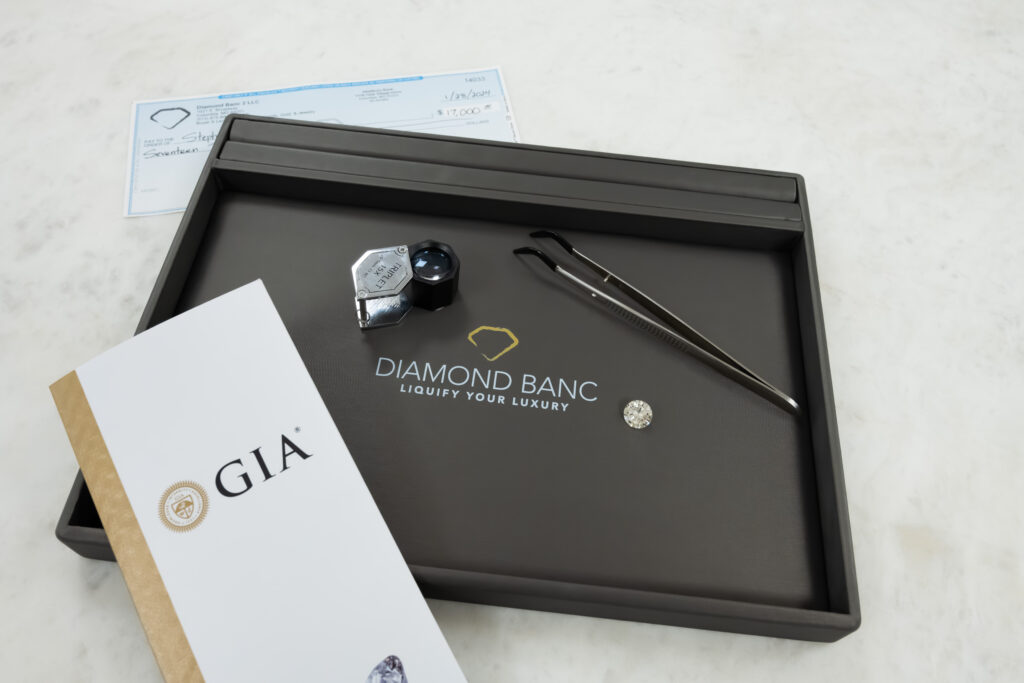
1. GIA-Certified Diamonds Command Higher Offers
Sellers who present a GIA certificate often receive higher cash offers for their diamonds. The certified diamonds come with reliable proof of quality, enabling trusted buyers to make informed decisions. A stone without a certification, no matter how stunning, lacks documentation to confirm its worth, often reducing its monetary value.
Reputable diamond buyers always factor in GIA grading when appraising diamonds and fine jewelry. A well-documented diamond engagement ring or colored diamond with GIA backing helps them offer a fair price with confidence.
2. Supports a Smoother Resale or Trade-in Experience
When selling a diamond, particularly larger diamonds or colored stones, having a GIA diamond report readily available simplifies the transaction. Without a grading report, buyers may need to send the stone for independent verification, delaying the sale.
A GIA-accredited stone gives everyone involved, especially those unfamiliar with gem research, the tools they need to trust the transaction. This is particularly valuable when selling to reputable buyers who prioritize transparency and efficiency.
3. Better Alignment With Current Market Trends
The diamond market is ever-changing, influenced by supply, demand, and consumer preferences. A GIA grading report helps sellers stay aligned with market trends by clearly stating a stone’s specifications. This ensures sellers receive competitive offers that reflect current diamond prices for similar stones.
GIA vs. Other Labs
While other gemological labs exist, not all grading systems are equal. GIA is known for its strict and consistent grading standards, making it the gold standard in diamond certification.
Some labs may inflate grades or apply more lenient criteria, which can mislead buyers and devalue the diamond in the resale market. A GIA-graded diamond, by contrast, offers unbiased assessment and widely accepted credibility. When you want to sell diamonds for their true worth, the GIA report ensures you’re dealing with accurate data.
Impact on Informed Decision-Making
1. Understanding the Diamond’s Beauty and Limitations
GIA certification offers sellers a chance to understand their diamond on a technical level, what makes it beautiful, and what may affect its price.
For example, inclusions noted in the clarity grade or subtle tints found in the color grade can help a seller set realistic expectations for offers.
Whether you’re selling a diamond ring or a natural diamond pendant, knowing the strengths and weaknesses of your stone empowers you to negotiate wisely.
2. Transparency Throughout the Selling Process
Buyers are far less likely to question your asking price when your diamond comes with a GIA grading report. A certified diamond provides clear, verified details about the stone’s quality, which helps streamline the appraisal process and builds trust.
This added transparency is especially valuable in a fast-moving market, where sellers are looking for quick, fair, and reliable offers
The Role of Diamond Grading in the Jewelry Industry
In the modern jewelry industry, diamonds are not just valued for their sparkle; they are graded, compared, and traded based on scientific analysis. GIA has led the charge in standardizing this approach, allowing buyers and sellers to operate on common ground.
By securing a GIA certification, sellers align their diamonds with this system, creating a seamless bridge between private ownership and professional evaluation. This is critical for anyone hoping to make informed, confident choices when entering the resale market.
GIA Report Number: Tracking and Security
Each GIA report comes with a unique GIA report number, which can be entered into GIA’s online database for verification. This extra layer of security reassures buyers that the diamond grading report is legitimate and corresponds to the specific stone being sold.
Some GIA diamonds also have the report number laser-inscribed on the stone’s girdle, providing a direct physical link between the diamond and its documentation. This tamper-proof method adds value and credibility during the sales process.
What If You Don’t Have GIA Certification?
If your diamond isn’t GIA certified, it still holds value, but selling it may take longer, and you might receive lower offers. Without a recognized grading report, buyers have less certainty about the diamond’s quality, which can lead to more conservative pricing.
In many cases, it’s worthwhile to have your diamond evaluated and certified by GIA before selling. The cost of certification is relatively small compared to the potential boost in resale value and buyer interest. This is especially true for larger diamonds or stones with strong color, clarity, and carat weight, where accurate grading can significantly impact the final offer.
Make Informed Decisions with GIA Certification!
In today’s complex jewelry industry, a GIA certification is more than just a document; it’s a guarantee of your diamond’s authenticity, characteristics, and marketability. Whether you’re selling a diamond engagement ring, a vintage heirloom, or modern diamond jewelry, a GIA diamond grading report provides you and the buyer a sense of confidence and a shared understanding of value.
By partnering with a reputable and knowledgeable buyer like Diamond Banc, you can make confident decisions throughout the diamond resale process.
Looking to sell your diamond? Contact Diamond Banc today. Our experts are ready to provide a complimentary evaluation, help you understand your stone’s value, and guide you every step of the way!
Frequently Asked Questions
Can GIA certify diamonds that are already set in jewelry?
No, GIA requires the diamond to be loose (not mounted in a setting) for a full grading report. This allows graders to accurately assess characteristics like clarity and cut without obstruction. If your diamond is set in a ring or pendant, you may need to have it unset temporarily for evaluation.
Can small diamonds or accent stones be GIA certified?
Yes, but certification is typically most valuable for center stones over 0.25 carats. Accent diamonds can be graded, but the cost of certification may outweigh the resale benefit unless they are part of a larger piece of jewelry with significant value.
What’s the difference between a GIA grading report and an appraisal?
A GIA grading report provides an unbiased assessment of a diamond’s characteristics, such as cut, clarity, color, and carat weight, but it does not assign a monetary value. An appraisal, on the other hand, estimates the diamond’s market value, often for insurance, resale, and other purposes. Having both can give you a complete picture: GIA for quality, appraisal for price.
Does GIA certification expire?
No. A GIA diamond grading report does not expire. However, because diamonds can be re-cut or altered, some buyers prefer recent reports. If your diamond was certified many years ago, updating the certification may help reassure buyers.
Can I sell a diamond without sending it to GIA first?
Yes, you can sell a diamond without certification, but you may receive lower offers because buyers cannot confirm its exact quality. Certification adds trust and usually results in better pricing and smoother transactions.
 Instagram
 Facebook
 Tiktok
 YouTube