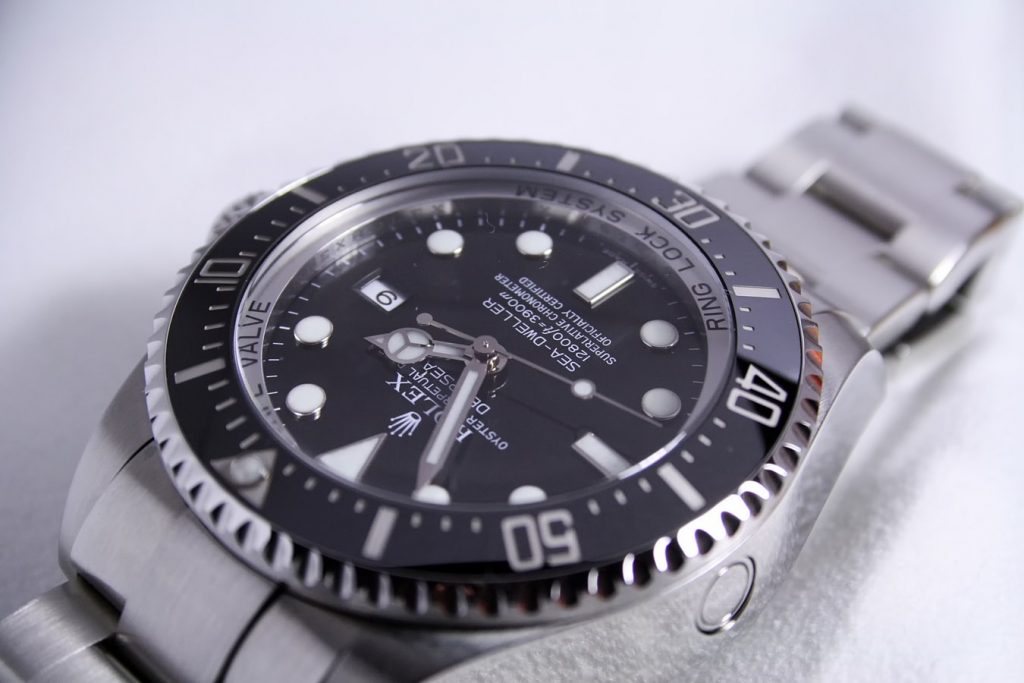
The Rolex Sea-Dweller was introduced in 1967 as a professional dive watch designed to meet the demands of deep-sea exploration. Rolex developed the Sea-Dweller for commercial saturation divers working with COMEX (Compagnie Maritime d’Expertises), a French diving company.
Unlike the Submariner, the Sea-Dweller featured a helium escape valve, enabling it to handle decompression and operate at depths of up to 610 meters (2,000 feet), marking a significant advancement in dive watch engineering.
Over time, the Sea-Dweller line evolved with significant upgrades in design and functionality. The Sea-Dweller 1665 “Double Red”, released in the late 1960s, introduced dual red lines of text on the dial and became an early collector’s favorite. The 16660 Triple Six, launched in the 1980s, added a sapphire crystal, improved depth rating (1,220 meters), and the Caliber 3035 movement.
In 2008, Rolex introduced the Deepsea (Ref. 116660), a variation with a depth rating of 3,900 meters and the patented Ringlock System. More recent versions, such as the Sea-Dweller 126600, released in 2017, marked the 50th anniversary with a return of red text and a larger 43mm case.
The Sea-Dweller holds strong value in the US luxury and vintage watch market, where rarity, functionality, and legacy drive demand. Its limited production runs and historical ties to professional diving make it a prime investment piece for collectors. Diamond Banc recognizes its high market liquidity and brand power.
With growing interest in heritage models and tool watches, the Sea-Dweller’s appeal continues to increase, particularly among buyers seeking authenticity and practicality in luxury timepieces. The model reflects Rolex’s commitment to durability, precision, and professional-grade performance.
Table of Contents
- What is the Rolex Sea-Dweller?
- How Does the Rolex Sea-Dweller Work?
- What Are the Different Rolex Sea-Dweller Models?
- How Do the Rolex Sea-Dweller Models Differ?
- What Is the Market Value of a Rolex Sea-Dweller?
- What Factors Contribute to the High Market Value of Sea-Dwellers?
- How to Authenticate a Rolex Sea-Dweller?
- How to Use Your Rolex Sea-Dweller as Loan Collateral
- Is my Rolex Sea-Dweller a good investment?
- Is the Rolex Sea-Dweller better than the Submariner for a loan?
- Which is the rarest Rolex Sea-Dweller to get a loan against?
- Why was the Sea-Dweller created?
- What material is typically used for the Sea-Dweller’s crystal?
- What depth rating does the current standard Sea-Dweller offer?
- What type of professionals primarily use the Sea-Dweller?
- How can I get a fast Rolex equity loan in the US?
What is the Rolex Sea-Dweller?
The Rolex Sea-Dweller is a professional-grade dive watch engineered for extreme underwater depths. Introduced in 1967, it was designed to support the needs of commercial and saturation divers operating in high-pressure environments. Its development stemmed from Rolex’s collaboration with COMEX, aimed at solving the problem of helium buildup during decompression.
The Sea-Dweller features a helium escape valve, exceptional water resistance (up to 1,220 meters or 4,000 feet in modern versions), a robust Oystersteel case, and a screw-down Triplock crown for enhanced durability. Most models include a unidirectional rotating bezel, Chromalight luminescent markers, and a sapphire crystal to protect the dial. Recent versions are powered by Rolex’s Calibre 3235 movement, ensuring high precision and a long power reserve.
Initially used by professional divers, the Sea-Dweller today appeals to both diving professionals and luxury watch collectors. Its technical strength, historical significance, and understated design appeal to those who seek functionality with a touch of brand prestige. In the US market, it holds strong appeal as a collectible asset due to its limited production runs and connection to Rolex’s heritage in exploration and innovation.
When Was the Rolex Sea-Dweller First Released?
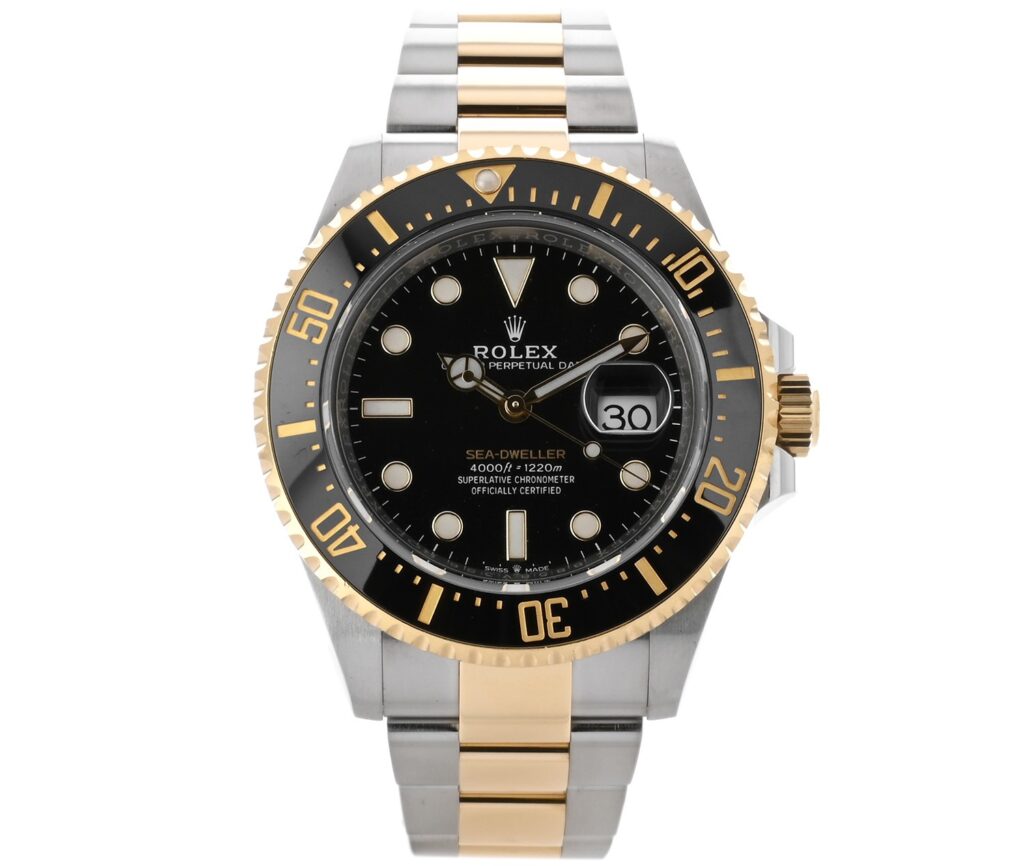
The Rolex Sea-Dweller was first released in 1967 as a solution for deep-sea divers requiring greater depth capabilities and decompression safety. During the 1960s, advancements in commercial diving, particularly saturation diving, highlighted the limitations of traditional dive watches. Rolex collaborated with COMEX to engineer a watch that withstands the buildup of helium gas and high-pressure conditions during extended underwater operations.
The initial model, Ref. 1665, included a helium escape valve, allowing gas to exit the case without damaging the crystal during decompression. This innovation marked a significant milestone in dive watch design. With a depth rating of 610 meters (2,000 feet), the original Sea-Dweller exceeded the capabilities of the Submariner and set a new standard for professional timepieces.
How Does the Rolex Sea-Dweller Work?
The Rolex Sea-Dweller operates through a high-precision automatic movement housed in a robust waterproof case designed for deep-sea performance. It features the Calibre 3235 self-winding mechanical movement, offering a power reserve of approximately 70 hours and high accuracy thanks to Rolex’s Chronergy escapement and Parachrom hairspring.
The Oyster case, made from corrosion-resistant Oystersteel, ensures waterproof protection up to 1,220 meters. It is paired with the Triplock winding crown, which features a triple-seal system to prevent water intrusion. These components work together to protect the movement in extreme underwater environments.
A key feature is the helium escape valve, a one-way valve that releases internal gas pressure during decompression, preventing damage to the watch crystal. This makes the Sea-Dweller suitable for saturation diving.
The unidirectional Cerachrom bezel, crafted from scratch-resistant ceramic, enables divers to track elapsed time with precision and accuracy. It rotates only counterclockwise, ensuring accurate timing under pressure.
The dial features the Chromalight display, which emits a long-lasting blue luminescence for legibility in dark environments. Combined with bold hour markers and hands, it enhances visibility in deep-sea conditions.
The watch includes Paraflex shock absorbers, which protect the movement from impact, and a precision regulation system, ensuring it maintains Superlative Chronometer standards of -2/+2 seconds per day. All components work together to deliver durability, performance, and accuracy under the most demanding conditions.
Why Is the Helium Escape Valve Important in the Sea-Dweller?
The helium escape valve is a pressure-release mechanism designed to protect the Rolex Sea-Dweller during decompression. It serves a critical role for saturation divers who spend extended periods in pressurized environments filled with gas mixtures containing helium.
During deep dives, helium particles penetrate the watch case. As the diver ascends and pressure decreases, the trapped helium expands. Without a release mechanism, this pressure causes the watch crystal to pop off. The helium escape valve automatically expels excess gas from the case, maintaining the watch’s waterproof integrity.
This feature ensures that the Sea-Dweller remains fully functional and undamaged during high-pressure operations. It reflects the watch’s engineering focus on professional-grade pressure management, making it reliable for commercial diving missions.
What Are the Different Rolex Sea-Dweller Models?
The different Rolex Sea-Dweller models comprise a series of tool watches designed for saturation diving, each distinguished by technological advancements and significant historical milestones.
The Sea-Dweller line, part of Rolex’s professional watch collection, was designed for commercial divers requiring robust, pressure-resistant timepieces with long-term reliability under extreme underwater conditions.
Early Sea-Dweller (Ref. 1665)
The Rolex Sea-Dweller Ref. 1665, introduced in the late 1960s, marked the debut of Rolex’s professional saturation-diving watch family. Designed in collaboration with COMEX for deep-sea commercial divers, it introduced the helium escape valve, a pioneering feature that prevents crystal blowout during decompression.
This reference, especially the early models known as the “Double Red Sea-Dweller” (DRSD), featured two lines of red text on the dial, making them highly collectible today — learn more in Diamond Banc’s guide to famous Rolex nicknames. Later editions, known as the “Great White,” eliminated the red text but retained the tool-watch appeal.
With a depth rating of 610 meters and a matte dial, the 1665 is prized for its historic significance and vintage charm. Its appeal lies in being the origin of the Sea-Dweller legacy, attracting both hardcore collectors and Rolex enthusiasts seeking a pure, functional aesthetic.
Transitional & “Triple Six” (Ref. 16660, 1978–1988)
The Sea-Dweller Ref. 16660, nicknamed the “Triple Six,” represents a pivotal transitional model in the Sea-Dweller lineage. Launched in 1978, it introduced several vital upgrades, including a sapphire crystal, a larger helium escape valve, a more robust 1220-meter depth rating, and the Calibre 3035 movement with quick-set functionality.
These updates enhanced both durability and daily usability, making it a reliable choice for professional divers. While it retains vintage characteristics, such as the matte dial in early versions, it bridges the gap between the classic and modern Sea-Dwellers.
The 16660 is especially appealing to collectors seeking a model that combines technical innovation with traditional styling, and it remains a somewhat underappreciated gem in the Sea-Dweller lineup.
Modern Classic (Ref. 16600, 1988–2008)
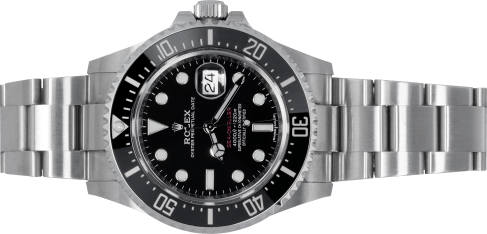
Produced for two decades, the Rolex Sea-Dweller Ref. 16600 is considered the modern classic of the Sea-Dweller family. It featured a 1220m depth rating and a scratch-resistant sapphire crystal and was powered by the Calibre 3135, a highly reliable automatic movement.
Unlike most Rolex models of the time, it notably lacked the Cyclops date magnifier, maintaining the Sea-Dweller’s clean, tool-watch design. This model is revered for its no-nonsense utility, offering professional-grade dive capabilities in a durable and wearable package. Collectors and divers alike appreciate the 16600 for its long production run, mechanical reliability, and adherence to the original Sea-Dweller ethos form follows function.
“New” Sea-Dweller (Ref. 116600, 2014–2017)
The Ref. 116600 marked the revival of the Sea-Dweller line in 2014 after a six-year hiatus, blending vintage inspiration with modern Rolex innovations. It retained the traditional 40mm case and the absence of the Cyclops lens, staying true to its tool-watch roots. New features included a Cerachrom ceramic bezel, a maxi dial with larger markers and hands, and continued use of the Calibre 3135 movement.
Despite its short production run, the 116600 quickly developed a cult following due to its rarity and balanced design. It appeals to those who want a modern Sea-Dweller without the controversial Cyclops, offering enhanced durability, a refined presence on the wrist, and all the hallmarks of Rolex’s advanced engineering.
“Sea-Dweller 43” (Ref. 126600, 2017–Present)
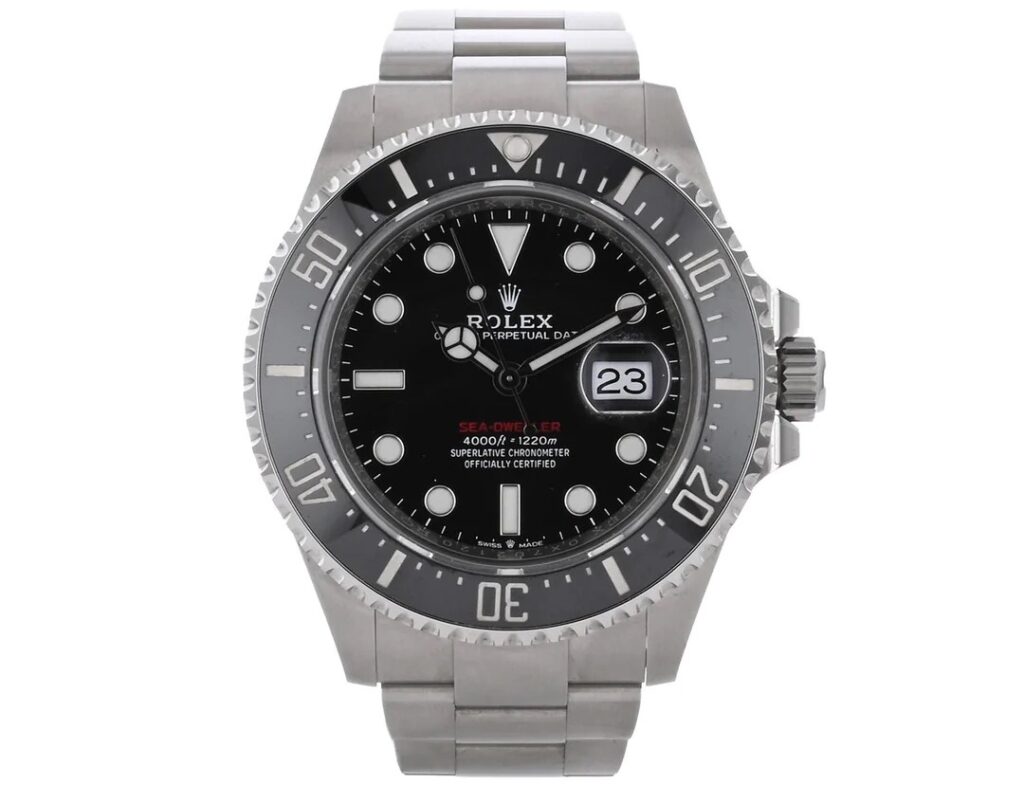
Launched to commemorate the 50th anniversary of the Sea-Dweller line, the Ref. 126600 brought several bold changes. Most notably, it introduced a larger 43mm case and, controversially, added a Cyclops magnifier over the date, breaking with the previous Sea-Dweller design tradition. The watch is powered by the Calibre 3235, which offers an improved power reserve and enhanced movement efficiency.
The red “Sea-Dweller” text on the dial is a nod to the original Double Red models. With its increased size and visual presence, the 126600 straddles the line between the Sea-Dweller and the Submariner in both aesthetics and wearability. It appeals to modern Rolex buyers and collectors seeking a blend of heritage, technology, and bold wrist presence.
Deepsea Variants (Ultra-Deep Models)
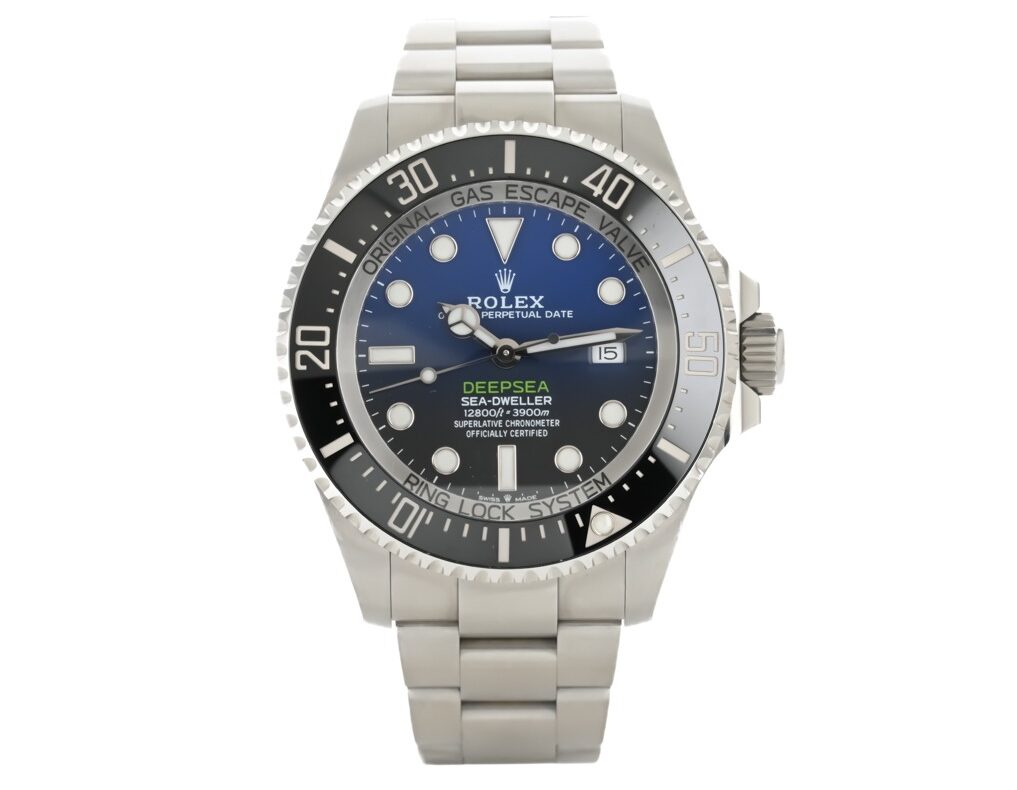
The Rolex Deepsea line pushes the limits of dive watch engineering even further, building upon the Sea-Dweller platform. The original Deepsea Ref. 116660, launched in 2008, featured a massive 44mm case, a Ring Lock System, and an impressive 3,900-meter depth rating. Later evolutions, including the Deepsea D-Blue (also known as the James Cameron edition) and Deepsea Challenge, introduced gradient dials and titanium construction, respectively.
These watches are engineered for extreme conditions far beyond recreational diving. Their massive size and specialized design make them less of an everyday wear but a statement piece for professional divers, collectors, and fans of extreme engineering. The Deepsea line represents Rolex’s pinnacle of underwater performance, appealing to those who value overbuilt capability and technological bravado.
Each model serves divers and collectors who value precision, history, and Rolex’s commitment to functional luxury.
How Do the Rolex Sea-Dweller Models Differ?
The Rolex Sea-Dweller models differ in case size, depth rating, materials, movement technology, and display features. Each generation introduces upgrades tailored to professional divers, collectors, and luxury watch enthusiasts.
The major differences among Rolex Sea-Dweller models are:
- Case Size & Depth Rating
The Sea-Dweller began with a 40mm case and a 610m depth rating in Ref. 1665, which was later increased to 1220m in Ref. 16660 and 16600. The 40mm size continued with Ref. 116600, striking a balance between tradition and utility. In 2017, Ref. 126600 introduced a 43mm case for enhanced wrist presence, while Deepsea models expanded to 44mm and increased water resistance to 3900 m. Collectors favor the classic 40mm size, divers benefit from the Deepsea, and modern luxury buyers may prefer the boldness of the 126600.
- Movement Upgrades
Early models used Caliber 1575 and 3035, while the Ref. 16600 and 116600 relied on the durable Caliber 3135. The 126600 and Deepsea variants feature the newer Calibre 3235, which offers a 70-hour power reserve and improved efficiency. Collectors value the legacy of the 3135, divers and professionals benefit from the upgraded 3235, and modern enthusiasts appreciate the latest tech in newer models.
- Ceramic Bezels & Luminescence
Vintage models, such as the 1665 and 16600, featured aluminum bezels that fade attractively over time. Ref. 116600 introduced the scratch-resistant Cerachrom ceramic bezel and Chromalight lume, now standard in newer models. Collectors appreciate the aging charm of aluminum, while divers and luxury wearers prefer ceramic for its durability and modern aesthetic appeal.
- Cyclops Date
The Cyclops date magnifier was absent from Sea-Dweller models until 2017’s Ref. 126600, which introduced it. Earlier models prioritized crystal strength and tool-watch aesthetics. Collectors favor the classic no-Cyclops look, while modern buyers appreciate the improved legibility and iconic Rolex styling, making the 126600 an ideal choice for those seeking a blend of heritage and contemporary flair.
Each model caters to a distinct audience while upholding Rolex’s standards of precision, durability, and brand heritage. Special features such as the Cerachrom bezel, sapphire crystal, and automatic helium release system reinforce the Sea-Dweller’s status as both a functional tool and a luxury asset.
What Is the Market Value of a Rolex Sea-Dweller?
The market value of a Rolex Sea-Dweller is influenced by factors such as model rarity, production year, condition, and demand from collectors. Modern models, such as the Ref. 126600, typically range from $13,000 to $15,000, while the Deepsea 136660 can be found for between $14,500 and $17,000. The limited Deepsea Challenge 126067, with its advanced titanium case and extreme depth rating, commands a higher value of $25,000 to $30,000.
Rarer models, such as vintage 1665 Double Red or Comex-signed references, fetch well above $30,000 due to their limited production runs and significance to collectors. Factors such as the watch’s condition, whether it includes the original box and papers, and its rarity in the secondary market play a crucial role in determining its price. Discontinued models or those with unique features, such as red text or titanium construction, are particularly sought after, contributing to their appreciation in value.
What Factors Contribute to the High Market Value of Sea-Dwellers?
The factors contributing to the high market value of Sea-Dwellers are the Rolex Brand, reputation, limited availability, and demand. These elements, both intrinsic to the watch itself and external market forces, shape the prices and desirability of the model in the luxury and collector markets.
- Rolex Brand
Rolex’s prestigious reputation as a symbol of luxury, precision, and durability elevates the value of all its models, including the Sea-Dweller. The brand’s long-standing history of creating high-performance, visually distinct timepieces ensures strong demand and brand-driven value.
- Reputation
The Sea-Dweller’s association with professional diving and its technical innovations, such as the helium escape valve, further solidifies its status as a highly regarded tool watch. Its legacy within the diving community adds to its appeal.
- Limited Availability
Rolex’s controlled production and limited runs of specific models make the Sea-Dweller a rare and exclusive model. Discontinued models, or those in rare editions, become even more desirable as their availability diminishes.
- Demand
Continuous demand from both professional divers and luxury collectors increases market prices. The Sea-Dweller’s enduring appeal to those seeking both performance and prestige drives consistent market interest.
- Technical Features:
Intricate engineering, including the helium escape valve, Cerachrom bezel, and water resistance ratings, adds significant value. The materials used, such as Oystersteel, sapphire crystal, and high-grade movements, showcase Rolex’s commitment to engineering excellence and material quality.
- Vintage Models
Vintage Sea-Dweller models, particularly limited-edition references like the Ref. 1665 “Double Red”, are highly sought after. Their rarity, connection to Rolex’s early dive watch innovations, and distinct characteristics make them valuable assets.
- Special Editions
Special editions, like the Deepsea Challenge or watches with unique features (e.g., titanium construction or red text), attract collectors due to their distinctive nature and historical significance.
- Investment Potential
The Sea-Dweller’s reputation for retaining and increasing in value over time makes it a smart investment piece. Collectors view it as an asset with growth potential, contributing to its market appeal.
- Provenance
Watches with a known history or those tied to specific events or figures, such as COMEX-issued models, increase in value due to their historical importance and distinctive backstory.
These factors, along with external market trends such as shifts in luxury watch demand, economic conditions, and collector enthusiasm, contribute to the high market value of the Rolex Sea-Dweller.
How to Authenticate a Rolex Sea-Dweller?
To authenticate a Rolex Sea-Dweller, several key features must be thoroughly examined to ensure the watch is genuine. These include scrutinizing the serial and model numbers, assessing build quality, and carefully inspecting the dial and other intricate details.
- Serial and Model Number Location & Engraving Precision
Genuine Rolex watches have engraved serial and model numbers located between the lugs at the 6 o’clock and 12 o’clock positions. These numbers should be clear, deeply engraved, and precise, not etched or poorly executed.
- Cyclops Magnification and Date Clarity
The Cyclops lens, which magnifies the date display, should provide a magnification of 2.5x. A common sign of a fake Rolex is a poorly magnified date or an uneven date display. Genuine Rolex Sea-Dweller models feature crisp, clear date windows.
- Weight and Build Quality
Authentic Rolex watches are crafted from high-quality materials, including Oystersteel and 18k gold. The Sea-Dweller should feel solid in the hand. Pay attention to the weight, bracelet feel, and overall build quality, as counterfeit watches tend to use lighter or lower-quality materials.
- Dial Markers, Lume Consistency, and Bezel Action
The lume on a genuine Sea-Dweller will glow brightly and uniformly in dark conditions, with the Chromalight display providing a distinctive blue glow. Additionally, the unidirectional bezel should rotate smoothly without resistance, and the dial markers should be evenly placed and precise.
- Digital and Professional Verification Tools
To ensure authenticity, digital tools such as Rolex serial number databases or professional authentication services are used. Some platforms provide services that allow you to match the serial number with Rolex’s records.
- Red Flags of Fakes and Evolving Counterfeits
Newer counterfeit models are becoming increasingly sophisticated, but they still exhibit subtle flaws, like incorrect engravings, uneven finishing, or incorrect fonts. Be cautious of unusually low prices or watches without proper documentation.
- Movement Inspection (if accessible) and Caseback Details
A major indicator of authenticity is the movement. Rolex watches have specific, finely tuned movements with engraved logos and serial numbers. The caseback of most Sea-Dweller models is solid, but if it is transparent, the movement should have clear and distinct markings.
Before buying or selling a Sea-Dweller, ensure thorough research and, if necessary, professional verification to avoid counterfeit products. Authentication is crucial, as even highly convincing replicas fail to meet the quality and precision standards set by Rolex.
How to Use Your Rolex Sea-Dweller as Loan Collateral
To use your Rolex Sea-Dweller as collateral for a loan, you’ll need to partner with a luxury collateral lender who will assess the market value of your watch. After the appraisal, the lender offers a loan based on that value, and your Rolex is held as security until you repay the loan. Choosing a loan over selling allows you to keep your watch while getting the cash you need, and you retain the opportunity to reclaim it once the loan is paid off.
This option is ideal if you want to access funds temporarily without parting with your asset, especially if you expect the value of your Rolex to rise. When pursuing this option, make sure your watch is in excellent condition, and it’s helpful to have the original box and papers. Diamond Banc offers a streamlined Rolex equity loan, with professional appraisals and secure storage of your Rolex during the loan term, ensuring both convenience and peace of mind.
Is my Rolex Sea-Dweller a good investment?
Yes, the Rolex Sea-Dweller is a good investment. Rolex watches, including the Sea-Dweller, tend to appreciate over time due to their exceptional durability, renowned brand reputation, and limited production.
Collectors seek vintage and rare models, and the Sea-Dweller’s connection to diving history adds to its appeal. Its high market demand, combined with Rolex’s ongoing innovation, positions the Sea-Dweller as a valuable asset in the luxury watch market, especially for long-term investors who keep it in good condition with its original box and papers.
Is the Rolex Sea-Dweller better than the Submariner for a loan?
Yes, the Rolex Sea-Dweller is better than the Submariner when compared. It offers greater value, especially for vintage models or those in excellent condition. Designed as a professional dive watch, the Sea-Dweller features a superior depth rating and a helium escape valve, making it more advanced and appealing to divers.
Its reputation as a robust tool watch enhances its loan potential. While both models are valuable, the Sea-Dweller stands out due to its unique features, rarity, and strong demand in the secondary market, making it the better option for collateral.
Which is the rarest Rolex Sea-Dweller to get a loan against?
The rarest Rolex Sea-Dweller model to be used as collateral is likely the Ref. 1665 “Double Red” Sea-Dweller. Released in the 1960s and early 1970s, it featured two red lines of text on the dial, marking it as a distinctive and highly sought-after model.
Due to its limited production and significant historical value, it is considered one of the rarest and most valuable Sea-Dweller models on the market. Lenders are willing to offer higher loan amounts for this rare reference due to its desirability among collectors.
Why was the Sea-Dweller created?
The Rolex Sea-Dweller was created to meet the needs of professional saturation divers. In the 1960s, commercial divers were working at extreme depths, which required watches capable of handling the pressures associated with deep-sea exploration.
Rolex developed the Sea-Dweller in collaboration with COMEX, a French diving company, to address the issue of helium buildup during decompression. This problem causes the crystal of a regular watch to pop off. This innovation allowed the Sea-Dweller to function reliably at depths of up to 610 meters (2,000 feet).
What material is typically used for the Sea-Dweller’s crystal?
The Rolex Sea-Dweller uses a sapphire crystal for its dial. Sapphire crystal is known for its excellent scratch resistance and durability, making it an ideal material for high-end dive watches. It’s highly transparent and ensures clarity, even under extreme conditions.
Rolex uses synthetic sapphire, which is made by crystallizing aluminum oxide at high temperatures, to produce a highly durable and clear lens. This crystal material, along with the Sea-Dweller’s robust construction, contributes to its reputation as a professional-grade dive watch built to withstand harsh environments.
What material is Rolex glass made of?
Rolex glass is made from synthetic sapphire crystal. Sapphire crystal is the material of choice for luxury watches, such as those by Rolex, due to its exceptional hardness and scratch resistance. It is chemically and physically tougher than many other materials used in watchmaking, making it highly resistant to damage from impacts or abrasions.
Rolex uses sapphire glass to ensure that their watches maintain clarity and durability in even the harshest conditions, including underwater environments for models like the Sea-Dweller, where durability is paramount.
What depth rating does the current standard Sea-Dweller offer?
The current standard Rolex Sea-Dweller, Ref. 126600, offers a depth rating of 1,220 meters (4,000 feet). This makes it one of the most capable dive watches in Rolex’s collection, built to handle extreme underwater pressures.
The 126600 model, introduced in 2017, features an upgraded design, including a larger 43mm case, a helium escape valve, and a Cerachrom bezel. It retains the Sea-Dweller’s legacy as a professional tool watch, offering impressive water resistance for serious divers while maintaining Rolex’s standards of durability and precision.
What type of professionals primarily use the Sea-Dweller?
Professional saturation divers primarily use the Rolex Sea-Dweller. It was initially developed in collaboration with COMEX, a French diving company, to support divers working in commercial saturation diving, where divers are exposed to high-pressure environments for extended periods of time.
These professionals rely on the Sea-Dweller’s helium escape valve, allowing it to withstand the pressures of deep-sea exploration and prevent damage from decompression. The Sea-Dweller is also popular among military divers, engineers, and other individuals working in extreme conditions where robust, high-performance watches are essential.
How can I get a fast Rolex equity loan in the US?
To get a fast Rolex equity loan in the US, you can approach a luxury collateral lender like Diamond Banc. The process typically begins with an appraisal, where experts assess the value of your Rolex, taking into account the model, condition, and market demand.
Based on this evaluation, you will receive a loan offer within 24-48 hours. Diamond Banc specializes in quick, confidential loans, offering competitive rates and secure storage for your Rolex while you repay the loan.
Like what you’re reading?
Add us in Google — more like this is on the wayRelated Posts
 Instagram
 Facebook
 Tiktok
 YouTube